Do you have soul food in your country?
In my case, it’s Korean donkatsu (돈까스) — our own style of pork cutlet. And I’m not alone here. Many Korean men my age would say the same.
I don’t know exactly why. When I was a kid, that thin, crispy, huge donkatsu was pure happiness. Maybe it made me feel, “Wow! This meat is as big as my face!” And that crispy, oily taste was something moms didn’t really want to give their kids — which made it more special. It was the kind of food you got on your birthday. And sometimes, when I was upset, my mom would comfort me like this: “Kid, let’s go eat donkatsu.” That was game over.
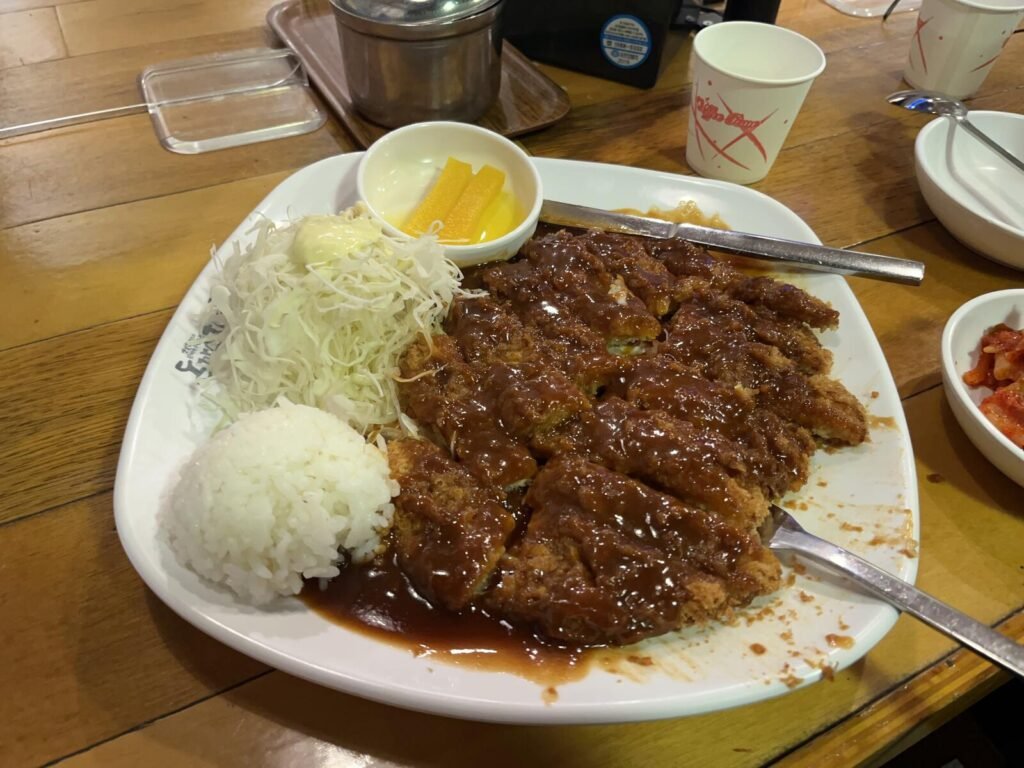
Korean donkatsu vs tonkatsu: three cousins
Here’s a fun fact I learned while writing this post: my soul food has a family tree, and it crosses three continents.
It started in Europe — think Austrian schnitzel: meat pounded thin, breaded, and fried. In 1899, a Tokyo restaurant called Rengatei turned the French côtelette into “katsuretsu,” which became tonkatsu — the thick, juicy version Japan loves today, sliced into pieces and eaten with chopsticks.
Donkatsu arrived in Korea in the 1920s–30s, but the thick Japanese style didn’t stick here. When it finally got popular in the 1960s, Korean donkatsu went back to the schnitzel way: pounded thin and wide, covered in a brown demi-glace-style sauce, and served uncut — you eat it with a knife and fork. So, funny enough, my Korean soul food is closer to a schnitzel than to a tonkatsu.
A feast of donkatsu
In Seoul, there are many old-school donkatsu places. Today, let me introduce mine: Donzanchi (돈까스잔치) in Dongbinggo-dong, near Ichon Hangang Park. Their donkatsu comes the classic way: as big as your face, drowned in brown sauce.
Donzanchi is a little special because they also sell janchi-guksu (잔치국수). Janchi means “feast” in Korean — so the restaurant’s name literally means “donkatsu feast.” Later, I learned why the noodle is called that: janchi-guksu was the dish for weddings, birthdays, and big celebrations. The long noodles mean a long life — and a long marriage. Koreans still ask an unmarried friend, “So, when are you going to feed us guksu?” It means: “When are you getting married?” Unlike donkatsu, this one is real traditional Korean food.
Their signature menu is janchi-guksu with a donkatsu on top. Honestly, I don’t recommend it, because I hate losing the crispy texture of my donkatsu. (If that combination sounds good to you, you would probably like katsu-nabe.)
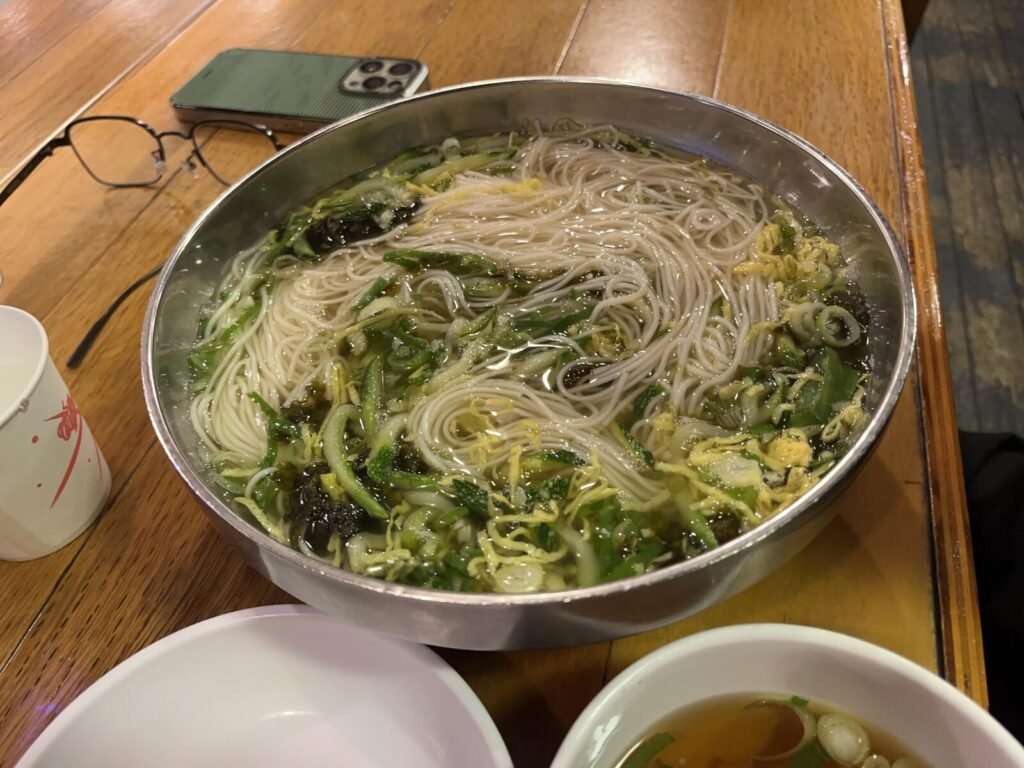
You know, it’s not a super fancy taste. But sometimes we miss our childhood. When I want to sink into that memory, I go to Donzanchi.
Jeong (정), served in a styrofoam box
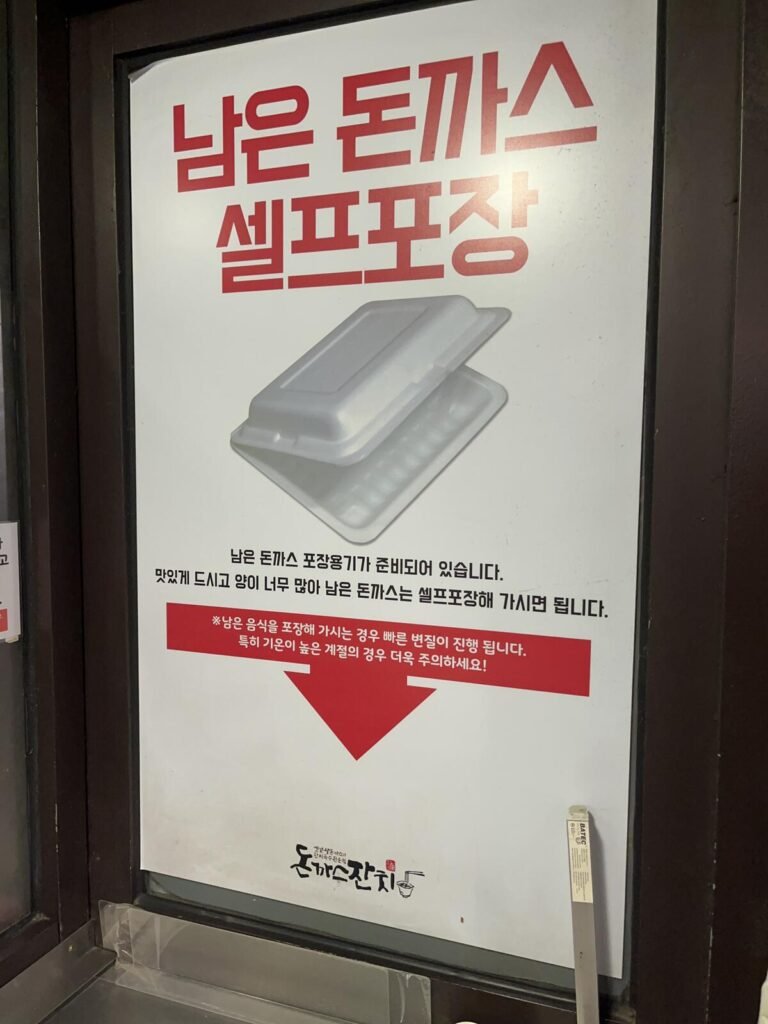
Maybe you’ve heard of jeong (정) if you’re interested in Korea — that warm, generous attachment Koreans share. At Donzanchi, jeong comes in portions. The plates are huge. But don’t worry if you can’t finish: leftover donkatsu can be self-packed for free. Take-out containers are right there, and you just pack it yourself. (The janchi-guksu can’t come home with you, though. It’s noodles.)
Eat it like a local
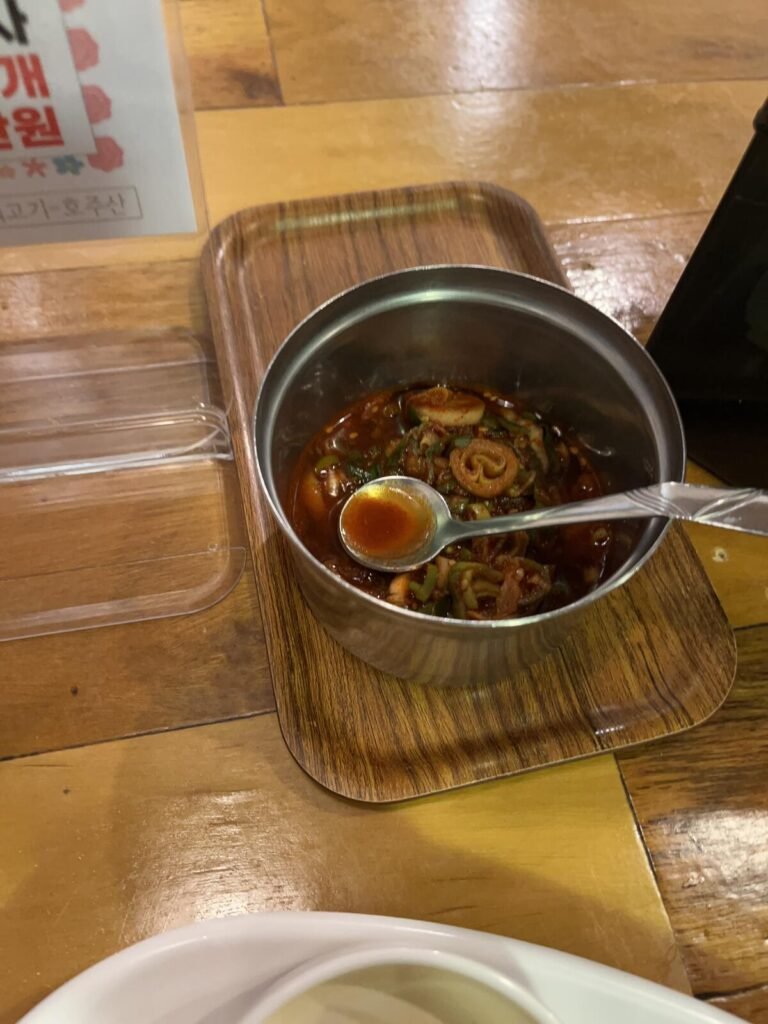
There’s no special way to eat here. Just one tip: try your janchi-guksu with dadaegi (다대기), the seasoned soy sauce on your table. Janchi-guksu is mild, and mild is good enough. But with dadaegi? It’s a kick — like kimchi.
The perfect finish: mix coffee
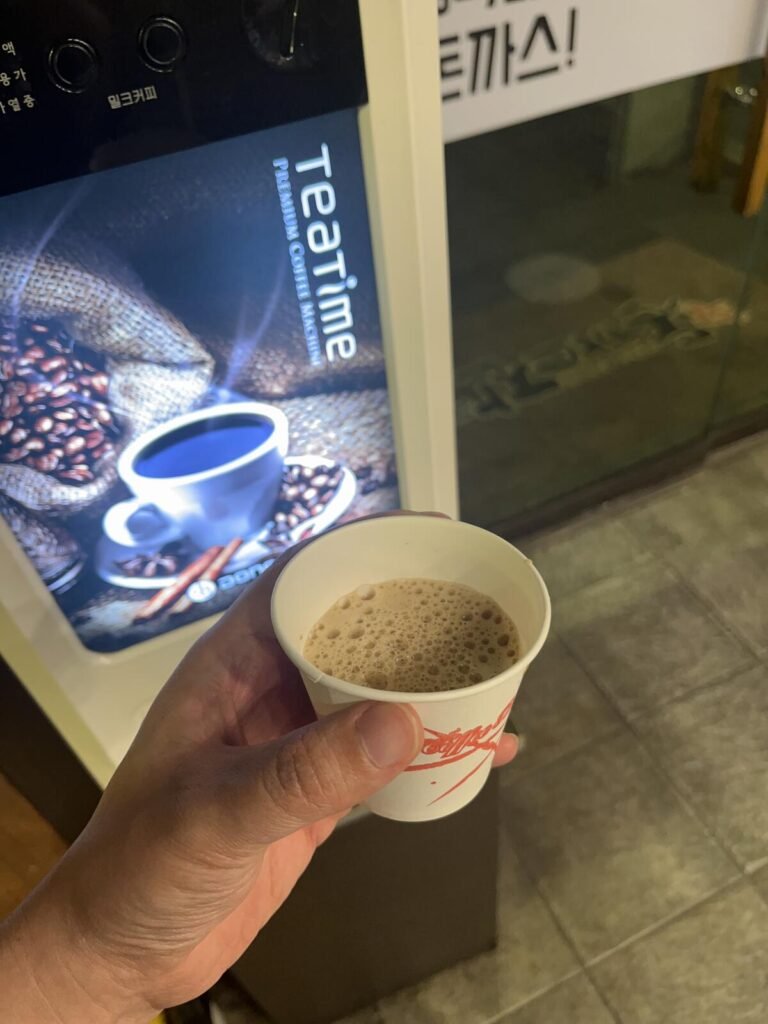
Many Korean restaurants like this have a mix coffee machine near the door. If you spot one, don’t pass it by. It’s the perfect finish to your meal.
I’ve heard many foreigners take mix coffee home as a souvenir. Good choice. In a future post, I’ll pick the best mix coffee for you — with water it’s good, but with milk? A perfect dessert. I’ll even share my recipe. (Calling it a “recipe” is a little embarrassing, but I’ll share it anyway.)
Honestly, the coffee from that old machine tastes subpar. But this is the REAL vibe.
Donzanchi is a nice stop if you visit Ichon Hangang Park (이촌한강공원) — it’s a local’s course in our daily life. I’ll introduce that area soon.
So… have a great meal, my stranger.
Quick facts
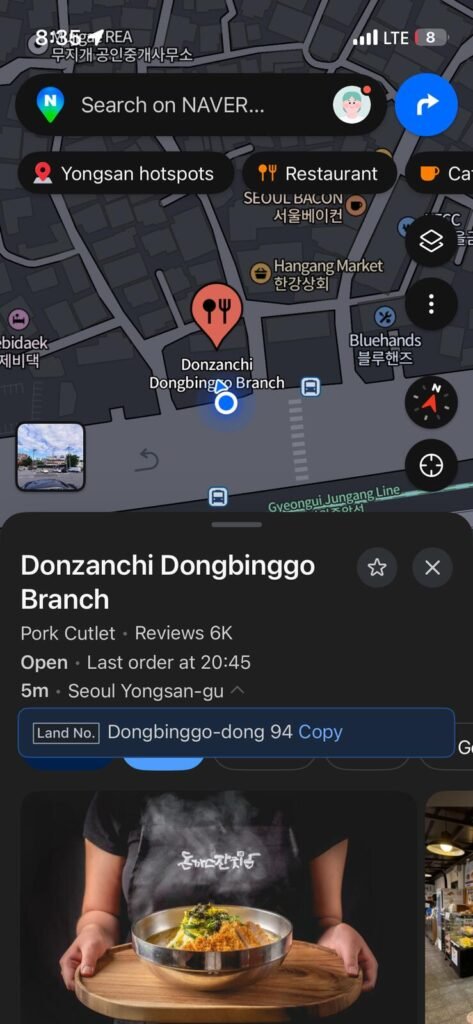
- Name: Donkatsu Janchi, Dongbinggo branch (돈까스잔치 동빙고점) — listed as “Donzanchi Dongbinggo Branch” on Naver Map
- What I ordered: Yetnal (old-style) donkatsu, 13,500 won (as of July 2026)
- Hours: Open daily, 10:30–21:30 (last order at 20:45)
- Where: Dongbinggo-dong, Yongsan-gu — a short walk from Ichon Hangang Park
- How to find it: search 돈까스잔치 동빙고점 on Naver Map
- Parking: yes — a big parking lot
Leave a Reply