Are Myeongdong (명동) and Gyeongbokgung (경복궁) too crowded? Is the Seoul summer making you hot and dizzy?
Seoul is a huge city, but it has a lot of nature too — like Bukhansan (북한산), the mountain you can see from almost anywhere in the city. We locals love hiking it. But let’s be honest: for some of us, hiking sounds a little heavy. And hiking in the middle of a Seoul summer…? Phew.
So here’s what I do instead: I go to the mountain, but I don’t climb it.
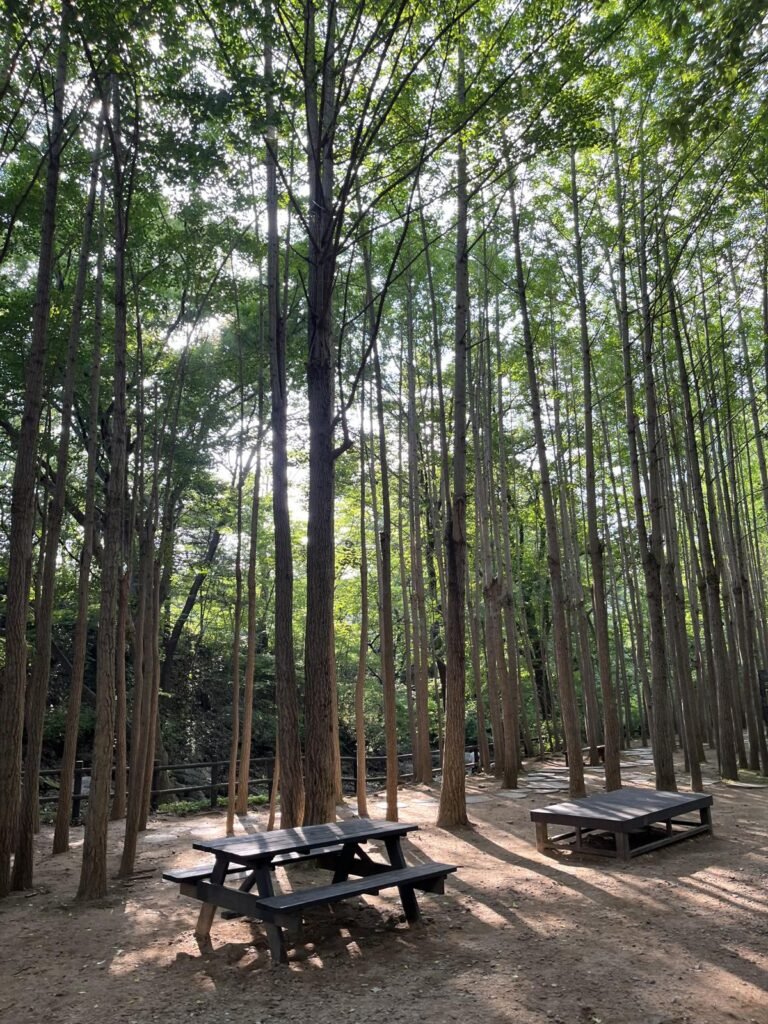
The Mountain Everyone Sees, Few Need to Climb
If you have one day to enjoy Korean nature, Bukhansan (북한산) might be your best choice. It’s a whole national park inside the city — about 80 km² of granite peaks and old temples, visited by around five million people a year. The highest peak, Baegundae (백운대, 837m), is a real climb: the final stretch is bare granite, and you pull yourself up holding steel cables. It’s not Hallasan (한라산) — Korea’s highest mountain on Jeju Island, a full-day pilgrimage — but don’t let the half-day course fool you. This is a serious mountain, not a city hill.
Here’s one for the Patagonia fans. Before Yvon Chouinard founded the company, he was a young American soldier stationed in Korea in the 1960s. On his days off, he kept coming back to one place: Insubong (인수봉), Bukhansan’s sheer granite tower. The routes he pioneered there — climbers still call them “Chouinard A” and “Chouinard B” — remain among the most beloved climbing routes in Korea, sixty years later.
And you’ve probably already seen this mountain. If you’ve stood in Gwanghwamun (광화문) Square and noticed a dramatic stone ridge rising far behind the palace roofs — that’s Bukhansan. It has been Seoul’s backdrop for six hundred years.
So, don’t you want to go? Me too. But climbing it in the middle of July? …That’s another story.
I Go to the Mountain, but I Don’t Climb It
Don’t get me wrong — I love being in nature. But hiking in a Korean summer? It’s harsh. The heat, the humidity… Conquering the peak of Bukhansan on a day like today? No, thank you. I’ll just sit by the stream and enjoy the greens.
(To be fair: if you want to experience Korean nature deeply, I do recommend the full hike too — just pack enough water and snacks!)
At the foot of Bukhansan, at the edge of Eunpyeong Hanok Village (은평한옥마을), there is a stream — Jingwansa Valley (진관사 계곡) — where locals go to cool off. Swimming in Seoul is complicated — but dipping your feet? That, we can do.
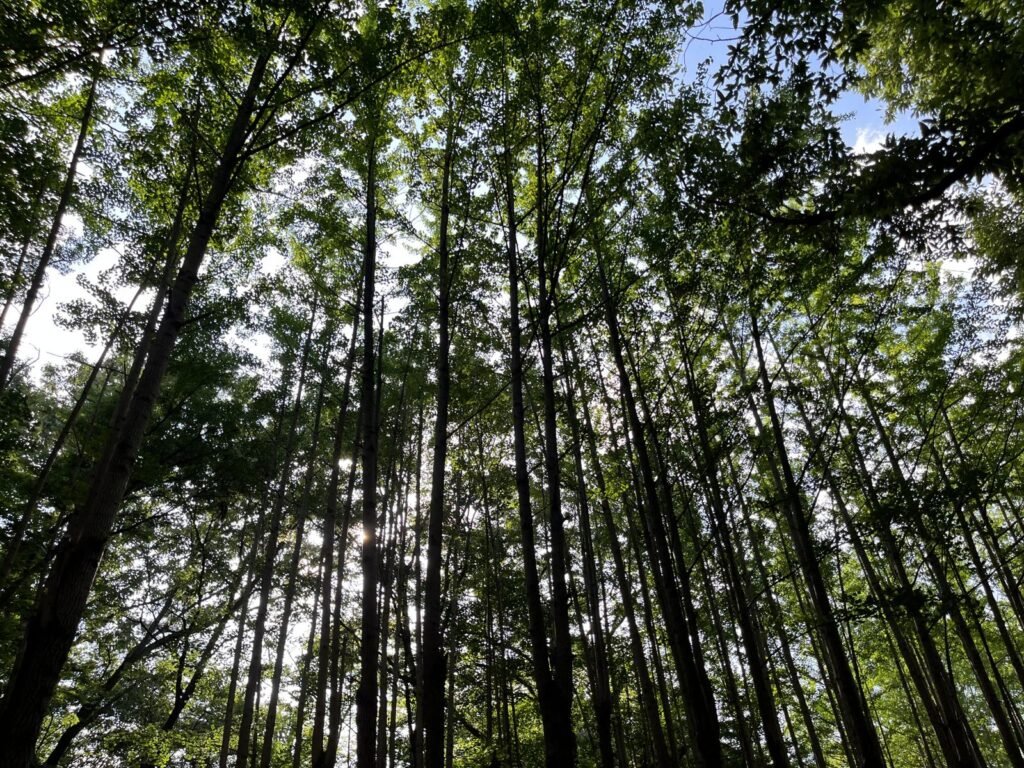
Getting to Jingwansa Valley
If you’re taking the bus to Jingwansa (진관사), get off at the stop called “Hana high school, Samcheonsa, Jingwansa” (하나고·삼천사·진관사입구) — it shows up in English on Naver Map, just like this. (Full disclosure: I actually drove there that day. But I did my homework for your wonderful day 🙂
– From downtown (Myeongdong, Seoul Station, Jongno): blue bus 701 goes all the way — one bus, no transfers.
– By subway: Line 3 to Gupabal Station (구파발역), then green bus 7723 to the same stop.
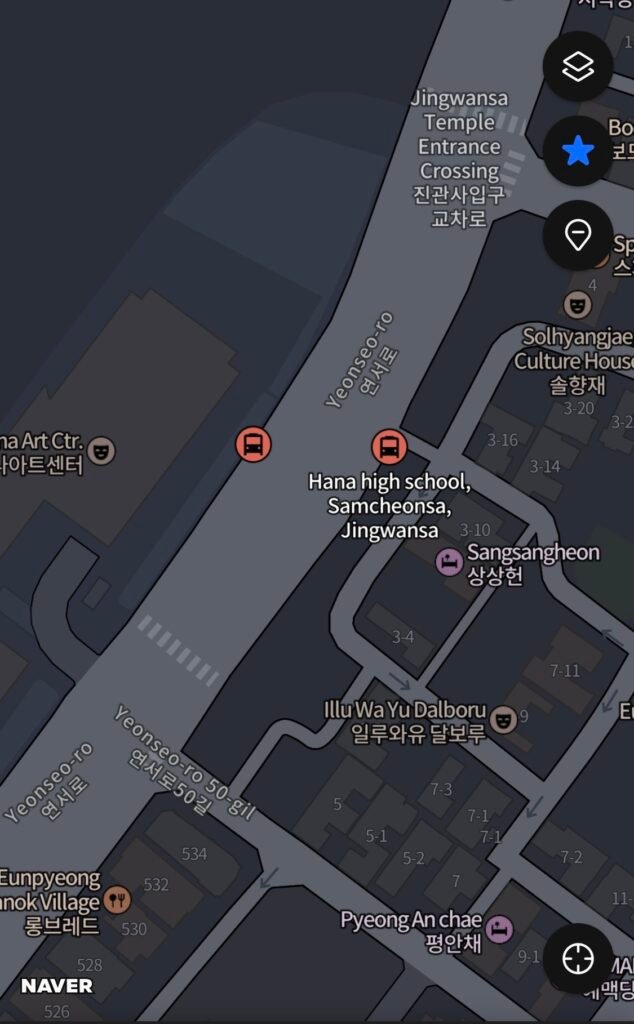
And… we should grab some snacks first, right? It takes two minutes from the bus stop to a CU (a Korean convenience store — you’ll see them everywhere in Seoul). I went with a Monster Ultra White and a bag of Poca Chips (포카칩), Korea’s beloved potato chips. Grab whatever suits your taste. Oh, and see that red circle on the map? That’s the spot.
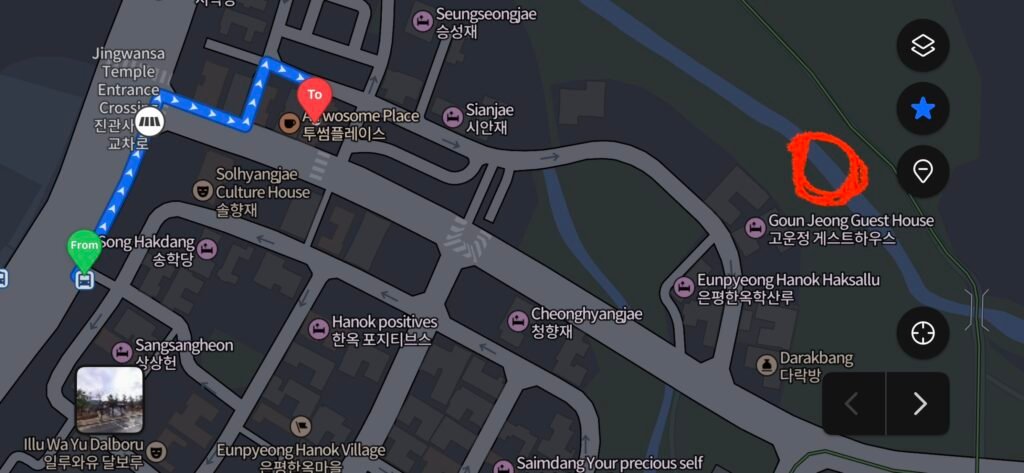
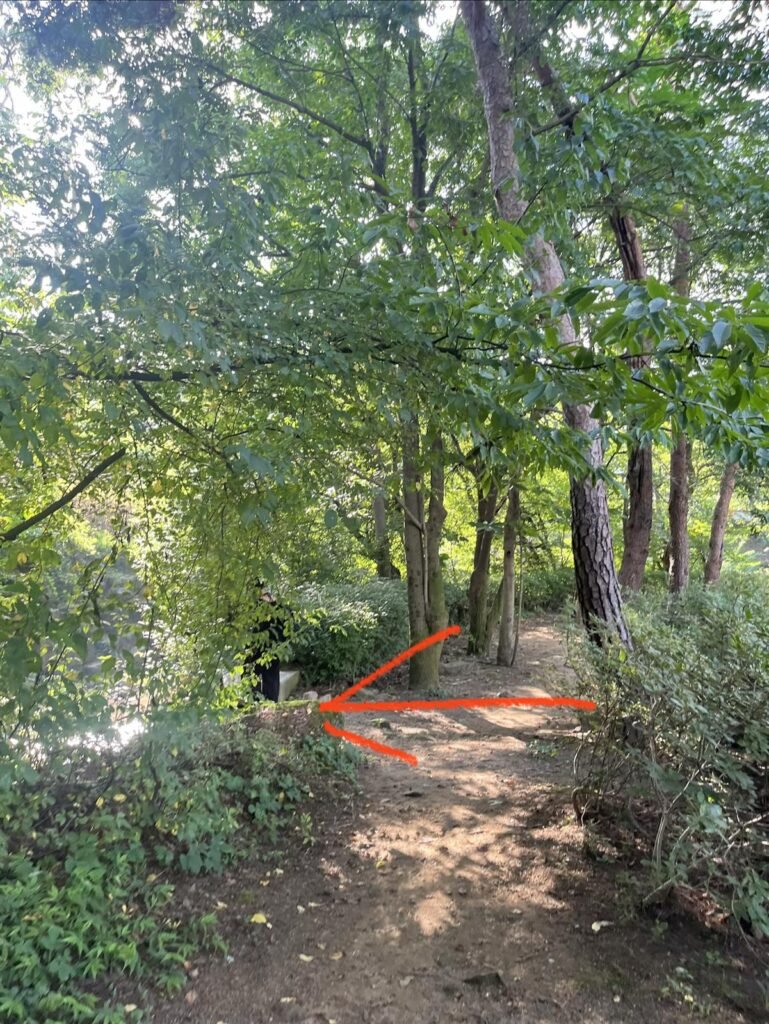
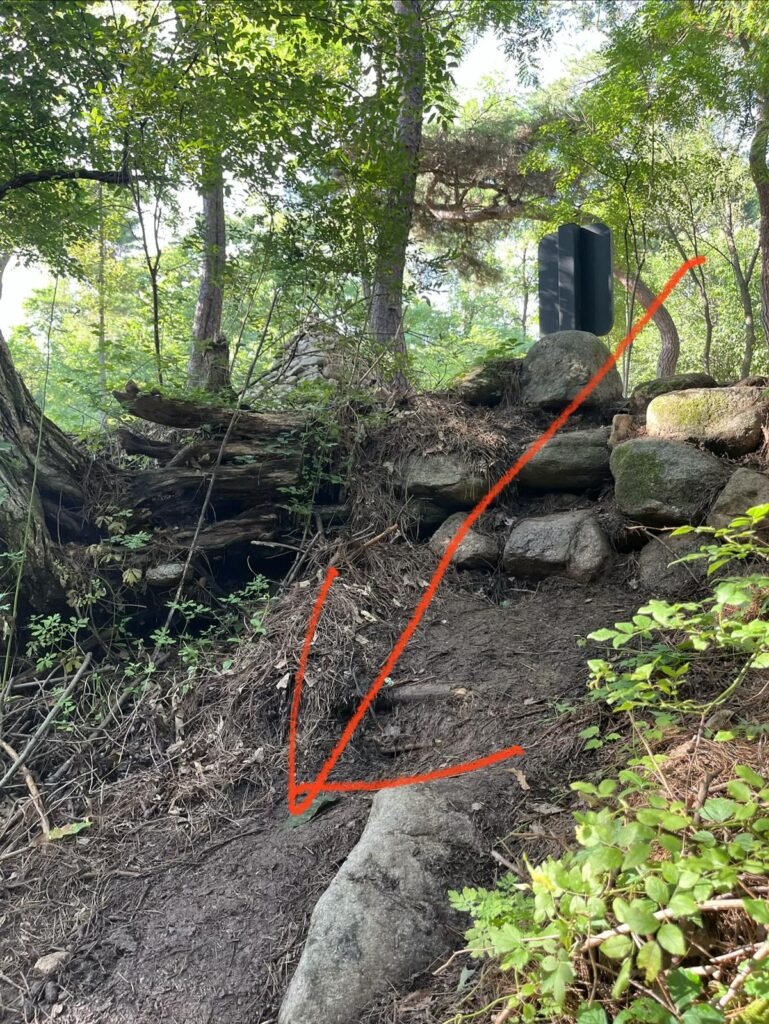
If you walk along the stream, you’ll see a fence running beside the trail — but keep going, and you’ll find the spot where the fence ends. That’s the saetgil (샛길) — a little side path that locals quietly use. From the bus stop, it’s about 12 minutes on foot, flat and easy.
An Hour by the Stream
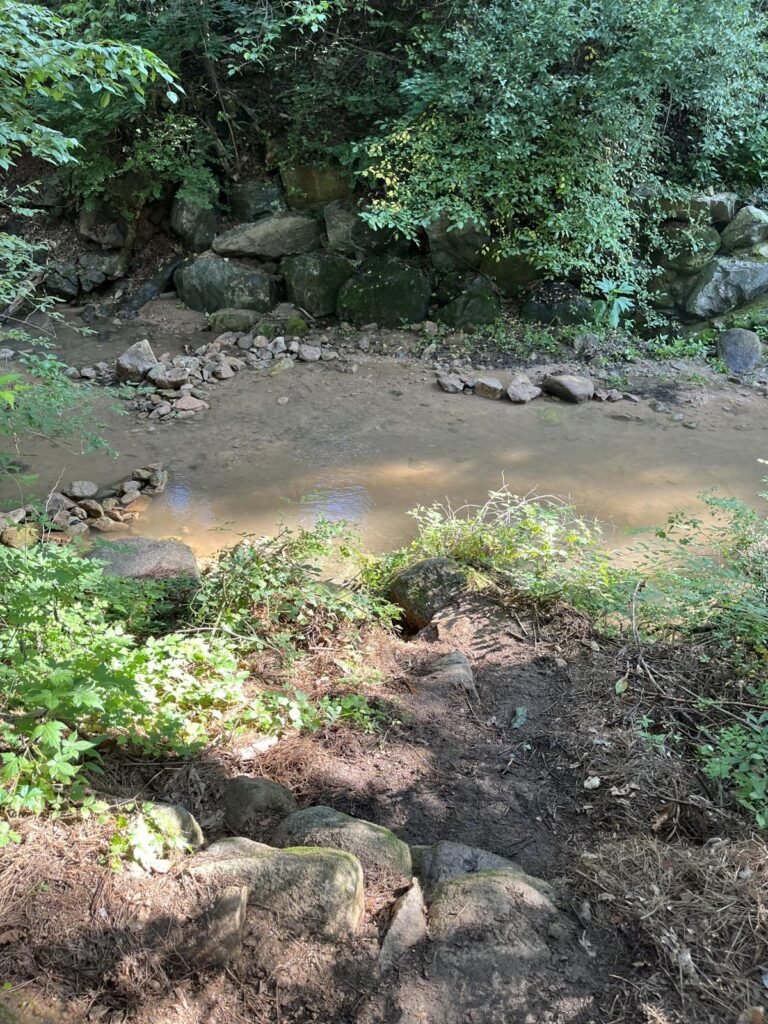
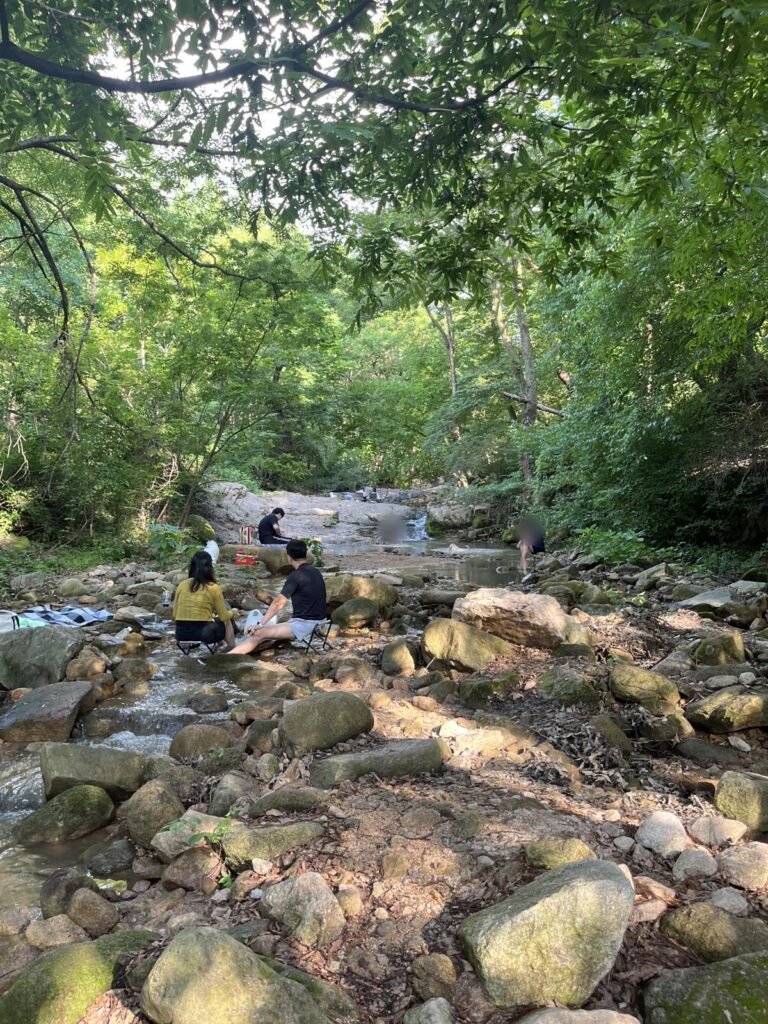
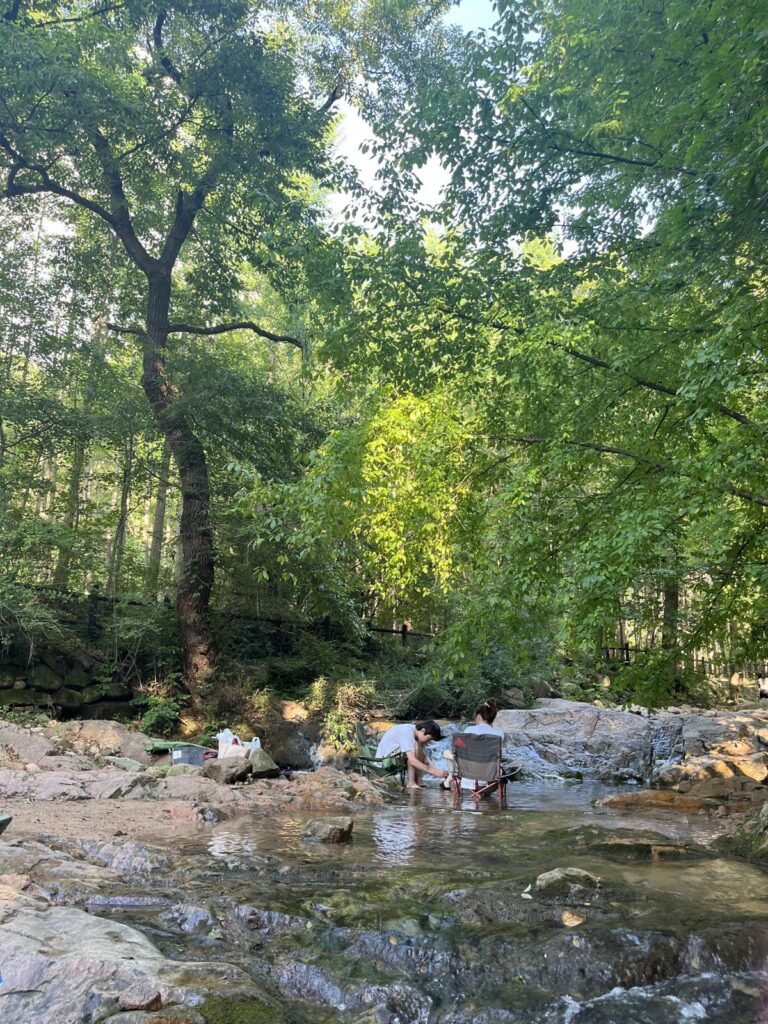
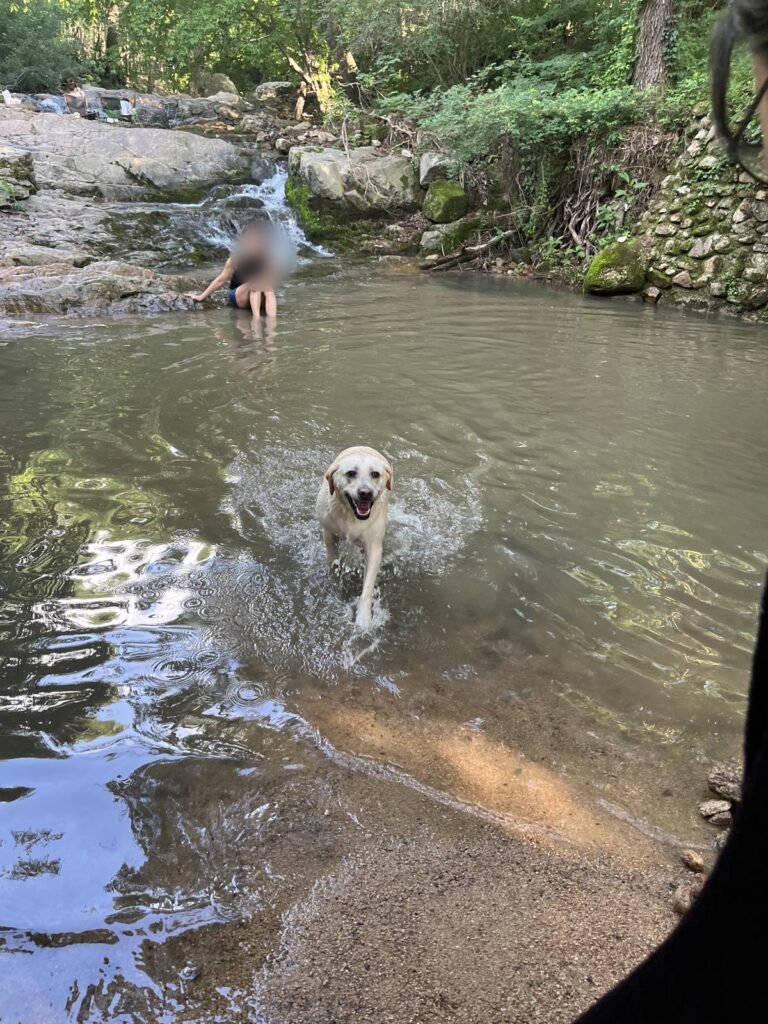
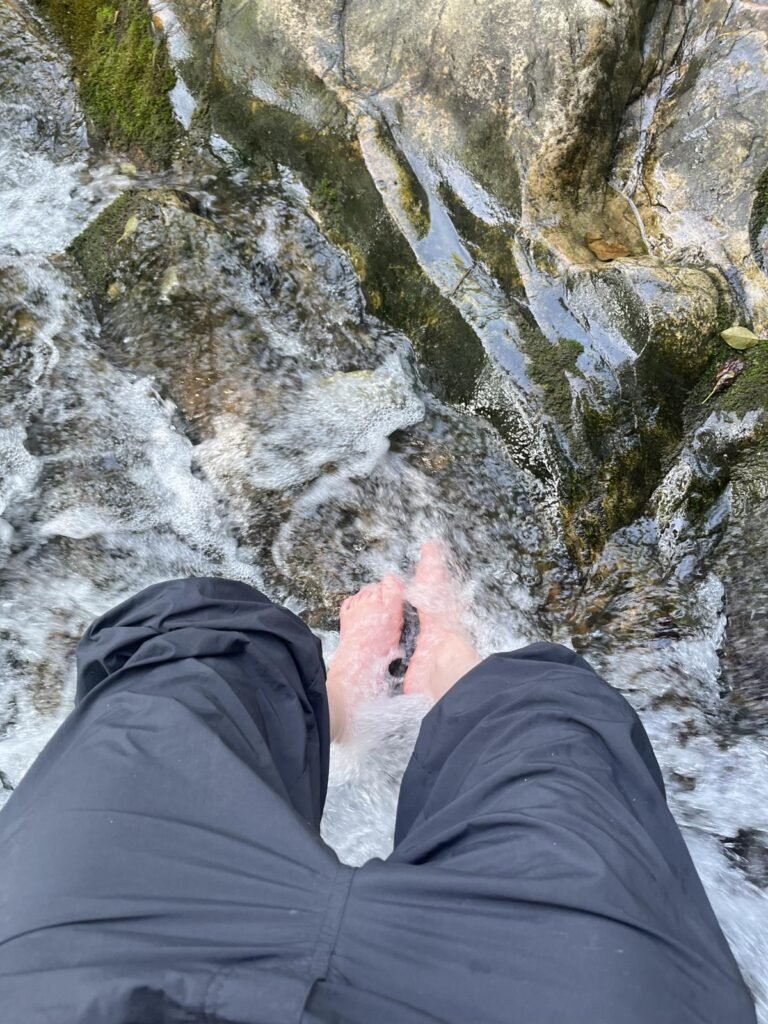
Around me, everyone had their own way of doing nothing: families with packed lunches on the flat rocks, a couple who brought camping chairs and set them in the water, dogs shaking themselves dry and jumping right back in. Nobody was in a hurry. I stayed about an hour, and it felt like the whole afternoon.
The Frogs Get It First
One thing you should know before you go: this valley belongs to the frogs until July.
Jingwansa Valley is part of the Jingwan Wildlife Protection Area, home to salamanders and the maenggongi (맹꽁이) — an endangered narrow-mouthed frog. Every year from February 20 to June 30, entry to the stream is restricted for their breeding season. The valley reopens on July 1st, just in time for the Korean summer. I kind of love that: Seoul closes a valley so the frogs can sing in peace.
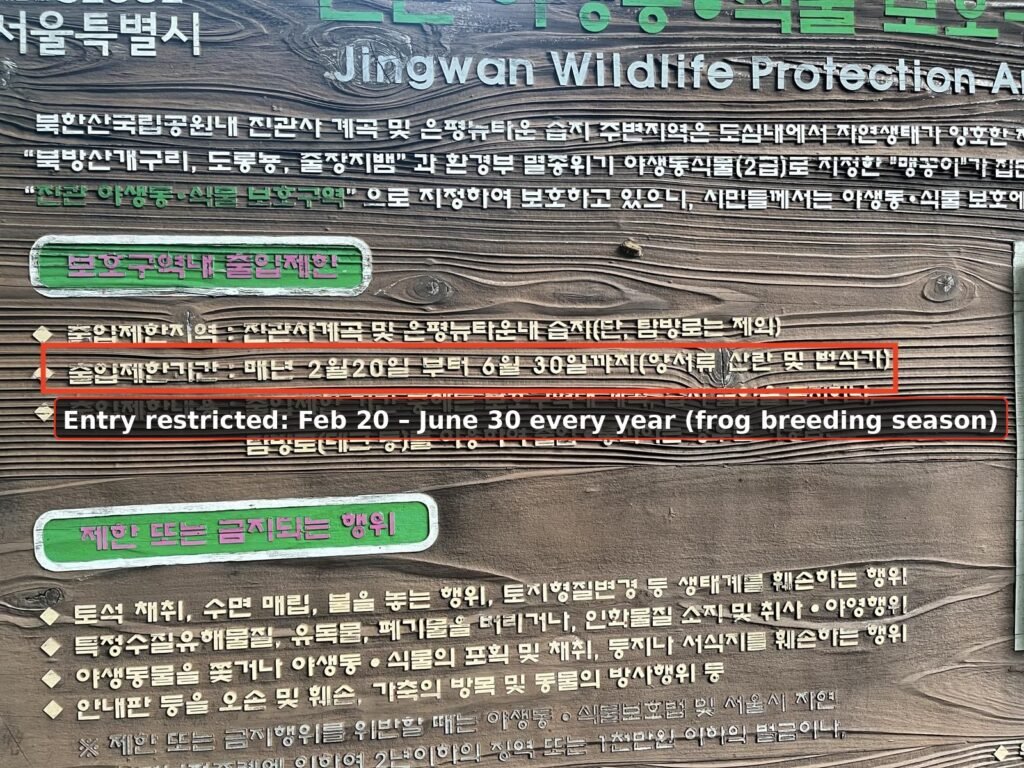
A few rules, year-round: no cooking or camping, no fires, take your trash with you, and leave the frogs alone. Simple manners for a place this good.
Quick Facts
– What: Jingwansa Valley (진관사 계곡) — a shallow stream for foot-dipping at the foot of Bukhansan
– Cost: Free. (Just take your trash with you — I hope we can hand this nature down to our sons and daughters.)
– When: July 1 – late summer (closed Feb 20 – Jun 30 for frog breeding season)
– Getting there: Bus 701 from downtown, or Line 3 to Gupabal + bus 7723 → “Hana high school, Samcheonsa, Jingwansa” stop → ~12 min walk
– Naver Map tip: copy-paste 진관사 계곡 (small places often don’t show up in English search — Korean works every time)
– Bring: sandals, a towel, snacks (or grab them at the CU near the bus stop)
– Nearby: Eunpyeong Hanok Village (은평한옥마을), and Jingwansa (진관사) — a temple famous for its Buddhist temple food
– Driving? There’s a public parking lot (한문화 공영주차장) right by the entrance — ₩100 per 5 minutes (about ₩1,200 an hour), capped at ₩13,000 a day.
If you always find your own little happinesses — like a stream at the foot of a mountain — Seoul has plenty more of them. More soon.
Leave a Reply