In my last post, I made you a promise.
I said that one day I’d pick the best mix coffee for you, and share my not-really-a-recipe. Today is that day.
If you’ve been to Korea, you’ve already met this thing. Korean coffee mix: that skinny foil stick sitting next to the hot water dispenser at a restaurant, a guesthouse lobby, your friend’s office. Free, always there, nobody makes a fuss about it. Most travelers walk right past it.
Don’t be one of them. Try one — that’s what it’s there for. And then, before you fly home, buy a box. Actually, buy a few: they cost about what a keychain costs, and they taste more like Korea than anything else in the souvenir shop.
What exactly is Korean coffee mix?
Korean coffee mix holds three things in one stick, already measured for you: instant coffee, creamer, and sugar. Tear off the top, pour it into hot water, and stir. That’s the whole ceremony. Thirty seconds, no barista, no machine.
And here’s the part I didn’t know until I wrote this post: Korea invented it.
In 1976, a Korean company called Dongsuh Foods put coffee, creamer, and sugar into a single package under the brand Maxim — the world’s first coffee mix.
So why is it everywhere? Because hot water is everywhere. That’s the only equipment it needs, which meant coffee could turn up in places a café never would: a construction site, a mountain shelter, a bank counter, a barracks. Mix coffee became the fuel of Korean work life, and it never left.
How much of it? Fifty years later, Dongsuh still holds about 88% of Korea’s instant coffee market — every other brand in the country is splitting what’s left. And Maxim Mocha Gold alone reportedly sells around 170 sticks every second. Not every minute. Every second.
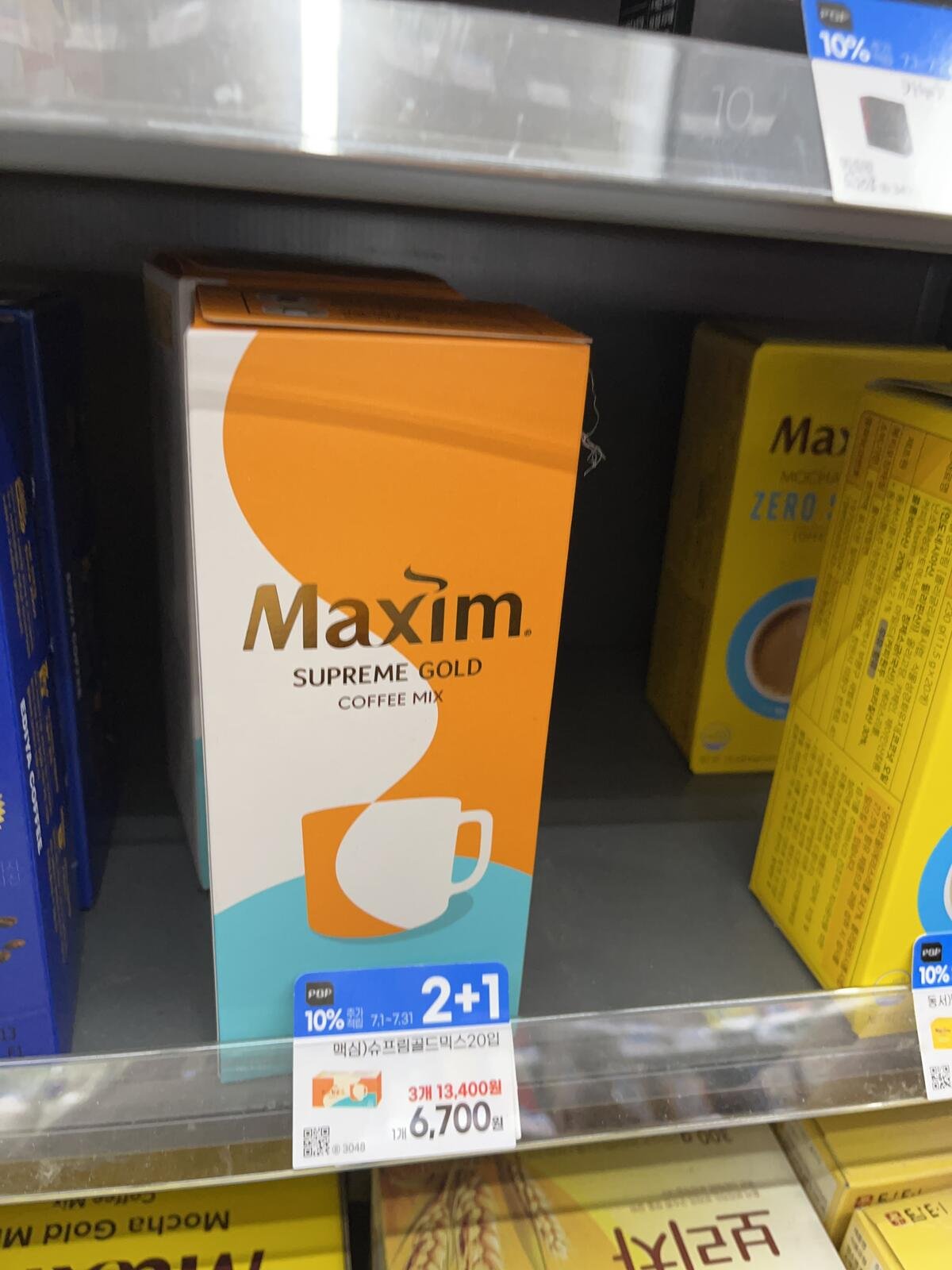
My pick: Maxim Supreme Gold
So… my pick is Maxim Supreme Gold. The reason is simple: it’s the expensive one.
In coffee mix, “expensive” means about 50 won a stick more than Mocha Gold, the standard one. Under four cents. It’s the cheapest way I know to feel rich, and I use it every day.
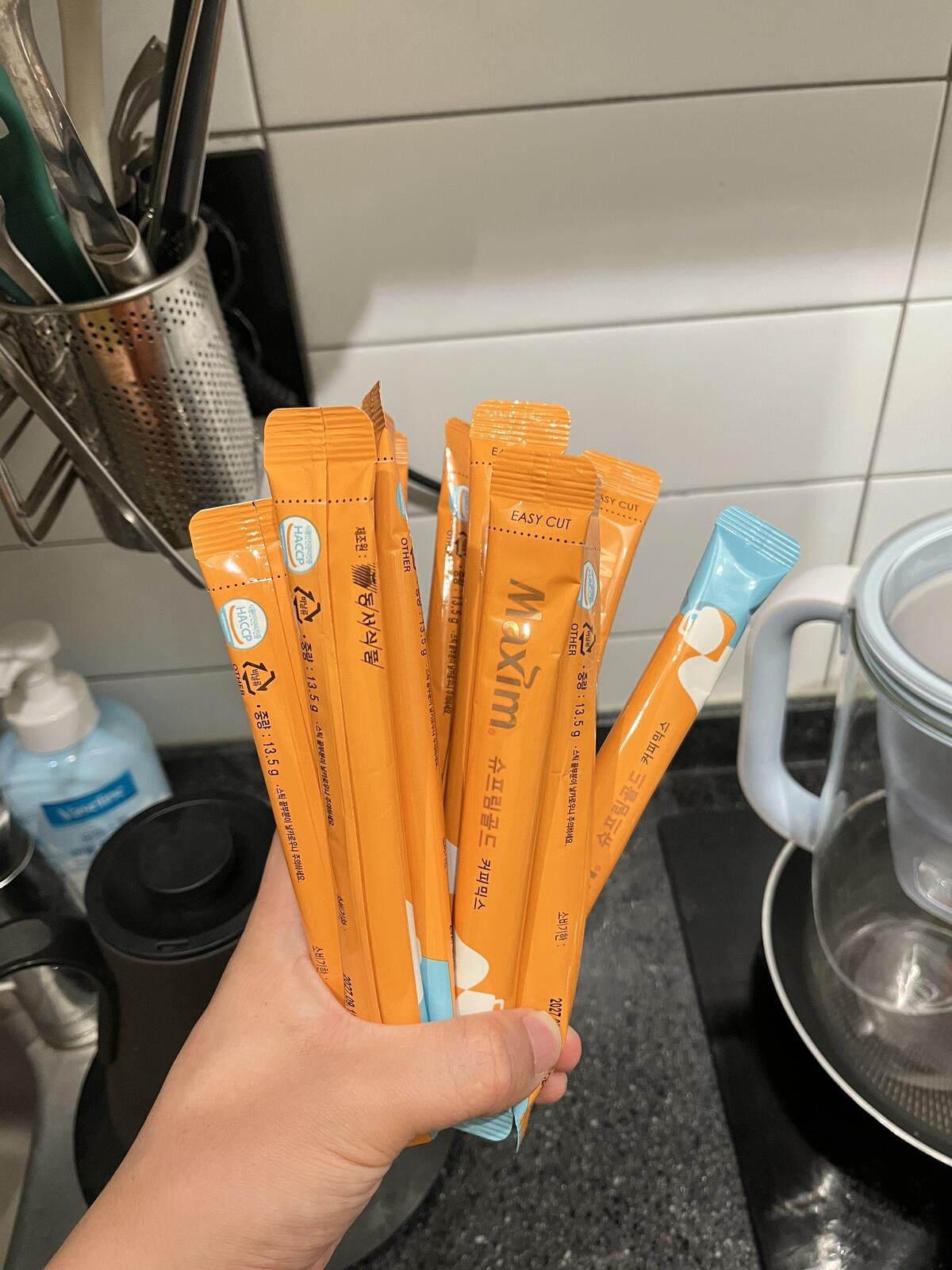
But I’d like to think it’s not only about the price. For me, coffee mix is really about the creamer — that milky body. I drink black coffee too, plenty of it, but this is a different pleasure entirely. So I want the creamiest one, and that’s this one. Dongsuh upgraded the creamer for this line, and you can see it on the label: 60 calories a stick against Mocha Gold’s 50, in a 13.5g stick instead of 12g. That gap is the creaminess. White Gold goes the other way, swapping the creamer for skim milk powder, so it comes out lighter and cleaner. Lighter is fine, but I want creamy.
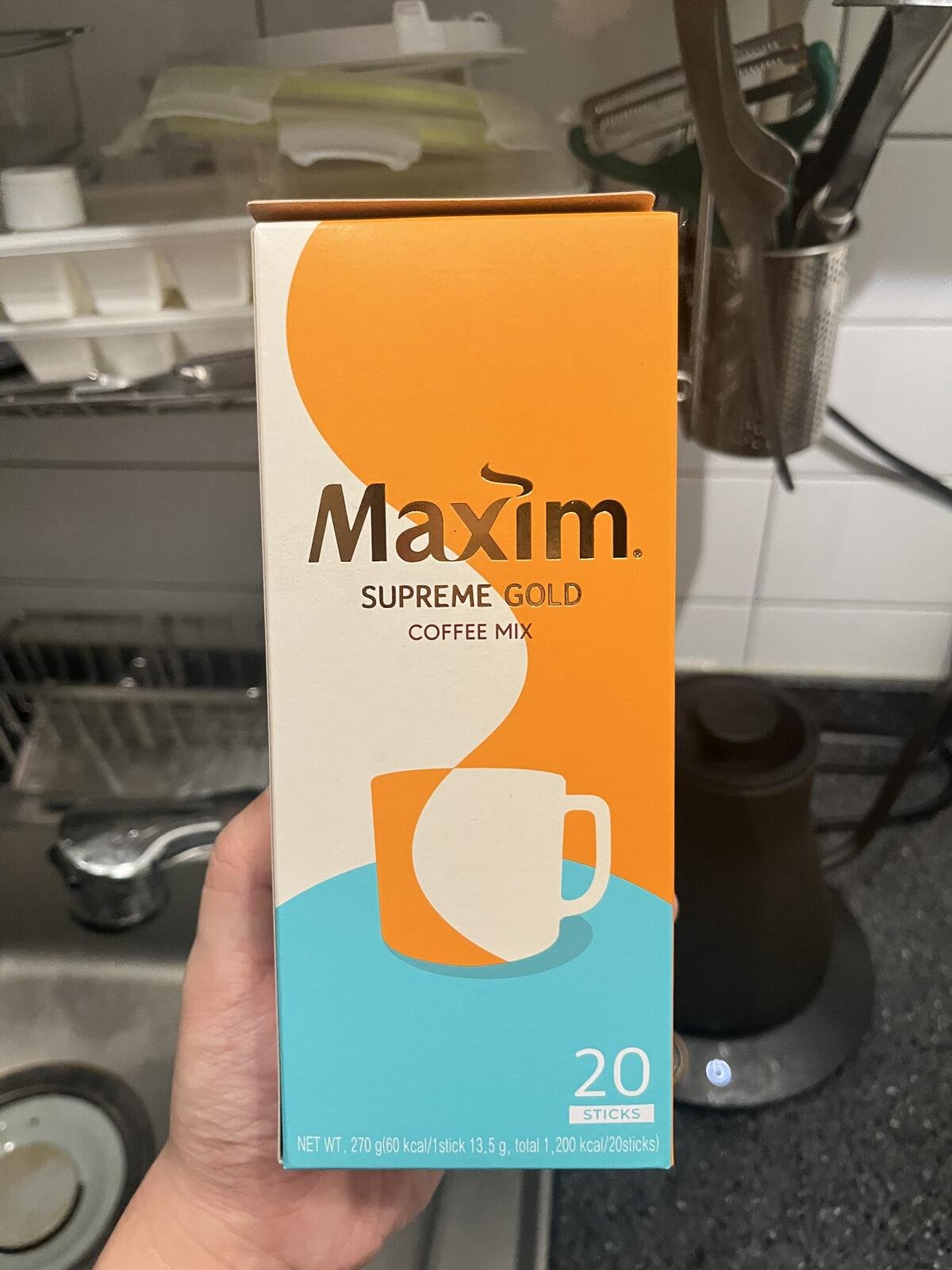
The box helps too. Clean lines, a little cup on the front, GOLD printed right under the name — it looks more expensive than it is. That’s ideal gift math. And the 20-stick size fits into a corner of your suitcase, which matters when you’re bringing one back for each coworker.
My not-really-a-recipe
Here it is, the recipe I promised: use milk instead of water.
That’s the whole thing. I told you it wasn’t really a recipe.
But I can tell you where I learned it. Every Korean man does his military service, and mine came with a 200ml carton of milk every morning. Milk is fine. What I wanted was a latte. There was no café, no chance — but the admin office had a box of coffee mix, because every room in Korea has a box of coffee mix.
So one morning I tore open two sticks, poured them into the milk carton, folded the top shut, and shook it as hard as I could.
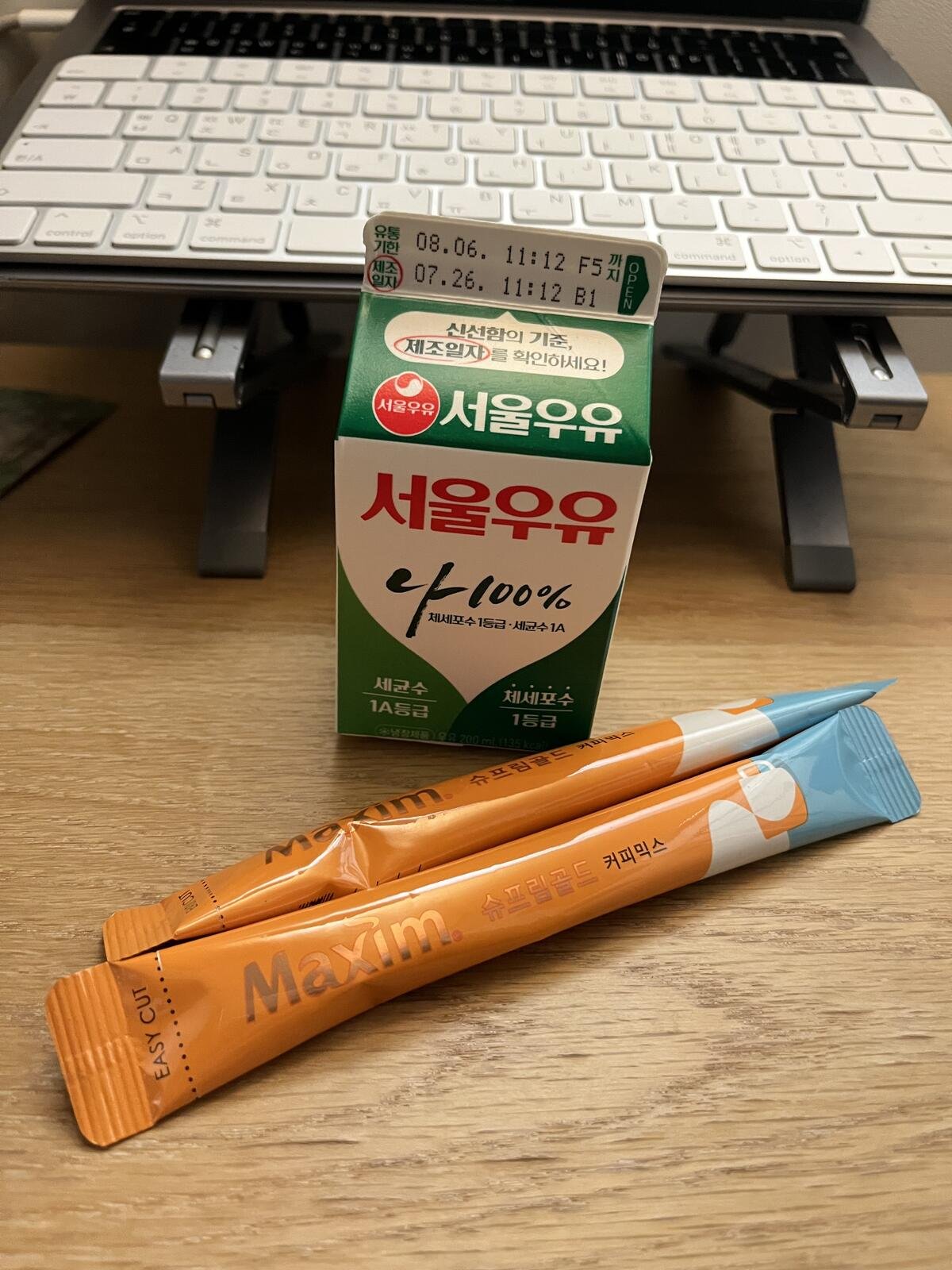
I expected lumps. Cold milk, powdered coffee — it had no business working. It dissolved. And it was good: sweet, thick, cold, closer to a dessert than to coffee. That carton became my morning for the rest of my service.
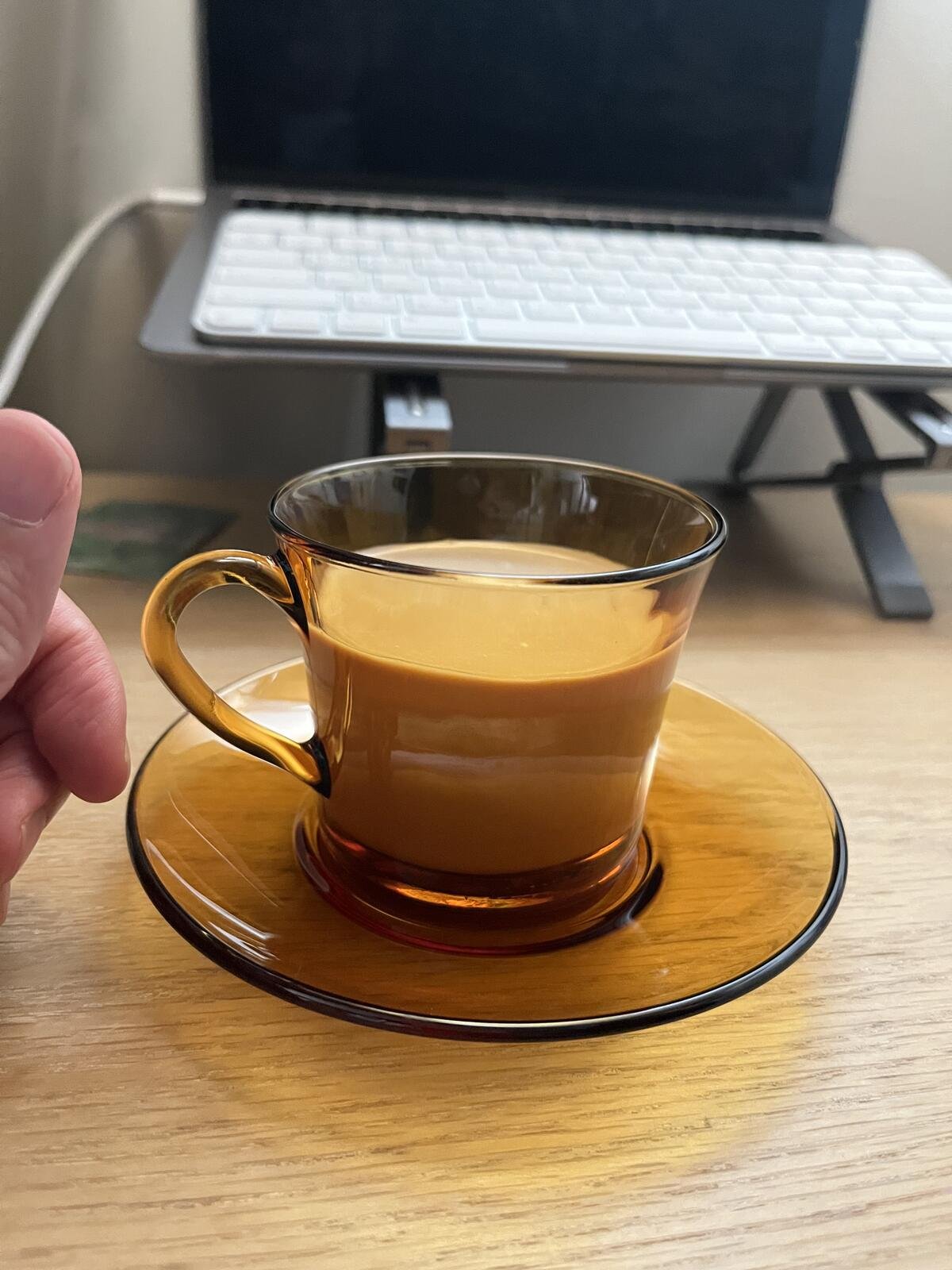
Years later I make it like a normal adult, in a cup: a splash of hot water first to melt the powder, then cold milk on top. Less milk than the carton version — I don’t measure it, I just pour until it looks strong. Strong is what I’m after in the morning. And no ice, ever. Ice waters it down, and thick is the entire point.
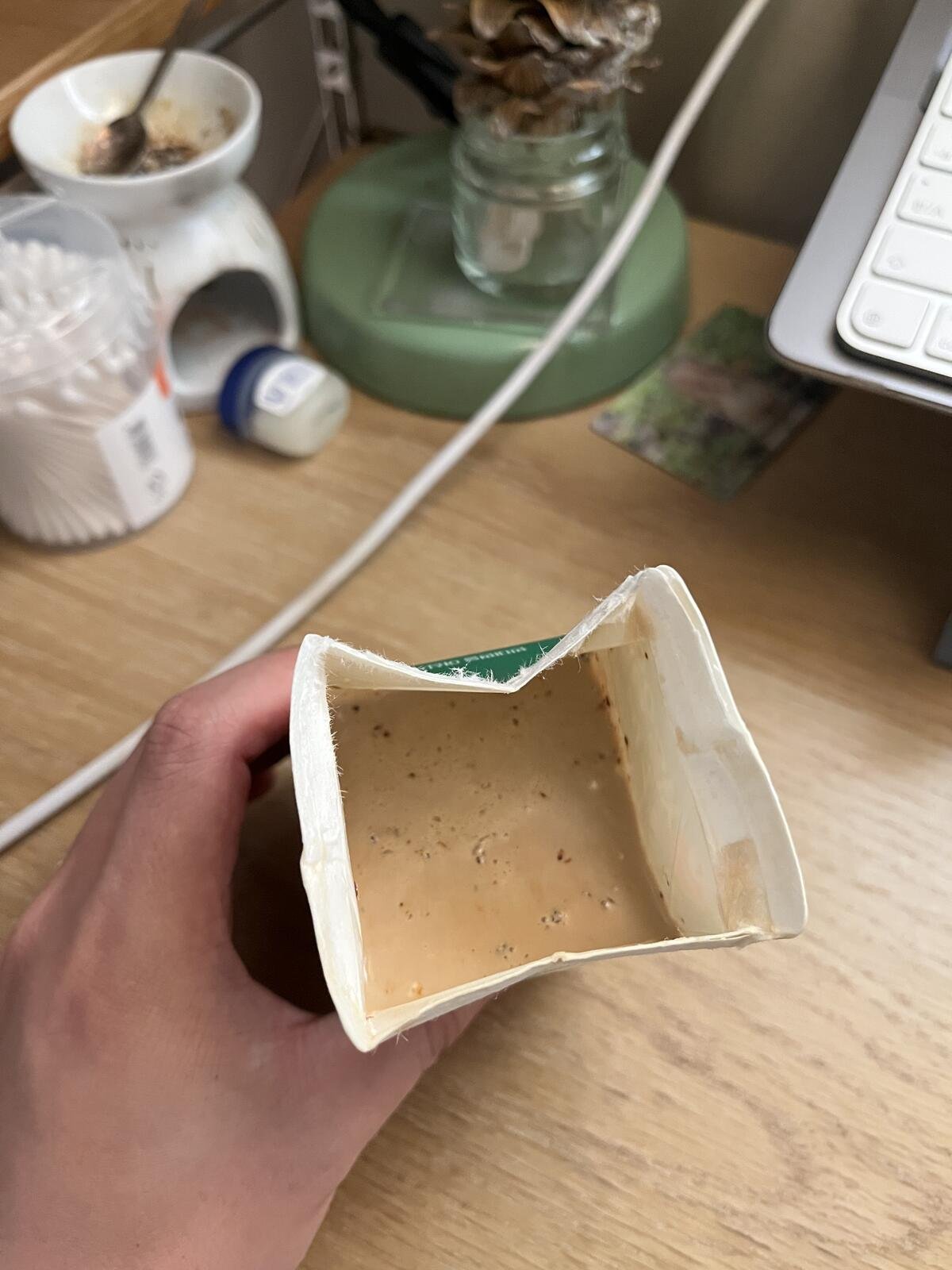
Then, writing this post, I went back and made it the old way — two sticks straight into a 200ml carton, shake. It was better. I think it’s the water. Even that little splash thins it out, and the carton version has nothing in it but milk and coffee mix.
So do it the way I did it in my early twenties, with no kitchen and no other options. 200ml of milk, two sticks, and shake it longer than feels necessary. No ice.
Buying it
You don’t have to hunt for this. Walk into any supermarket in Korea — a big one, a neighborhood one, the small one under your hotel — and it will be there, usually a whole shelf of it.
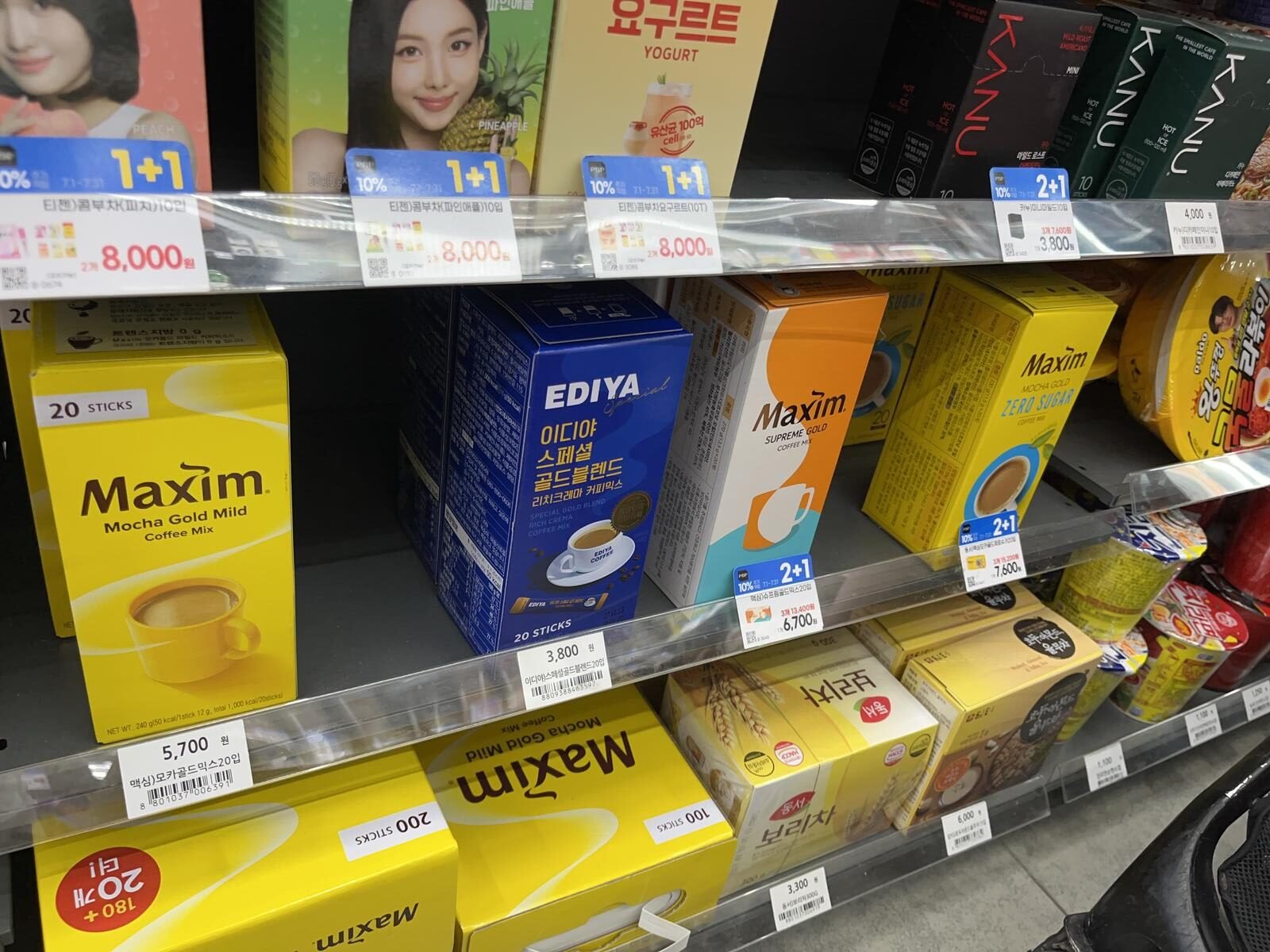
Get the 20-stick box, the one in the photos above. It’s the size that works as a gift: light, flat, cheap enough to buy five of them, and it doesn’t look cheap when you hand it over. Around 6,000–7,000 won depending on the store, so four or five dollars. Buy one more than you need — the last one is for you.
And it’s a good thing to fly with. Nothing to break, nothing to leak, nothing a customs officer will look at twice. And whoever you give it to will get more out of it than they would from the keychain you were about to buy instead.
Leave a Reply