I’ve been buying waffles from Waffle University (와플대학, Waffle Daehak) since I was a university student. Not every week. Every now and then. Lately it’s been more often, because there’s one near my place in Itaewon.
It started on the street
When I was a kid, there was always a waffle stall at festivals. I don’t know why they looked so good to me. They just did. They looked crisp, and the shape was pretty. In my memory, the people selling them always talked in sign language.
I only found this out while writing this post: Waffle University started on the street too. The founder, Son Jeong-hee, had been scammed and was down to her last 300,000 won. She put it into a street cart in Sinchon (신촌), a neighborhood full of universities, and sold bungeoppang (붕어빵), the fish-shaped pastry. When the season changed, she switched to waffles, and her twelve kinds of cream became a hit.
The name came from the students. Twelve creams, they said, were like a university’s departments. So it became Waffle University, and around Sinchon it got known as the neighborhood’s fourth university, after Yonsei, Ewha and Sogang.
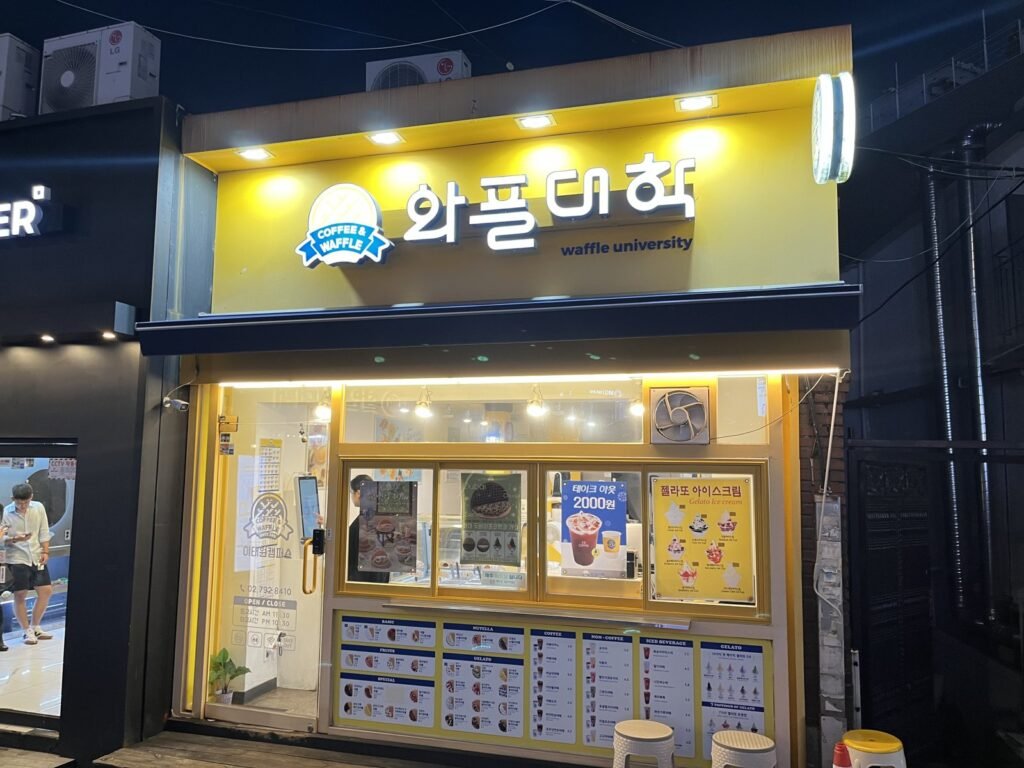
That’s why the sign says waffle university, and why every branch is called a campus. There are more than 350 in Korea now, and there’s even one in Las Vegas. The one near me is the Itaewon Campus. These days I order inside, at a kiosk. But I still eat mine on the street, because somehow it tastes better out there.
What I order
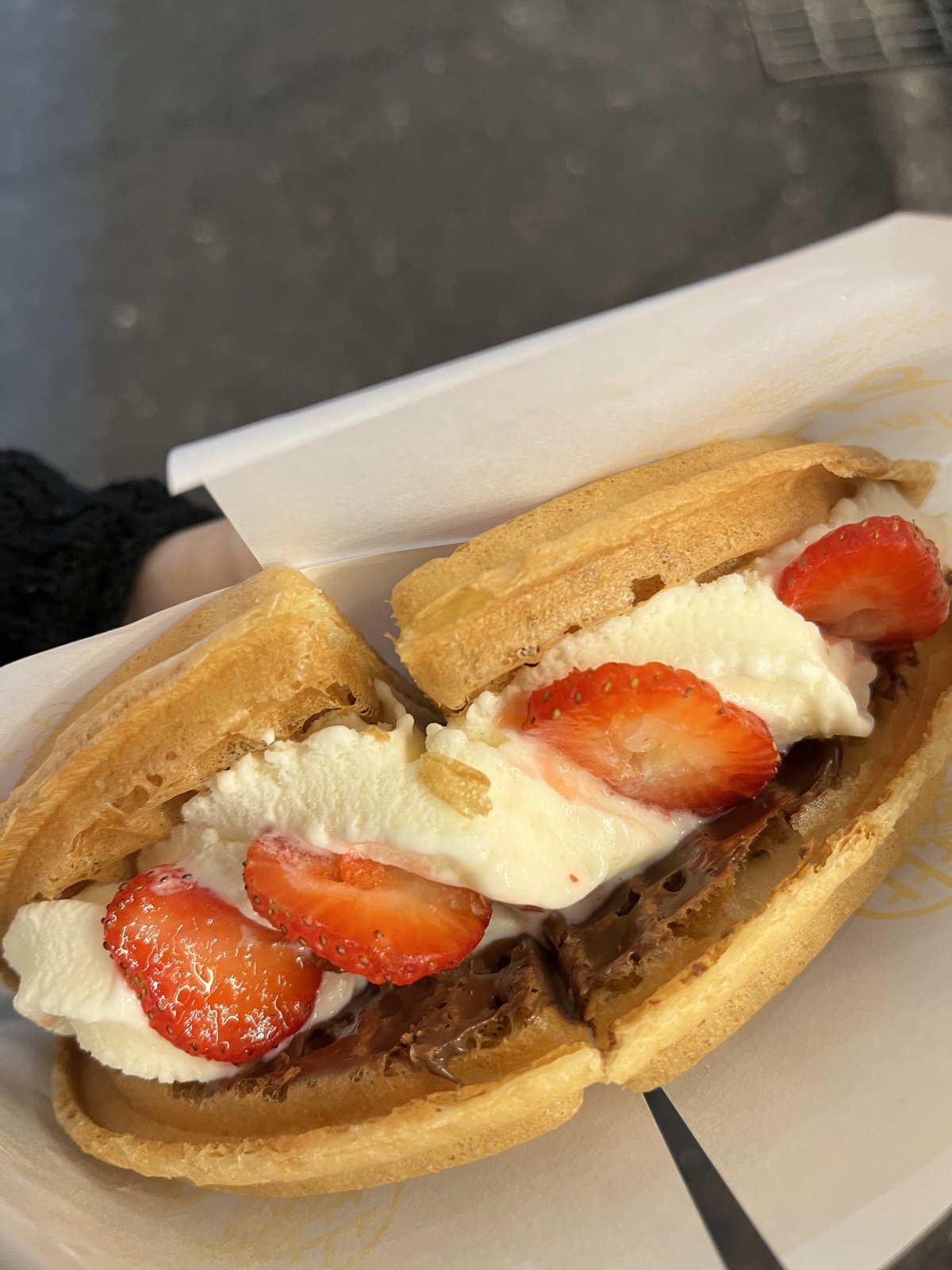
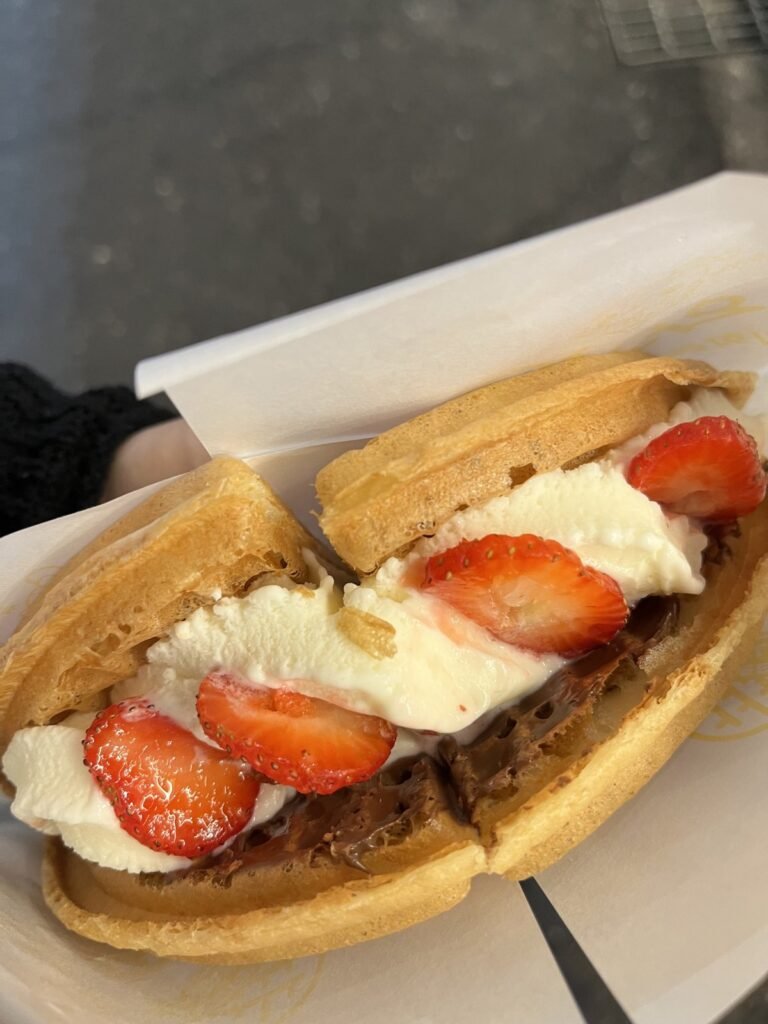
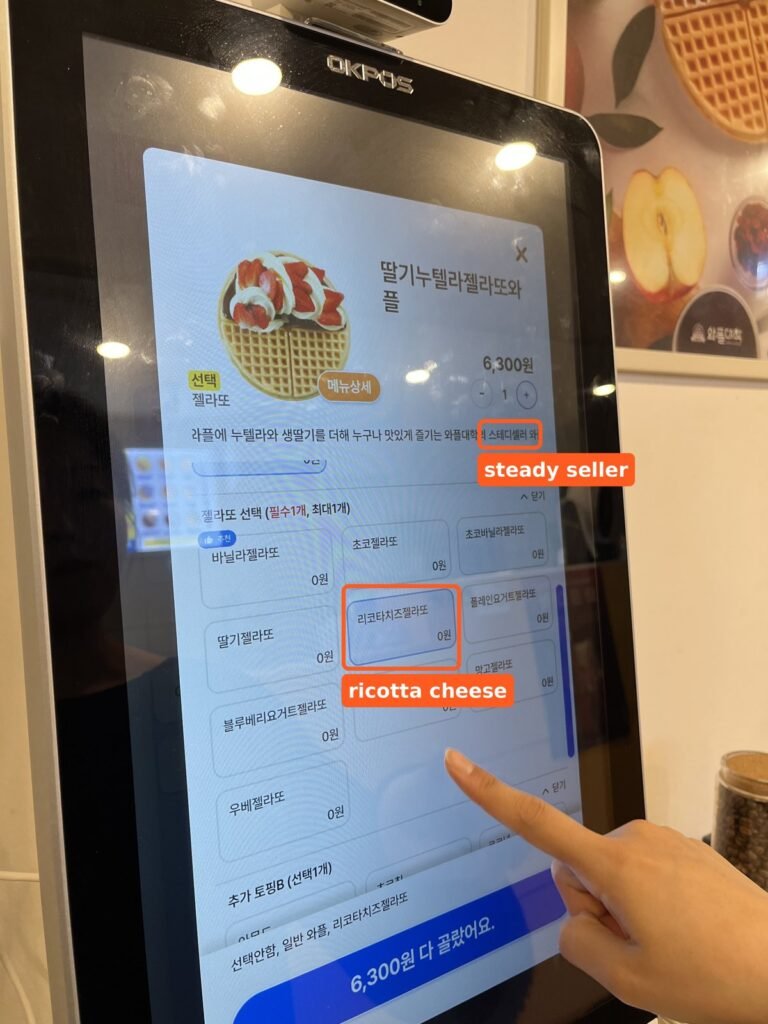
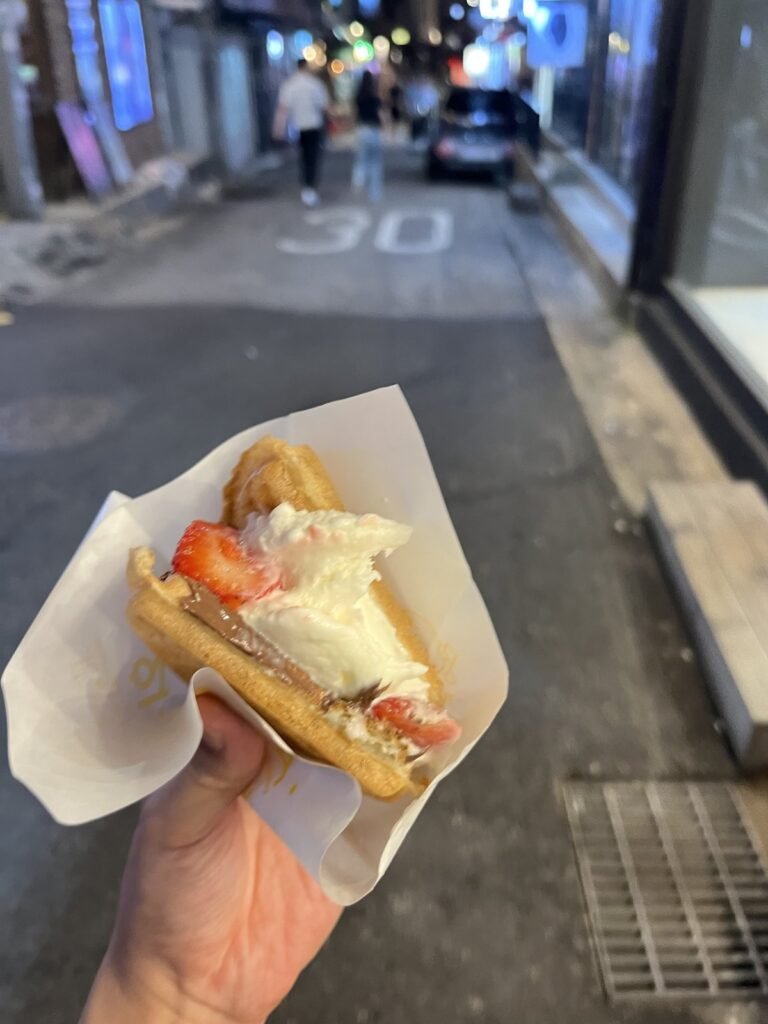
The strawberry Nutella gelato waffle (딸기누텔라젤라또와플), 6,300 won. Nutella, strawberries and a scoop of gelato, folded inside. The kiosk calls it the shop’s “steady seller.”
You pick the gelato. The Itaewon kiosk lists ten flavors, and none of them cost extra. I go with ricotta cheese. Why? It just looked like it would be the best one.
That’s my order, not a rule. There are a lot of ways to put one together, so build it the way you like.
How it tastes
The waffle is crisp on the outside and soft on the inside.
When I eat ice cream, I usually get it in a cone, because I like the two together.
There’s a popular story about where the cone came from. At the 1904 World’s Fair in St. Louis, an ice cream stand ran out of dishes, and the waffle stand next door rolled up waffles to hold the ice cream. Historians say cones existed before that, but the fair is where they caught on.
In that story, the cone is a rolled-up waffle. This one skips the rolling, and that’s what makes it better: you get the crunch of a cone, and under it a soft layer that soaks up the gelato.
Then the Nutella. It’s hard to make chocolate spread taste bad, and it keeps a pleasant sweetness going right to the last bite. The strawberries bring just enough sourness to balance it out. That’s why I can’t stop.
Split it
It’s a lot of waffle. I usually share one with a friend. There’s no option for this on the kiosk, so when they hand it over, just ask them to cut it in half:
반으로 잘라주세요 (ban-euro jalla-juseyo) — “Please cut it in half.”
Halved, it’s just right for two. Right after a meal, a whole one can be a lot.
Why it’s worth your time
Banana milk (바나나우유) and Viyott (비요뜨) are on a lot of visitors’ convenience-store lists. By local standards, this is a step above both.
Korea has a lot of great cafés and desserts. On a trip, most people go for the best and most expensive ones. You’re here, so why not.
This isn’t that. It’s something I’ve been eating since university. Now that I work and earn my own money, I’ve had the expensive desserts too. Honestly, not many of them beat this. They all have their own charm, of course. But if I may say so, I think this is the peak of Korean dessert.
No decoration, just what needs to be there. And the price is just as honest.
It’s cheap, it’s a chain, and it’s a safe bet.
Before you go
You don’t need to come to Itaewon for it. It’s a chain, so whichever campus is near where you’re staying should be just as good. Search 와플대학 on a map app. Days off differ from campus to campus, so check the one you want before you go.
If you’re in Itaewon anyway, here’s mine.
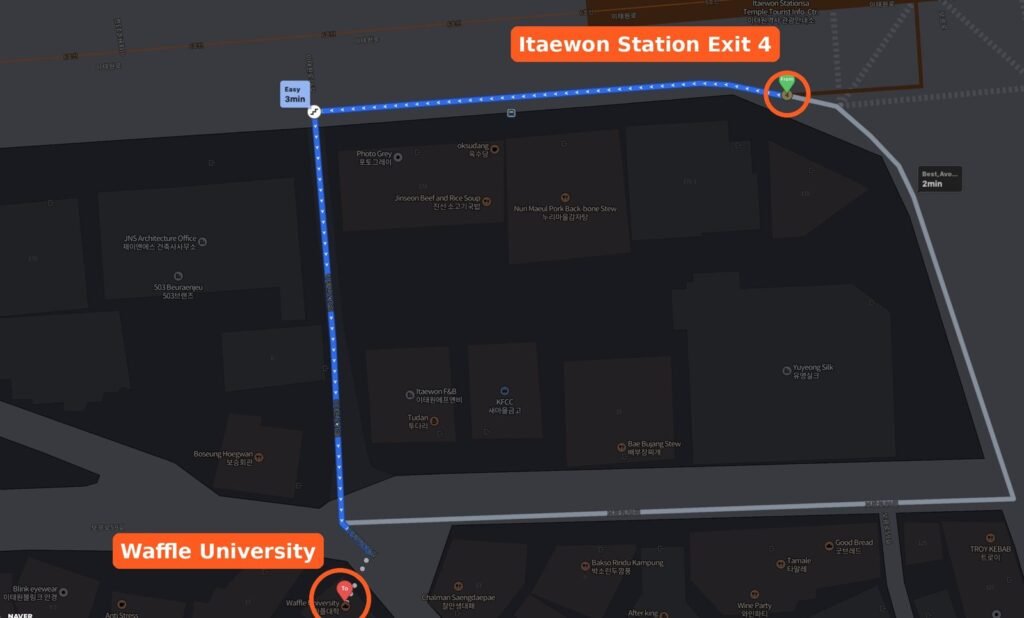
Waffle University Itaewon Campus (와플대학 이태원캠퍼스) 1F, 12 Itaewon-ro 26-gil, Yongsan-gu, Seoul (서울 용산구 이태원로26길 12 1층) Itaewon Station (Line 6), Exit 4, about a 3-minute walk 12:00–22:30
The kiosk speaks English. There’s a language tab at the top: English, Chinese and Japanese.
I ordered delivery from Jeonggane Seokswoe Bulgogi (정가네석쇠불고기) five times before I went to see what had been feeding me.
The second half of that name is the dish, and it isn’t one Koreans eat often. Seokswoe bulgogi (석쇠불고기) isn’t expensive. It’s just cooked in an unusual way, so most of us have only eaten it on a day out somewhere. A small treat, not a luxury.
What seokswoe bulgogi is
If you’ve had bulgogi before, it was probably beef — thin, sweet-marinated, cooked with enough broth that it came out closer to a stew than a grill.
The bulgogi here is pork, not beef — worth knowing if you don’t eat pork.
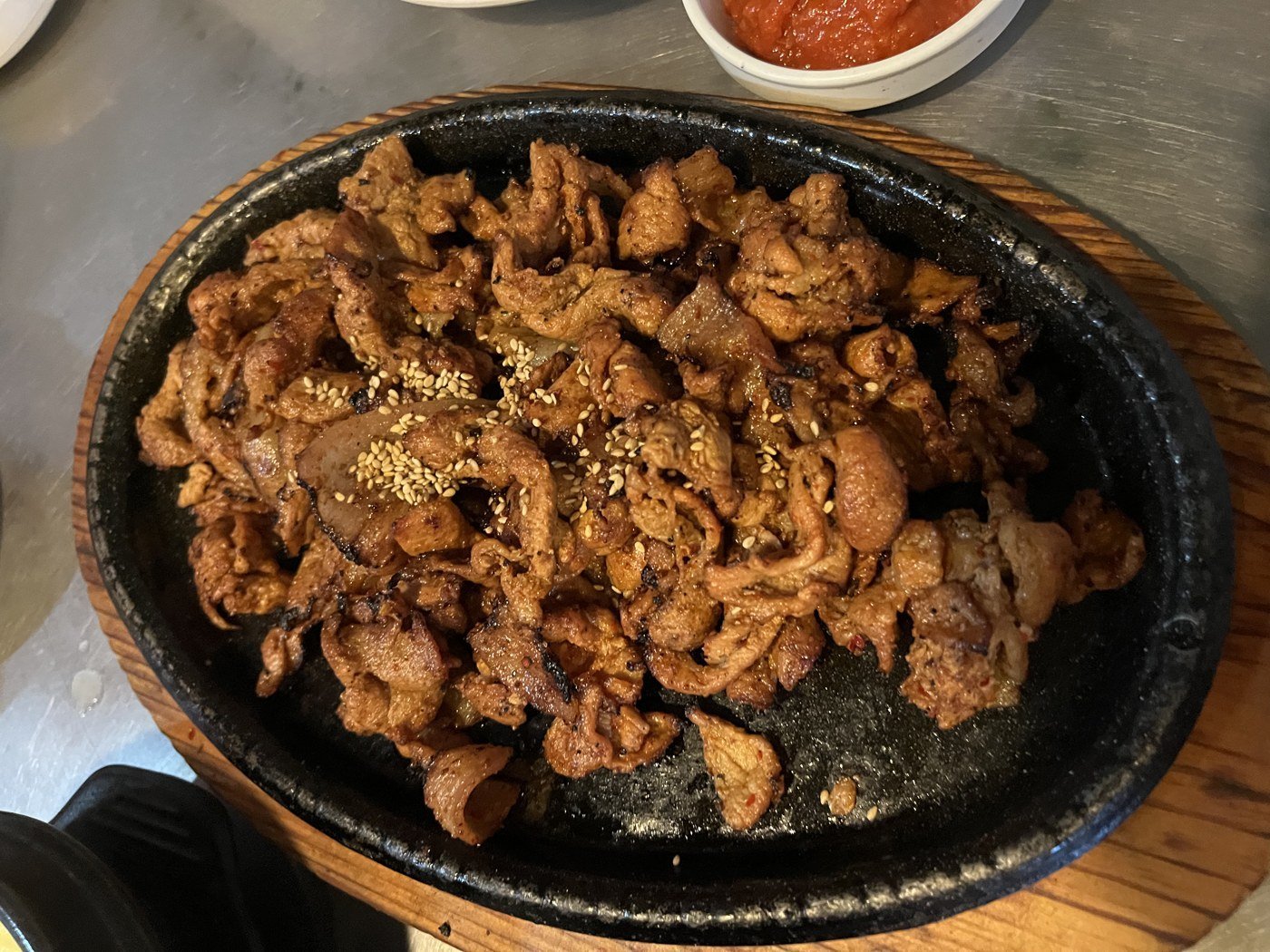
Seokswoe is the Korean word for a gridiron, and the word has iron in it: soe (쇠) means iron. That’s all the thing is — iron bars crossed into a grid, set over open flame. Seokswoe bulgogi is bulgogi cooked on one, and that change makes it a different dish. There’s no pan and no broth, so nothing pools and nothing stays wet. What you get instead is the taste of smoke, right down in the meat.
The side dishes
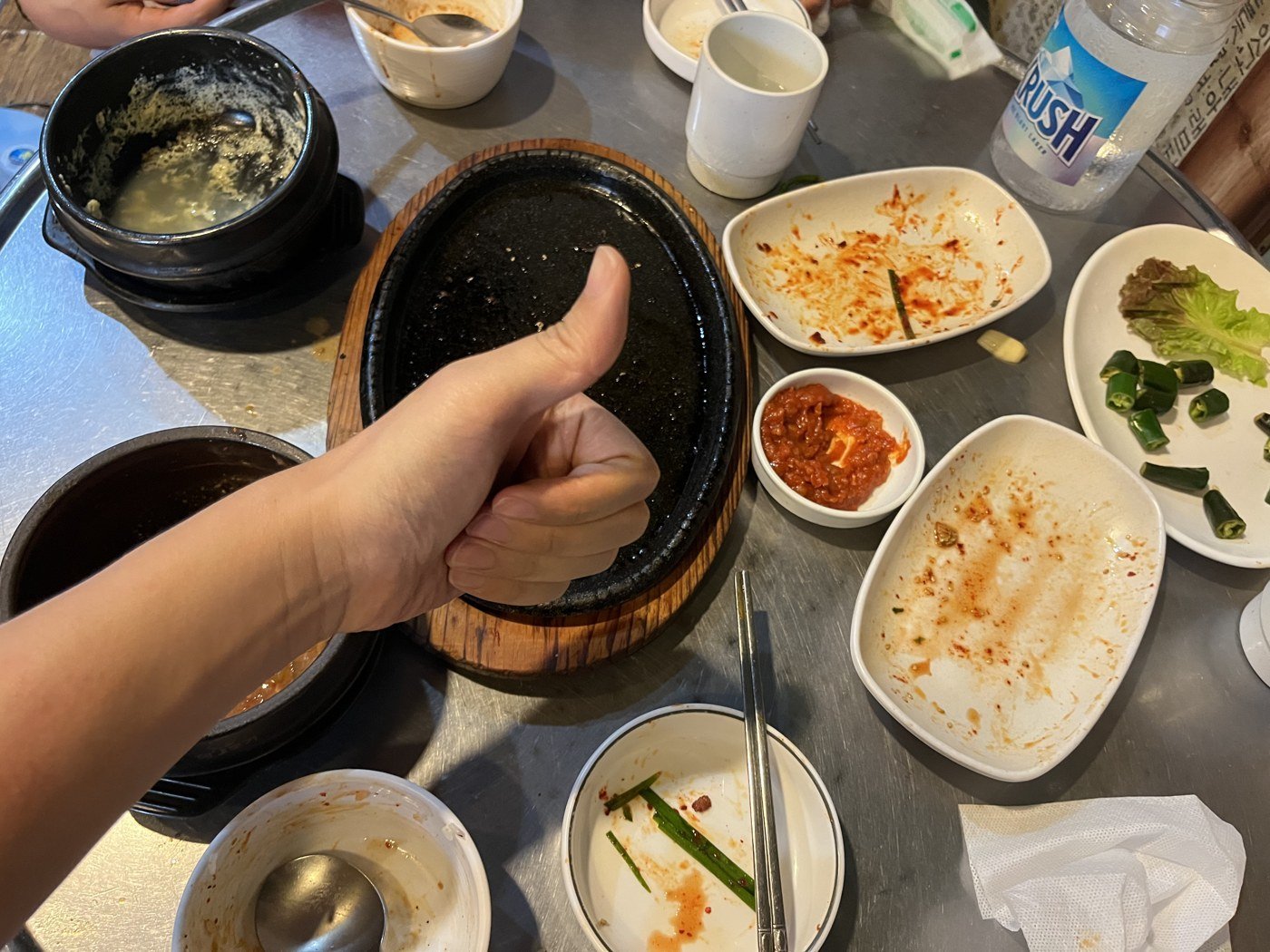
Plenty of restaurants send out a main good enough that you clear the plate. Here I clear everything else too.
None of it is decoration.
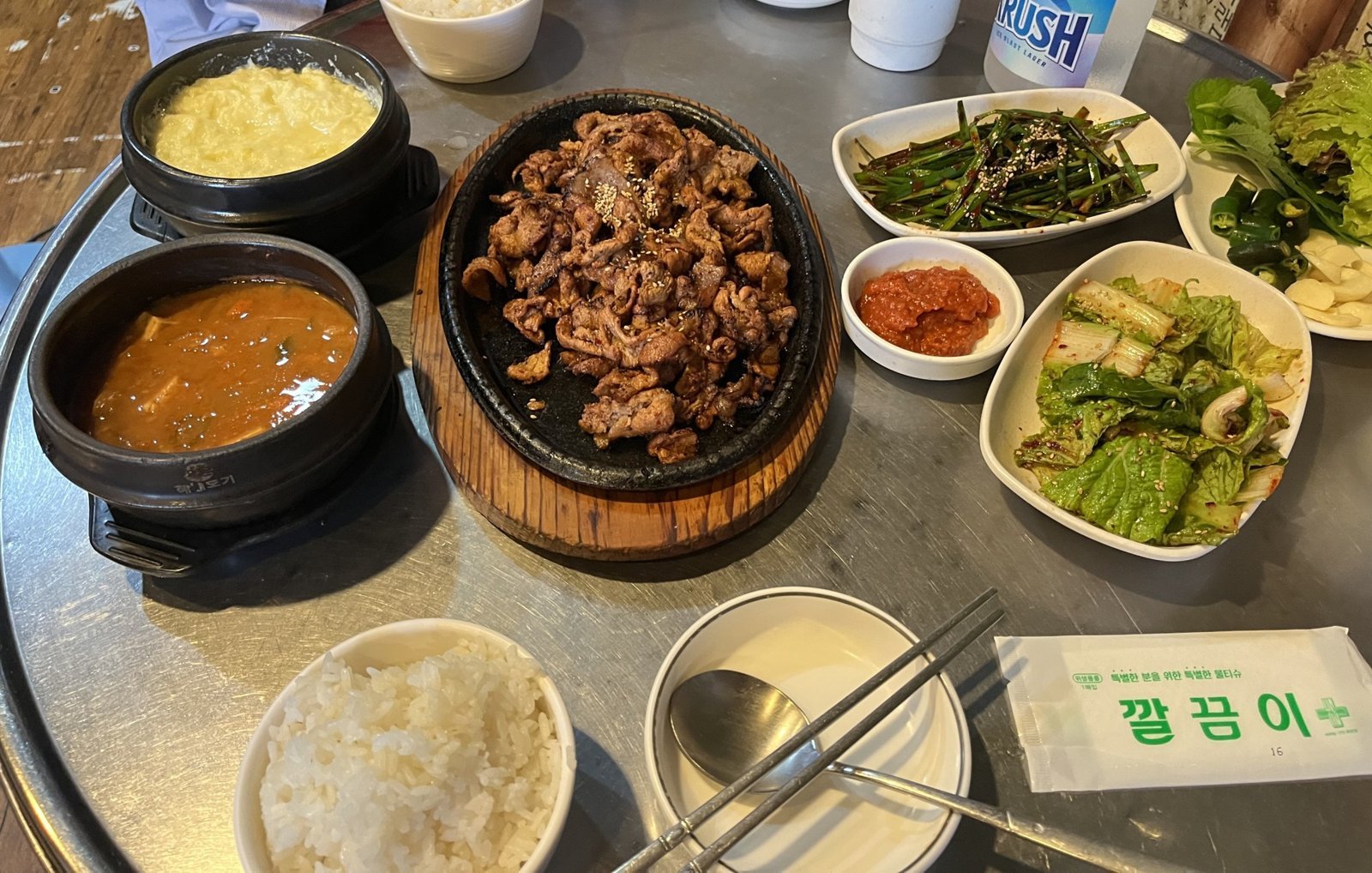
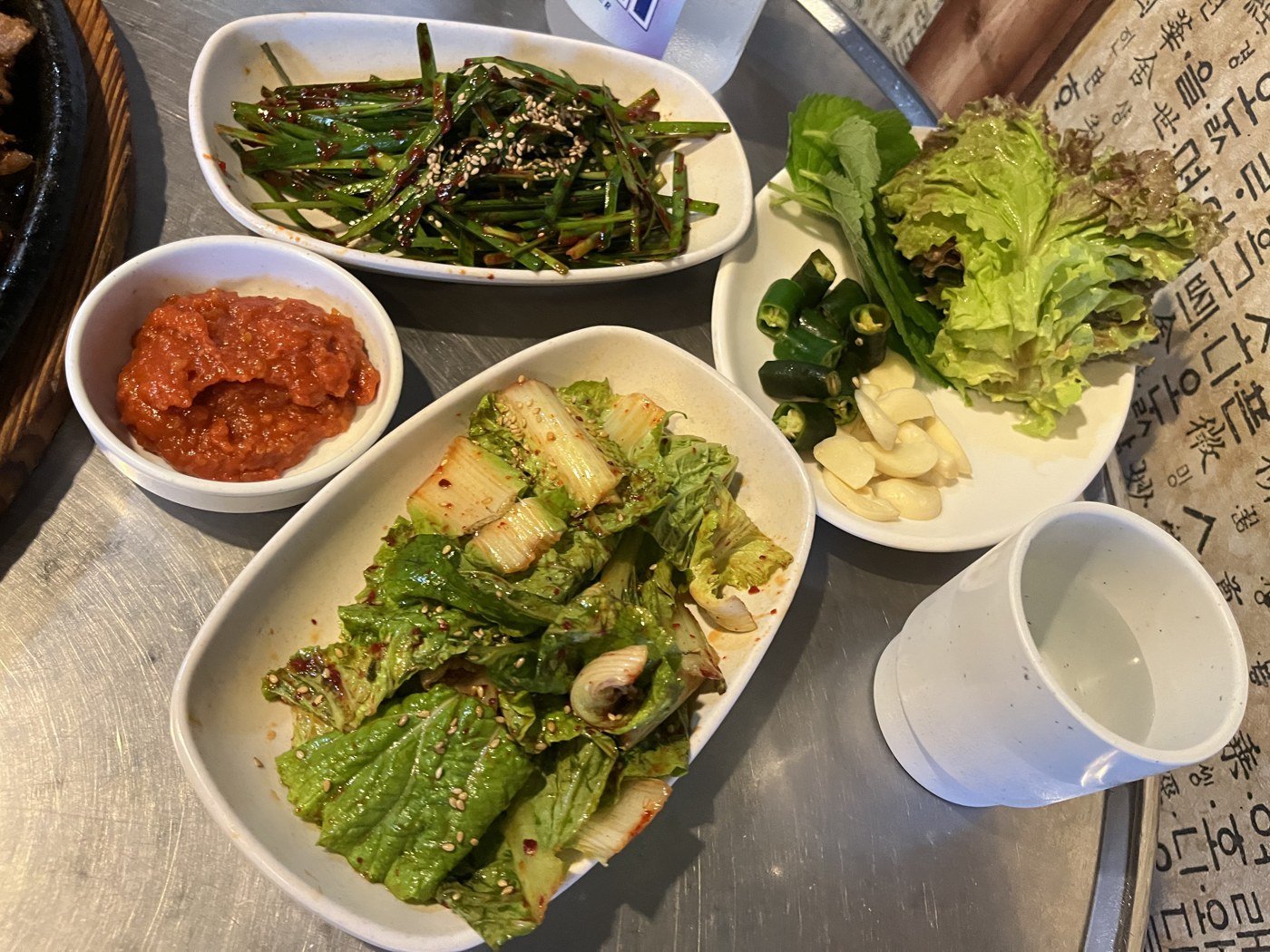
The one I’d come back for on its own is geotjeori (겉절이) — a kind of kimchi whose name is also its method: salted only on the surface. The leaves are dressed and served the same day rather than left to ferment, so it comes to the table still crisp and bright. The greens change through the year. In winter it’s bomdong, sweeter than ordinary cabbage. Other months it’s eolgari, a young cabbage that stays tender even as it grows. Whichever it is, I couldn’t taste much difference at the table. Both were good.
The dressing is soy and vinegar, sesame oil and sesame seeds, and just enough chili powder to keep it clean rather than hot.
I should tell you my bias. If there’s meat on the table, I’ll always reach for the sharp green thing next to it — scallion salad, pickled wild garlic leaves, that family. I’ve eaten a lot of them.
I’d never had geotjeori like this anywhere else. Now I want it at every meat restaurant I go to.
Then buchu-muchim (부추무침) — seasoned garlic chives. If you eat pork in Korea you’ll see it often: in the dumpling filling, next to a bowl of pork soup, and here. I grew up with that and never asked why. The explanation I’ve heard is nutritional — pork is high in vitamin B1, and the onion family helps the body absorb it. What I’m sure of is simpler. It gets the same dressing as the geotjeori, and a flat leaf holds it the way a wide noodle holds sauce — so the seasoning is in every bite. Same dressing, different leaf, and they come out nothing alike: the geotjeori sweeter, this one fragrant, and not even the same to chew. Both belong with the meat.
You could eat the meat with just the geotjeori and the buchu-muchim and be happy. It’s better if you wrap it. That’s what the fresh lettuce and perilla leaves are for — ssam (쌈), which isn’t a dish but a way of eating. Think of a taco with a leaf where the tortilla goes.
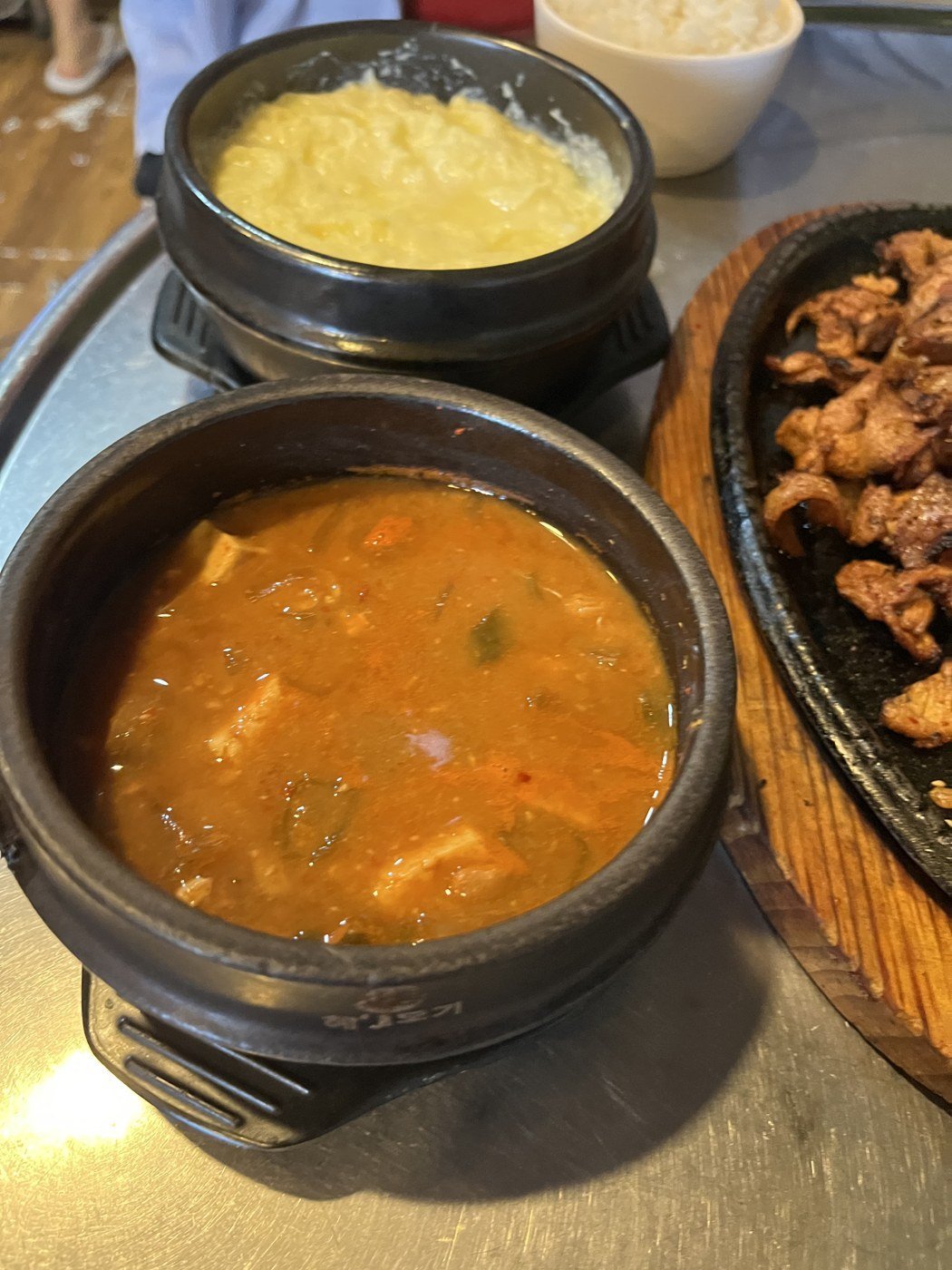
And one thing that only happens if you eat in: steamed egg, at the back there. The pot in front of it is cheonggukjang, and that one needs a section of its own.
The stew
Along with the meal comes a small earthenware pot of cheonggukjang (청국장). This is where the title of this post came from.
Start with what it is. If you know doenjang-jjigae — the brown soybean stew at the center of Korean cooking — cheonggukjang is another stew made from the same bean. The difference is time. Doenjang is a paste that ages for months before anyone cooks with it. Cheonggukjang is soybeans fermented for two or three days, and that’s the entire process. The beans don’t disappear into a smooth paste the way doenjang does. Some get broken up, some don’t, and you feel them when you eat.
It also has a reputation. Cheonggukjang is the dish people describe by its smell before they describe its taste.
If that’s what you’ve heard, don’t worry about it. It’s an old reputation. Most kitchens now make it for a general palate, and unless you go somewhere that specializes in cheonggukjang, what arrives is mild. This one was. Underneath it was something siwonhan (시원한) — the word means cool, but a hot soup can be siwonhan too. It means clean, with nothing heavy in it. There was dalkeun (달큰한) in there as well, a faint sweetness; radish, I thought, and crab. All of it sat on the gusuhan (구수한) taste of the beans — nutty, but deeper. My first thought was jipbap (집밥).
Jipbap is the Korean word for home food. Usually it means the everyday kind — whatever is on the table on a weeknight.
This isn’t quite that. This felt more like a welcome — the table someone sets when you’ve been gone a while and you finally come back. People don’t usually light a fire and grill meat on a weeknight. They do it because you’re home.
The shop
Fifteen years in the same spot. The owner told me that.
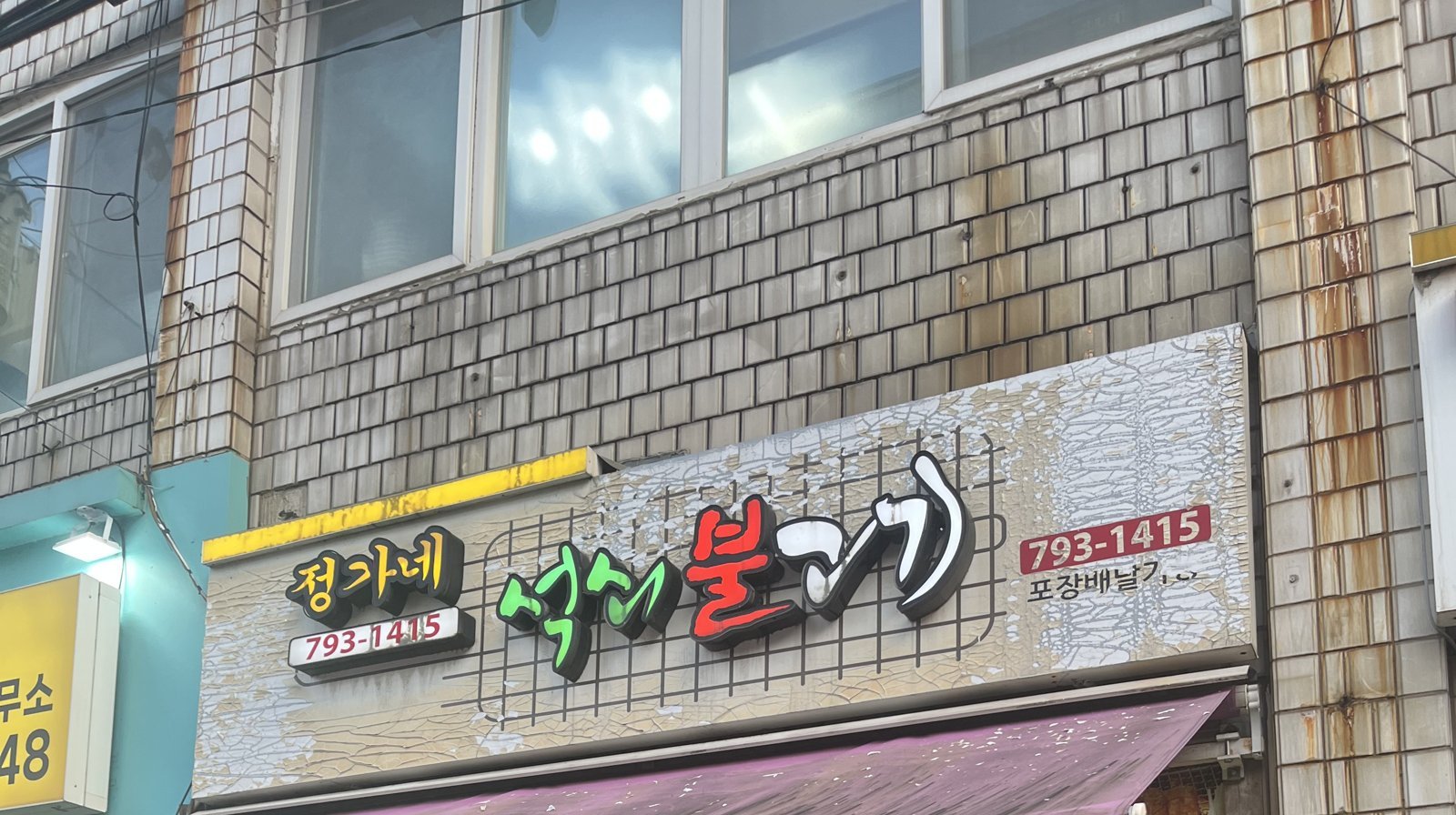
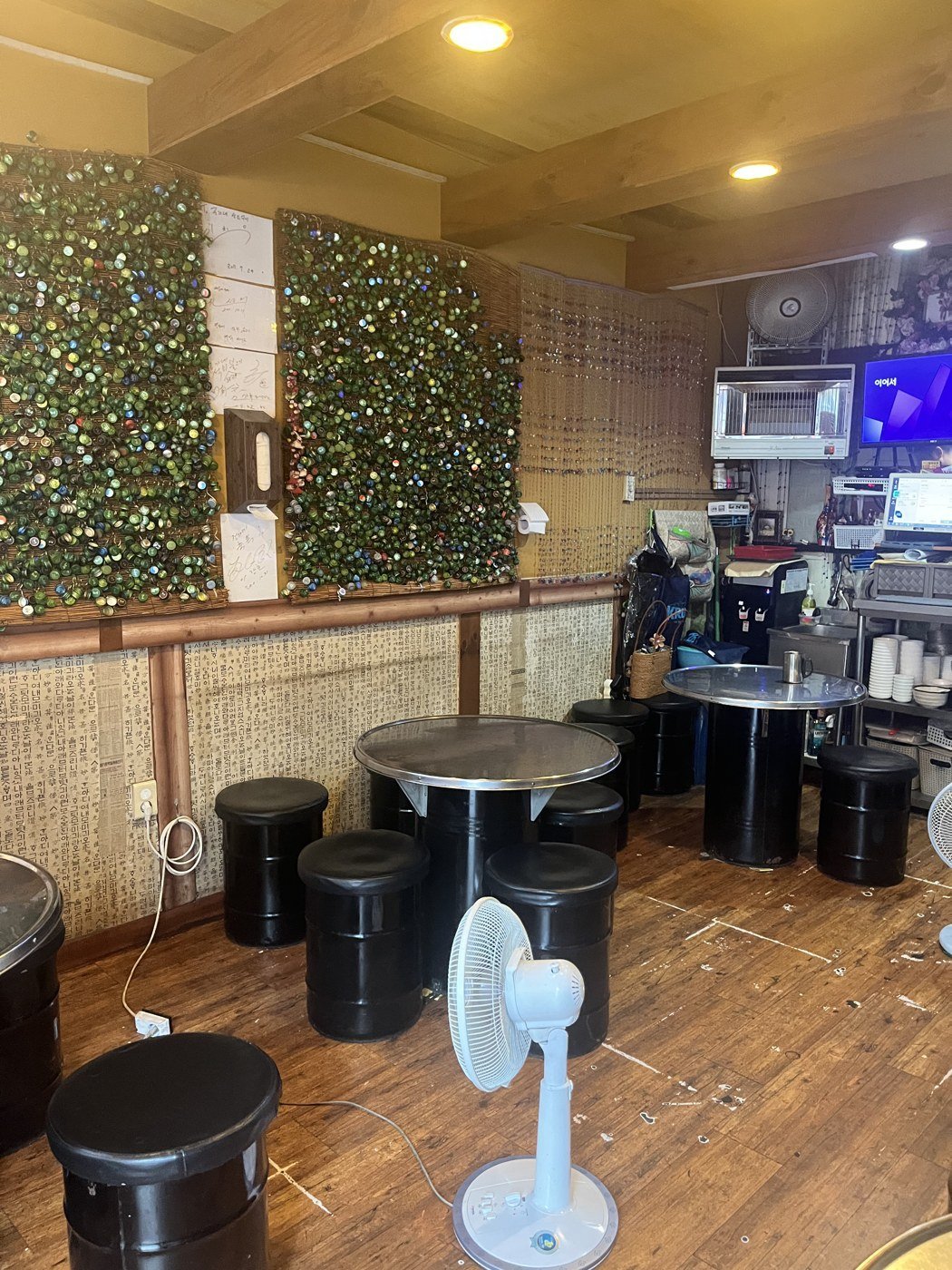
You can see it before anyone says it. The sign out front has cracked and lifted in patches, and the room inside has the same years on it.
The grilling happens in the kitchen. It’s hot, hard work, and it makes a lot of smoke. She told me the smoke makes it difficult to keep part-time help. So her younger brother does it.
It didn’t sound like a complaint to me. It sounded like pride.
The -ne (네) at the end of Jeonggane means somebody’s household. It’s the Jeong family’s place. And that isn’t just a name — the owner and the man at the grill are sister and brother. It had been on the sign the whole time.
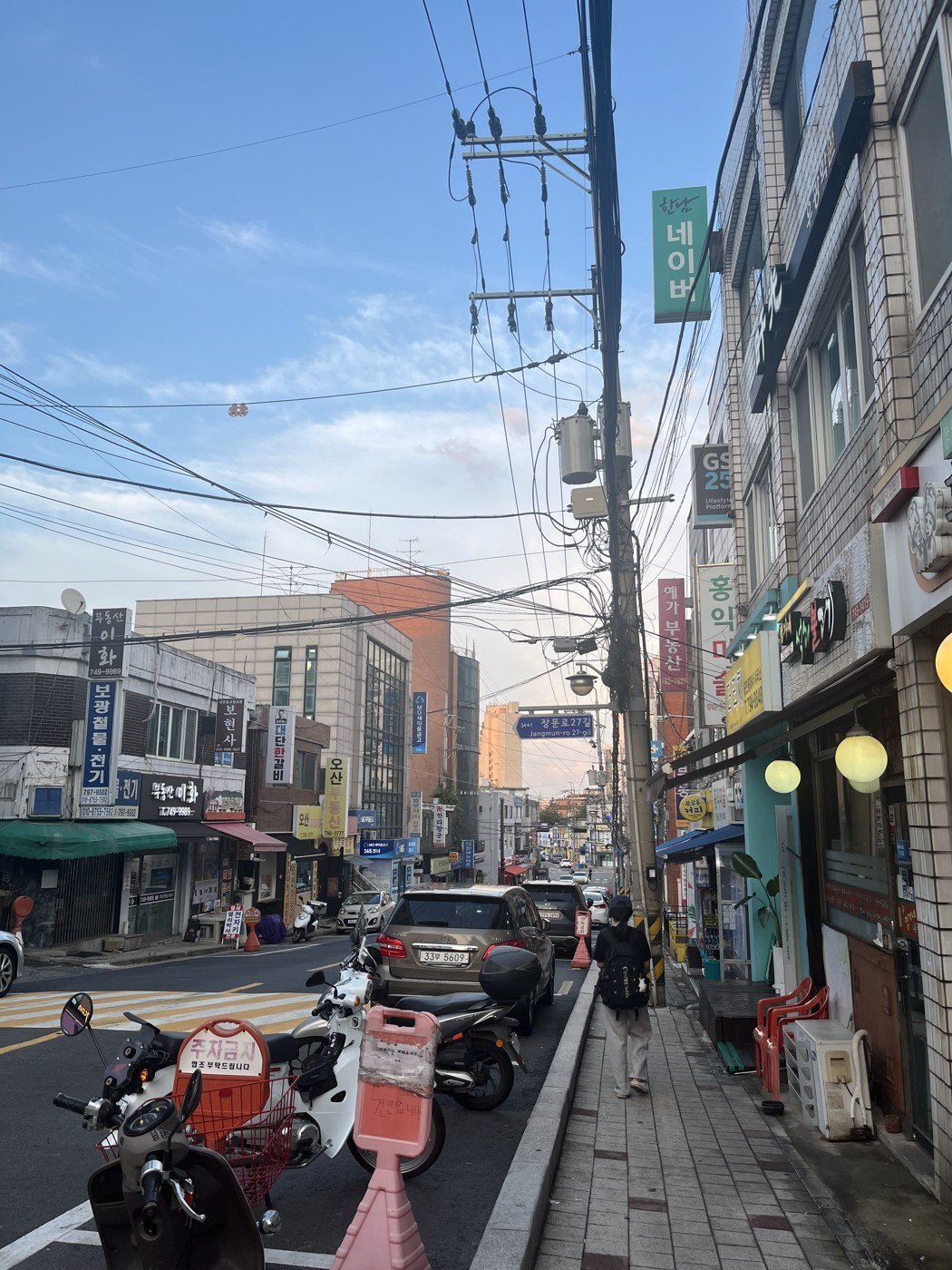
One more thing, and it’s why the phone number below matters. Bogwang-dong is being redeveloped, and this block is part of it. Nothing is closing tomorrow. But at some point the restaurant will have to move, and I don’t know when.
If you’re going
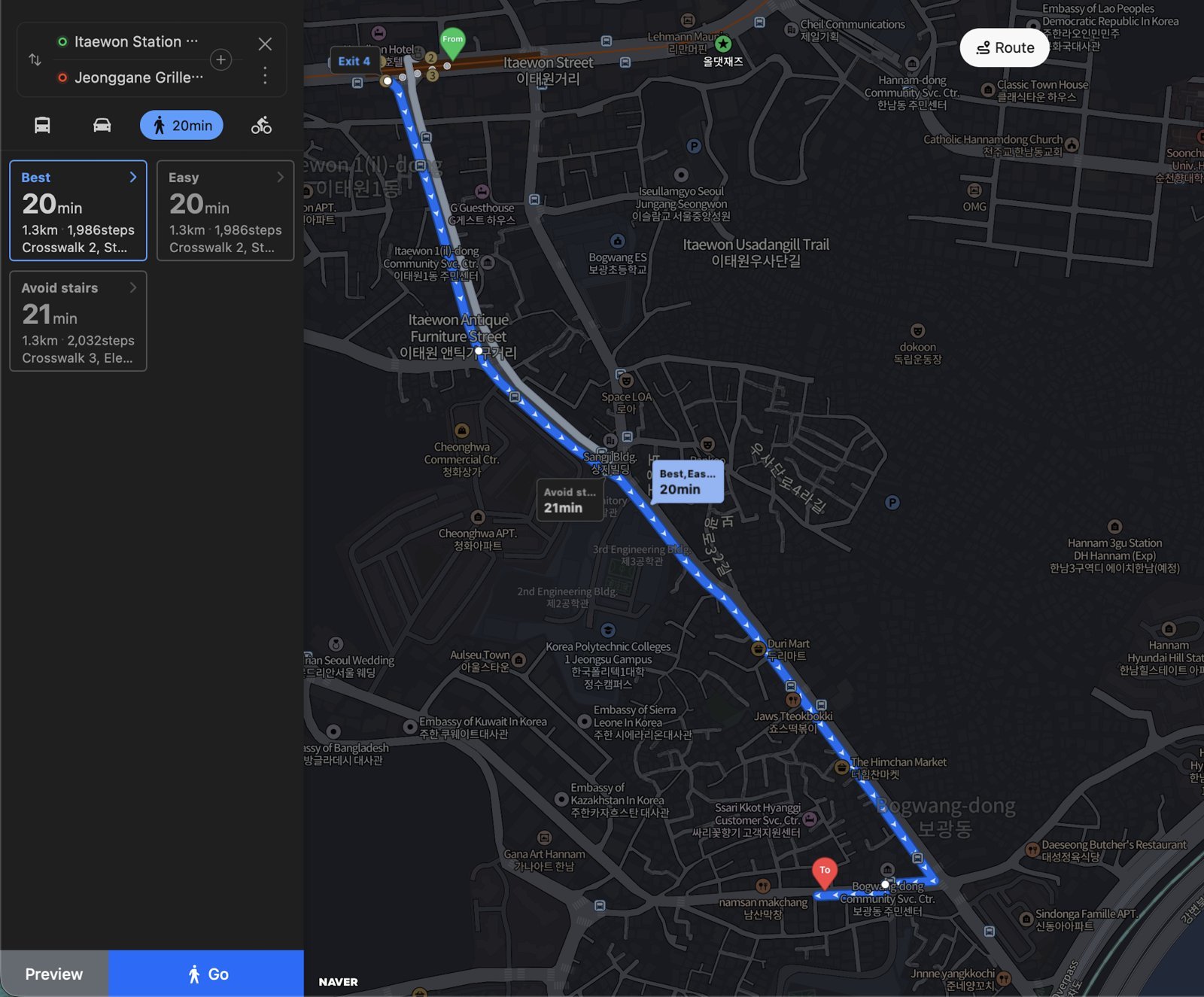
Getting there. Jeonggane Seokswoe Bulgogi (정가네석쇠불고기), 88 Jangmun-ro, Yongsan-gu (서울 용산구 장문로 88). It sits between two stations — Itaewon (Line 6) and Hannam (Gyeongui–Jungang Line) — so two different lines will get you there, and Hangang Park, Hannam-dong and Itaewon are all walkable from the door. I come from Itaewon Station — Exit 4, then twenty minutes on foot. From Hannam Station it’s Exit 1, and about the same.
Hours. 5:00pm to 2:00am, last order 1:45am. In principle it opens every day; in practice the owner closes when she needs a rest. It has been open every time I’ve gone, but the number is 02-793-1415, and given the redevelopment it’s worth a call either way.
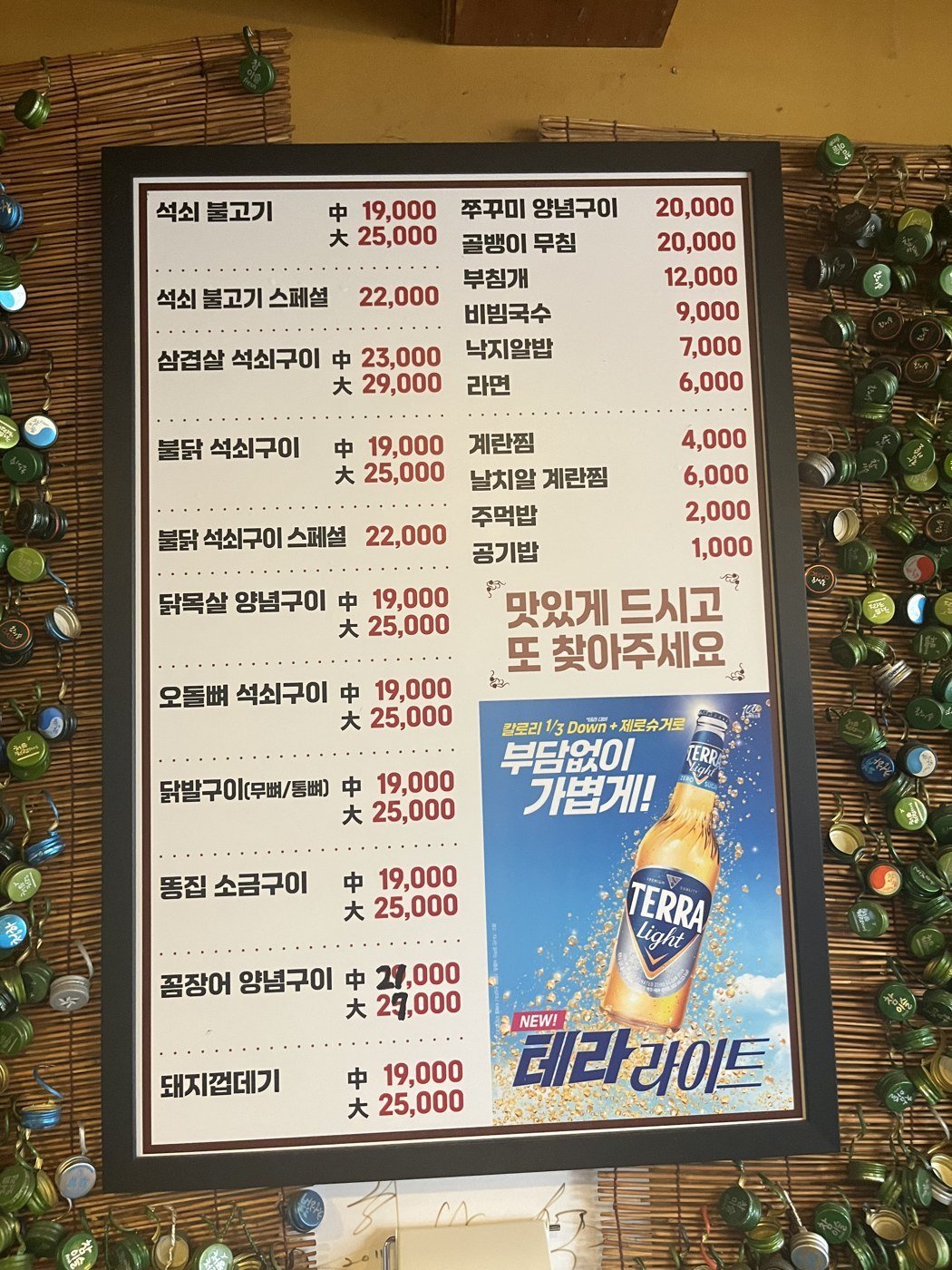
What to order.Seokswoe bulgogi (석쇠불고기), medium 19,000 won or large 25,000 won. The menu also lists a special — seokswoe bulgogi special (석쇠불고기 스페셜), 22,000 won — which is the same meat with rice cake and vegetables added. The plain one is plenty. How far that goes:
中 Medium 19,000
大 Large 25,000
As a meal
One person, generously
Two
With drinks
Two
Three
Bring a translation app. The menu is Korean only and the shop isn’t set up for English. Ordering from a phone screen works fine.
Eating alone is fine here. Nobody will look at you.
The steamed egg is free if you eat in. It’s on the menu at 4,000 won, and it doesn’t come with delivery. Of all the reasons to go in person rather than order, that’s the one I can put a number on.
On drinking. Half this menu — chicken feet, gizzards, cartilage, pork skin — is the kind of thing Koreans order to go with soju. I don’t drink, so I’ll leave that to you. It’s clearly a good room for it.
People come to this neighborhood from everywhere, and their food arrives with them. Japanese and Chinese — those are our neighbors, that much makes sense. Vietnamese. Cuban. Jordanian. Brazilian. Mexican. American. And it keeps going. Not in some food court built for tourists, either. Just scattered around the streets I walk every day.
That list is long for a reason. Yongsan-gu is where foreigners in Seoul have always ended up. A U.S. Army base sat here for most of the last century, and there are about two dozen embassies in Hannam-dong, the next neighborhood over — Italy’s is one of them. So a lot of people around here come from somewhere else. The food came with them and stayed.
I’m the local here. I’m the Korean one. And living in the middle of it has made me curious about everywhere else. I grew up thinking of other countries as places you fly to. Around here they’re just open for lunch.
It also makes this a good place to open a restaurant, if the food you cook comes from somewhere else. The neighborhood is already used to you. So they keep opening.
O Tigelle is one of them. The Italian one. This shop is the original — there’s a second one in Gongdeok now, but it started on this street.
It is the best sandwich I have ever eaten. Not just the best in Seoul. Not just the best for the money. The best one.
Which leaves me with a thought I can’t put down. If this is what an Italian sandwich tastes like on a side street in Seoul — what is waiting for me in Italy?
Is there a Korean restaurant near you? Tell me what it’s like — honestly.
What is a tigella?
The shop is called O Tigelle, and the thing it makes is a tigella. I didn’t know what that was either, so I looked it up.
It comes from the Apennine hills between Modena and Bologna, in Emilia-Romagna. A small flat round bread, about ten centimeters across — it sits in your palm. Flour, water, salt, and a little lard. That was the entire recipe.
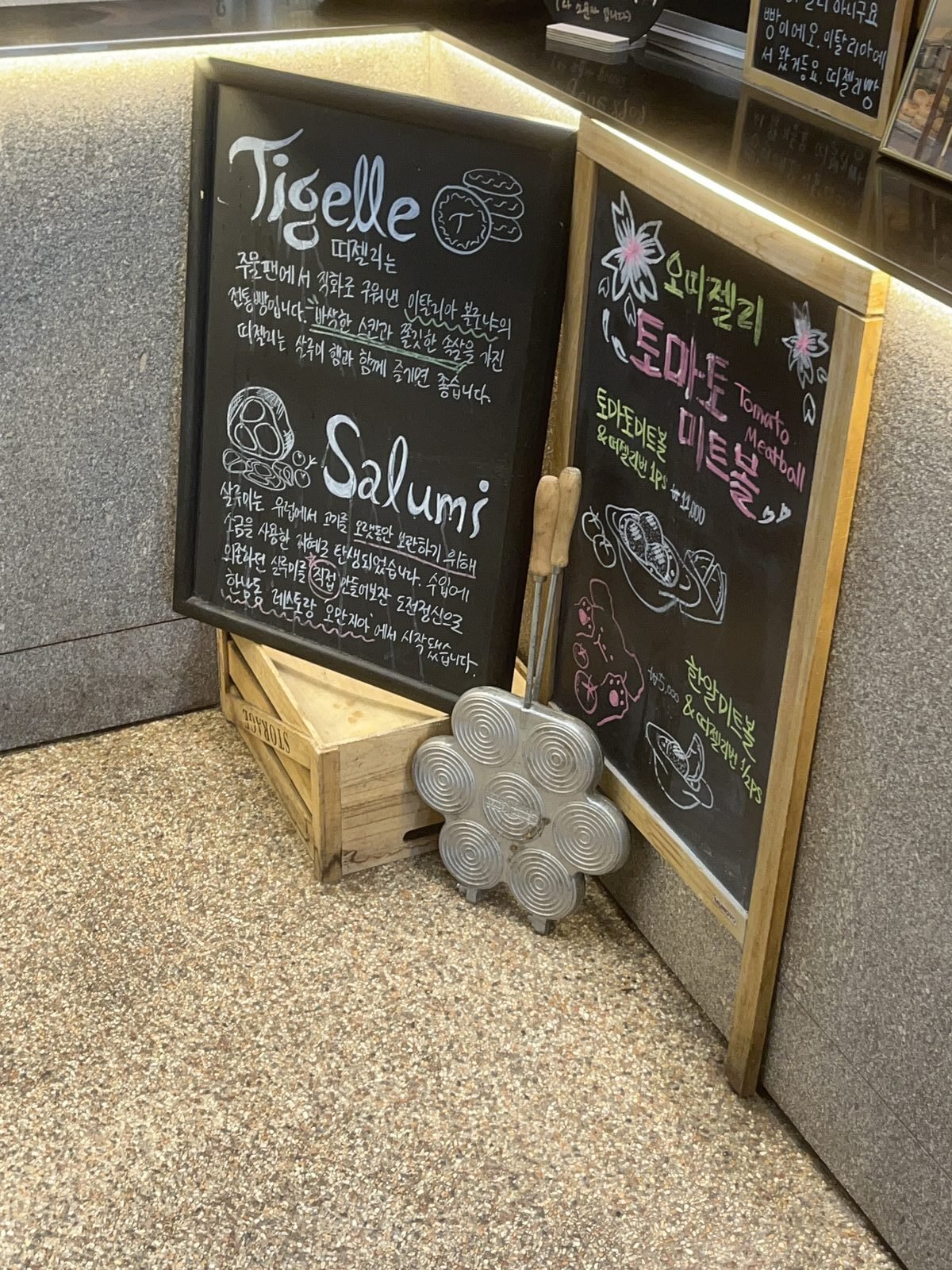
The good part is how they baked it. Not in an oven — between two hot faces at once. Crust on both sides, and a middle that stays soft. Those faces were flat clay disks, heated in the fire and pressed onto the dough. The disks were the tigelle — Latin for “cover” — and the bread ended up taking the name of the tool. At O Tigelle the tool is metal instead of clay — a hinged pan with seven round wells that shuts over the dough and goes onto an open flame. Same job.
The shop’s own explanation, in Korean. The pan beside it is the tigelliera.
What goes inside, traditionally, is cunza: pork lard beaten with garlic and rosemary, spread while the bread is hot enough to melt it, with Parmigiano Reggiano — the original Parmesan — grated over the top. Modena’s answer to pesto. After that, anything cured — and Emilia-Romagna cures more pork than just about anywhere on earth.
Which is why the menu here reads the way it does. Mortadella. Coppa cotta, coppa cruda. Pancetta. That isn’t a Seoul café reaching for Italian-sounding words. Those are what you actually find in a tigelleria in Modena, and the salumi here — the cured meats — are made in-house. The shop comes from Omangia, an Italian restaurant in Hannam-dong.
I’d never heard of Omangia until I looked this shop up, and I haven’t eaten there. But if they can make a sandwich this good, I want to see what they do with a whole restaurant. I’ll report back.
The friend who brought it to my office
I didn’t find this place. It was handed to me.
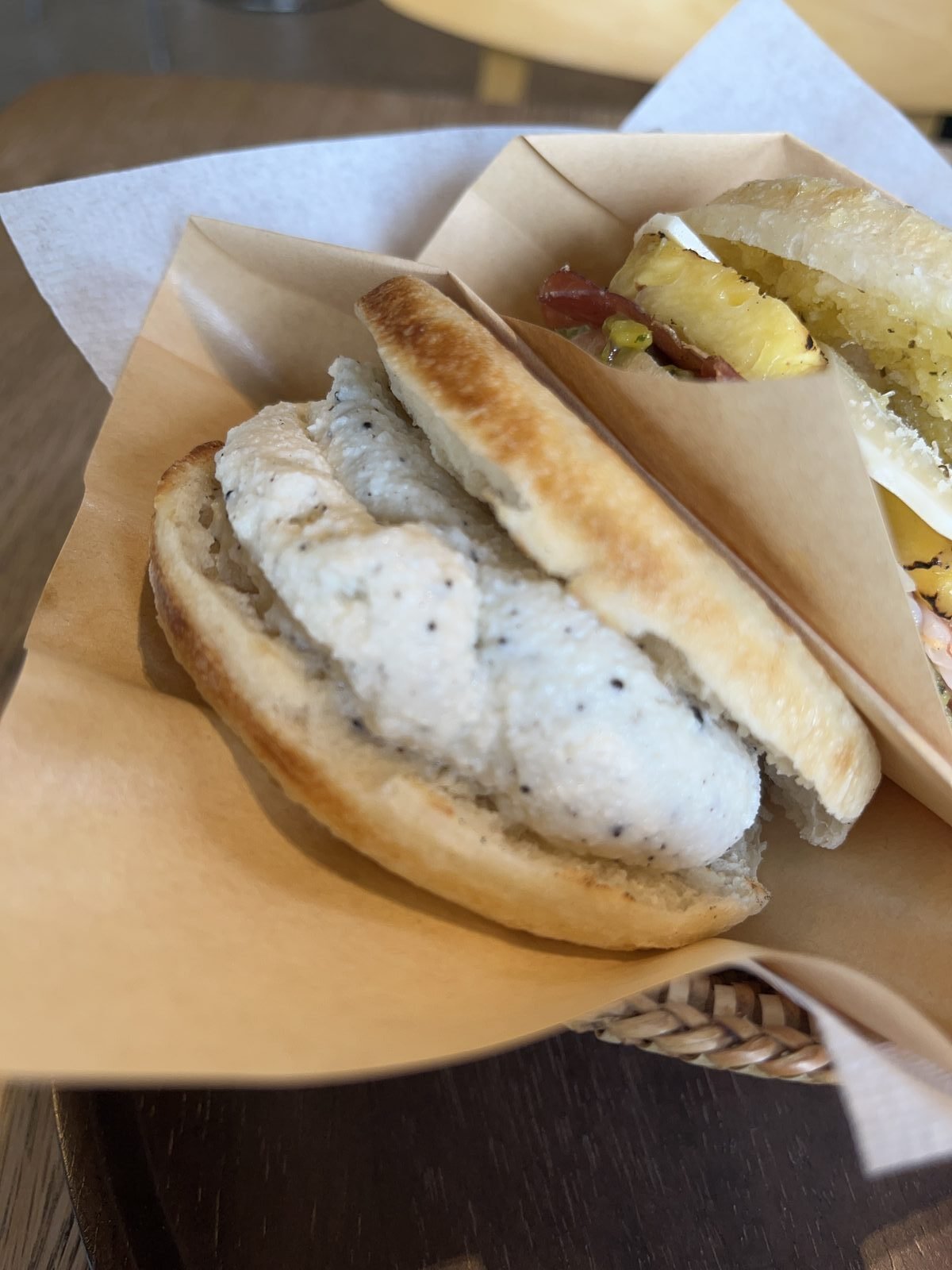
A friend who lives in Itaewon showed up at my workplace one day with lunch. The bread was the first thing I noticed — round, flat, nothing like sandwich bread. Then I ate it. It was called truffle ricotta, and it was extraordinary.
I asked him where it came from before I’d finished it.
When I went myself, two things happened. The first was the menu. I’d assumed my friend had brought me the one good sandwich; instead, there was a whole board of them.
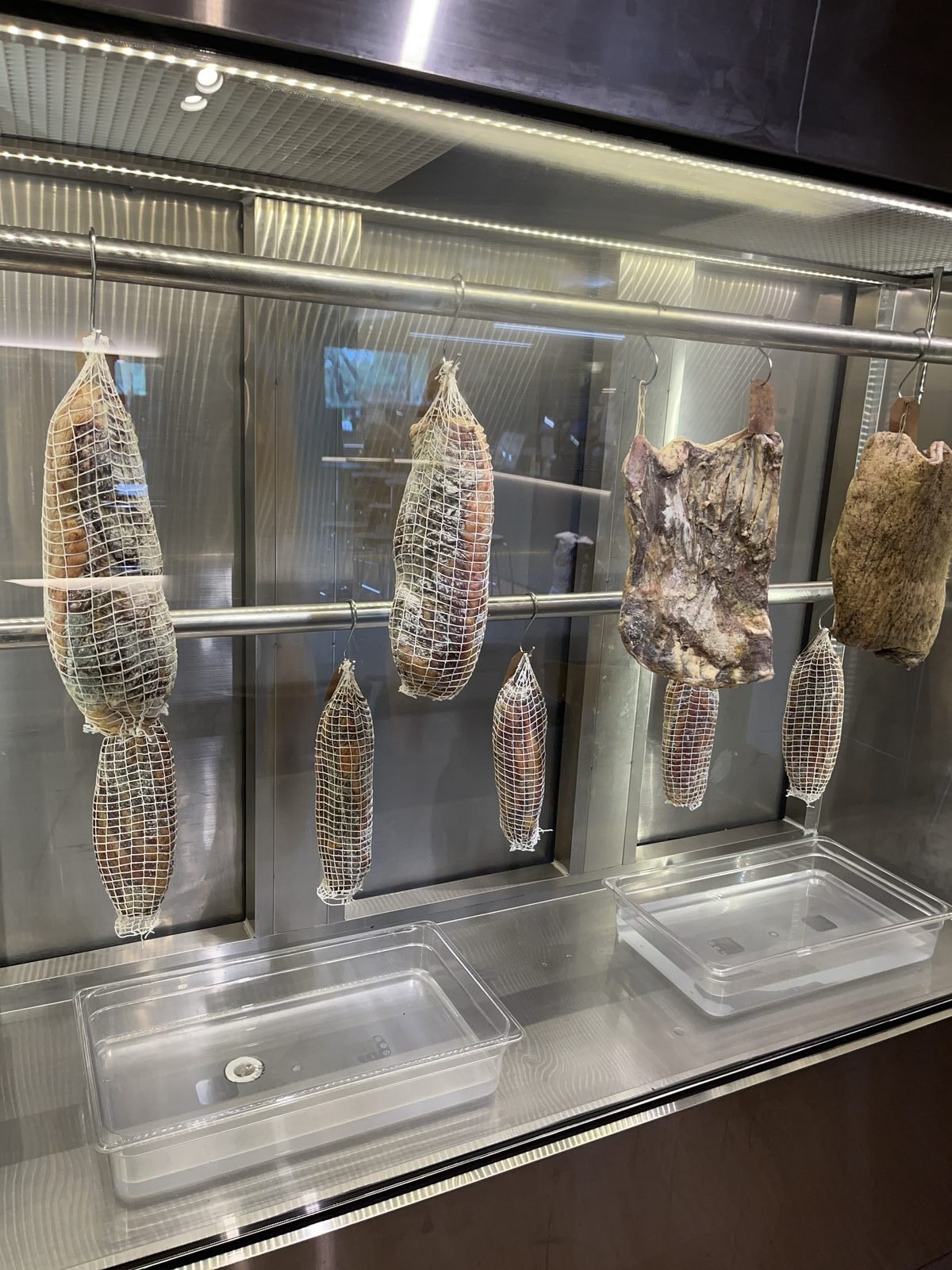
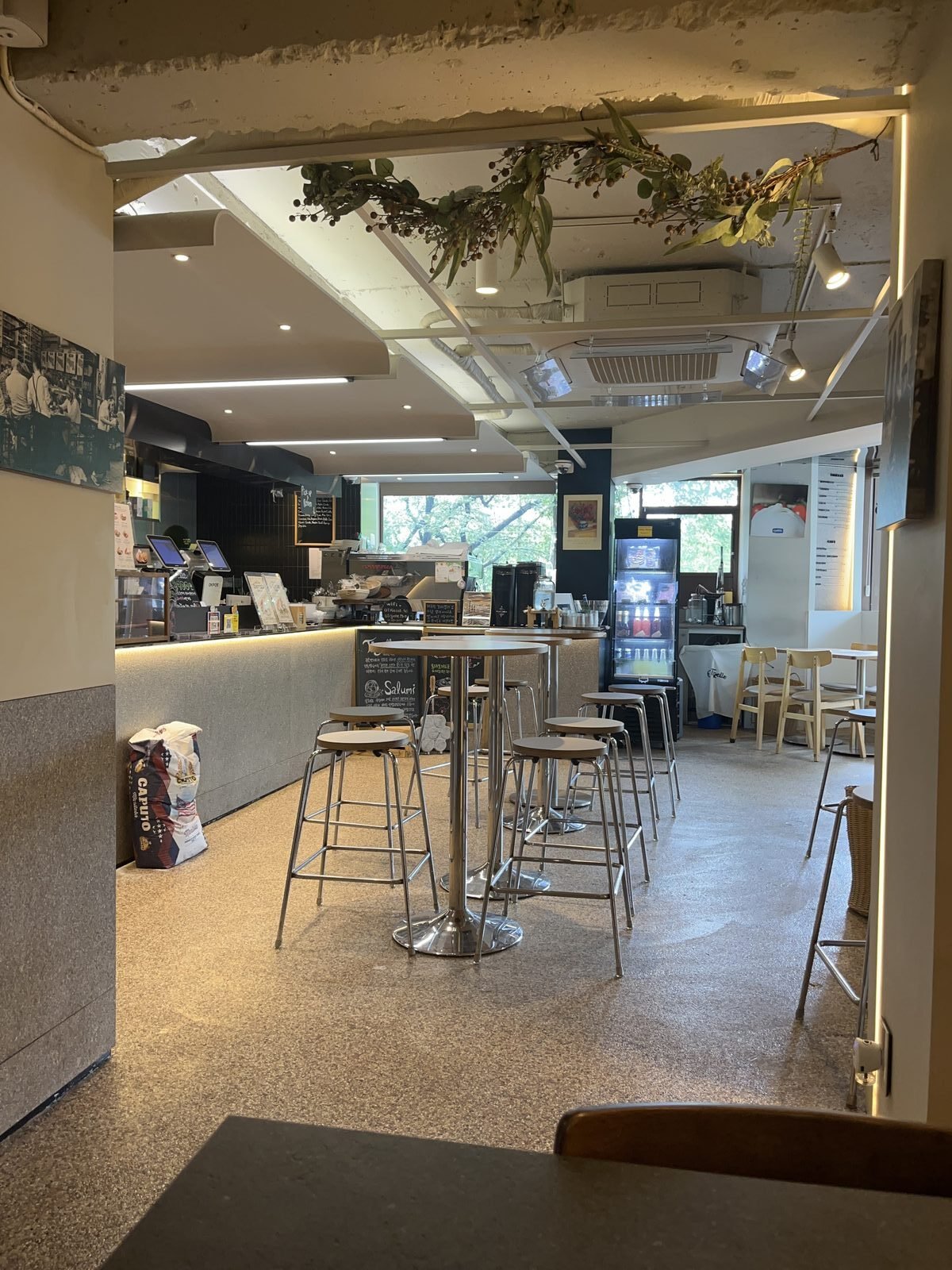
The second is the reason I never stopped going. The kitchen is huge — as big as the room you eat in. There’s a sack of Italian flour parked on the floor by the counter. The bread is made in that kitchen. So is the ham — it’s hanging in a glass case right now, months away from being ready to eat. A kitchen that big told me how much they care about the food. The food backs it up.
Cured in the shop, hanging in the shop. That’s why you can’t go wrong with O Tigelle.
What I actually order
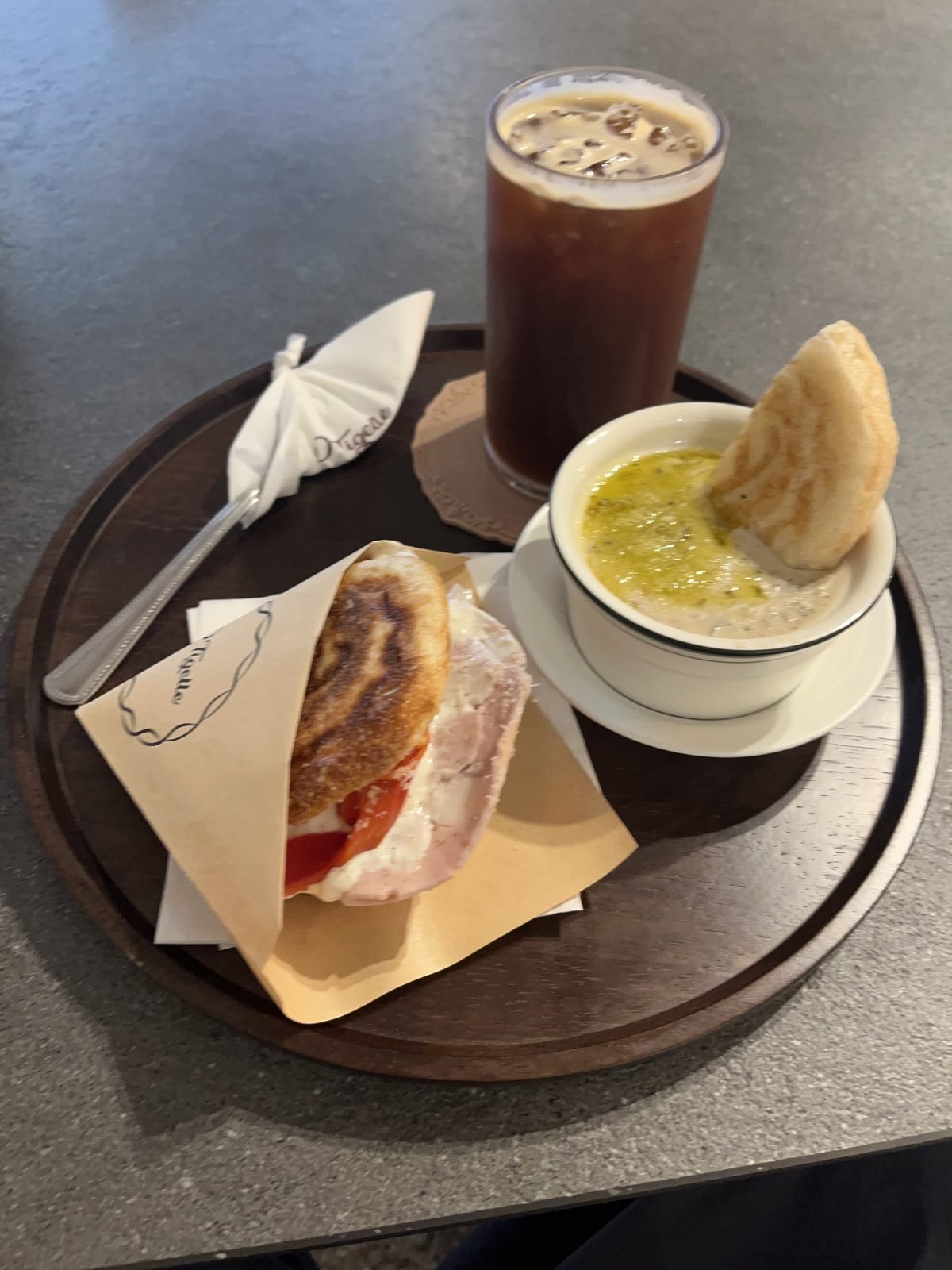
These days it’s one of the sets. Set one is a Special, a truffle ricotta, and a coffee. Set two swaps the truffle ricotta for a small soup or a small meatball. An hour out of the pool, one sandwich isn’t enough. Both sets come with the coffee that finishes waking me up. What decides between them is whether I want something hot. After a swim I usually do — so, set two, for the soup.
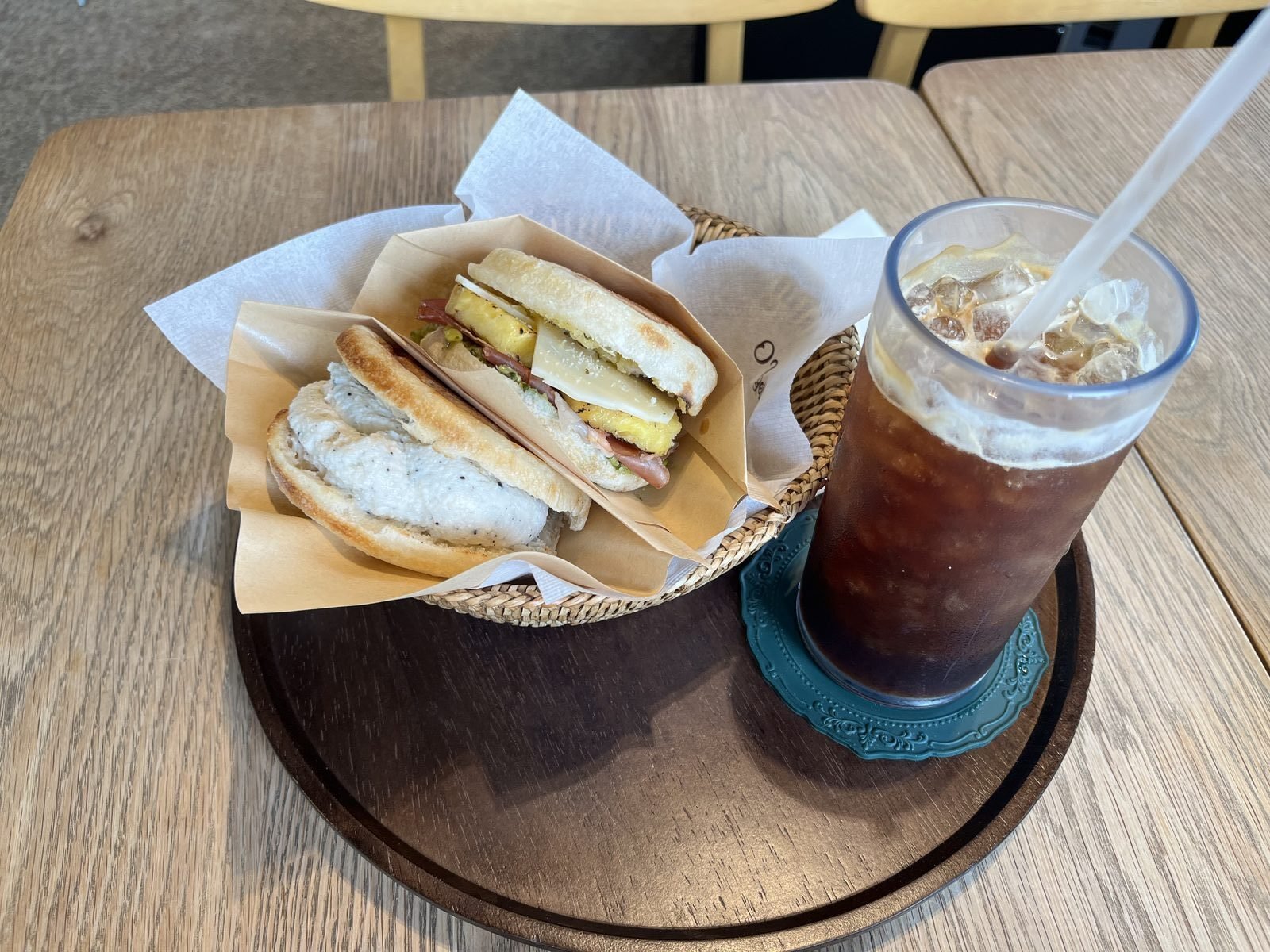
Set one — a Special, a truffle ricotta, and a coffee. 16,000 won.
The soup is mushroom, and it is the best soup I have ever eaten, too.
It’s a cream soup with enough mushroom in it to chew on. There’s a bright green herb oil pooled across the top, and cheese gathered in one place rather than dusted over it. Parmesan, maybe — I’ve never asked, and I’m not going to pretend I can name it. Take the cheese first, on its own. It’s sharp, it wakes your mouth up. After that you’re into the cream underneath, which is warm and fills you up.
I don’t usually like a thick soup. This one isn’t one. It’s thin enough to drink and thick enough to dip bread into — and half a tigella comes standing in the bowl to do it with.
Set two — with the mushroom soup. Half a tigella comes standing in it.
I’ve gone three weeks running and ordered something different every time. Of the Specials I’ve had the Mortadella, the Coppa cruda and the Hawaiiano. All of them good.
Now, how the menu is put together.
Most of the Regulars are built around one cured meat. Next to the Specials they look like the budget row. They aren’t. What comes with the meat — ricotta, butter, honey, and so on — is chosen to push the salumi forward, not to compete with it. That’s what the board means by enjoy the natural taste of salumi. You’re not choosing a tier. You’re choosing a flavor.
The sets are for a meal. For a snack I order Regulars instead. Pancetta is the one I keep going back to. The menu says sweet and salty: there’s honey in it, along with ricotta, olive oil, oregano and Parmigiano Reggiano. I am a salt-and-sweet person, and once something gets its hooks into me I eat it until I’m sick of it. I am not sick of it.
If it’s your first time
Truffle ricotta. It’s what my friend put in front of me, and I’d put it in front of you for the same reason — it’s a spread and a bread and nothing else, which makes it the cleanest way to actually taste the tigella. It’s also the cheapest thing on the menu, at 4,000 won. Start there.
Then a Regular, any of them. That’s the row where the salumi is the point. I’d say pancetta, but only because I’m me.
And get the mushroom soup. I like meat, and I watch my protein. There’s no meat in the soup or the truffle ricotta, and most days those two are still what I want.
Take it with you
The bread travels. That’s the whole reason I ever tasted it — my friend walked one over to my office in a paper bag, and it was still extraordinary half an hour later.
So consider not eating it here. I got mine to go once and ate it at the Han River.
This matters more than it sounds, because of where the shop sits. The National Museum of Korea, the War Memorial of Korea, Yongsan Family Park and the Han River are all in this part of Seoul. The shop opens at eight. If any of them are on your list, you can pick up breakfast here on the way.
If you’re going
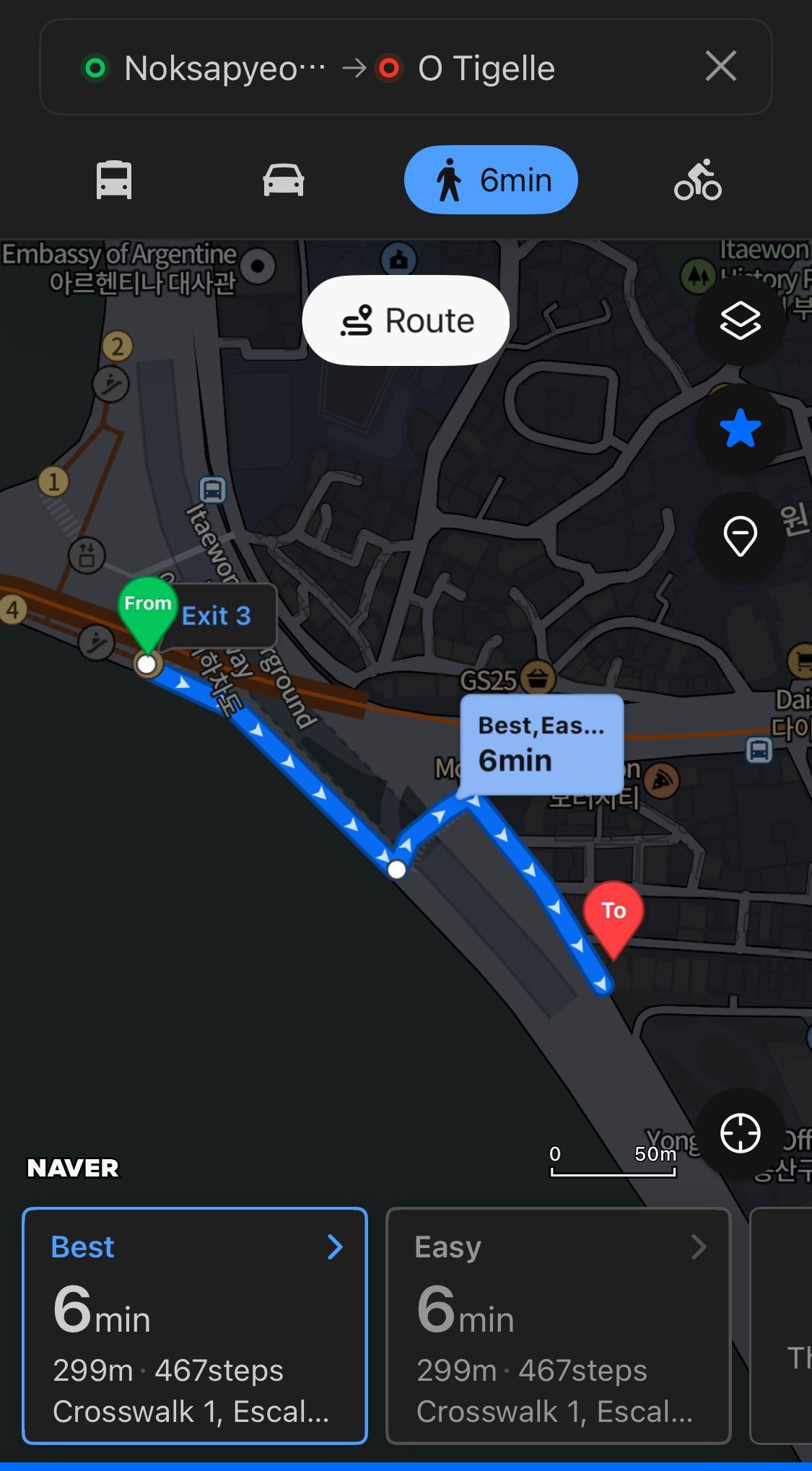
Getting there. Noksapyeong Station, Line 6, Exit 3. From there it’s 299 meters — about six minutes, one crosswalk. If you’re coming from the main Itaewon strip, give it ten minutes on foot. Here’s the shop on Naver Map.
Search the name and you’ll find two. The one in this post is the original in Itaewon, at 168-6 Noksapyeong-daero. The other is in Gongdeok, in Mapo-gu — three stops up Line 6, same name, different shop, and I haven’t eaten there. If that one’s closer to you, here it is on Naver Map.
Map: NAVER MapThat sack by the counter is Italian flour.
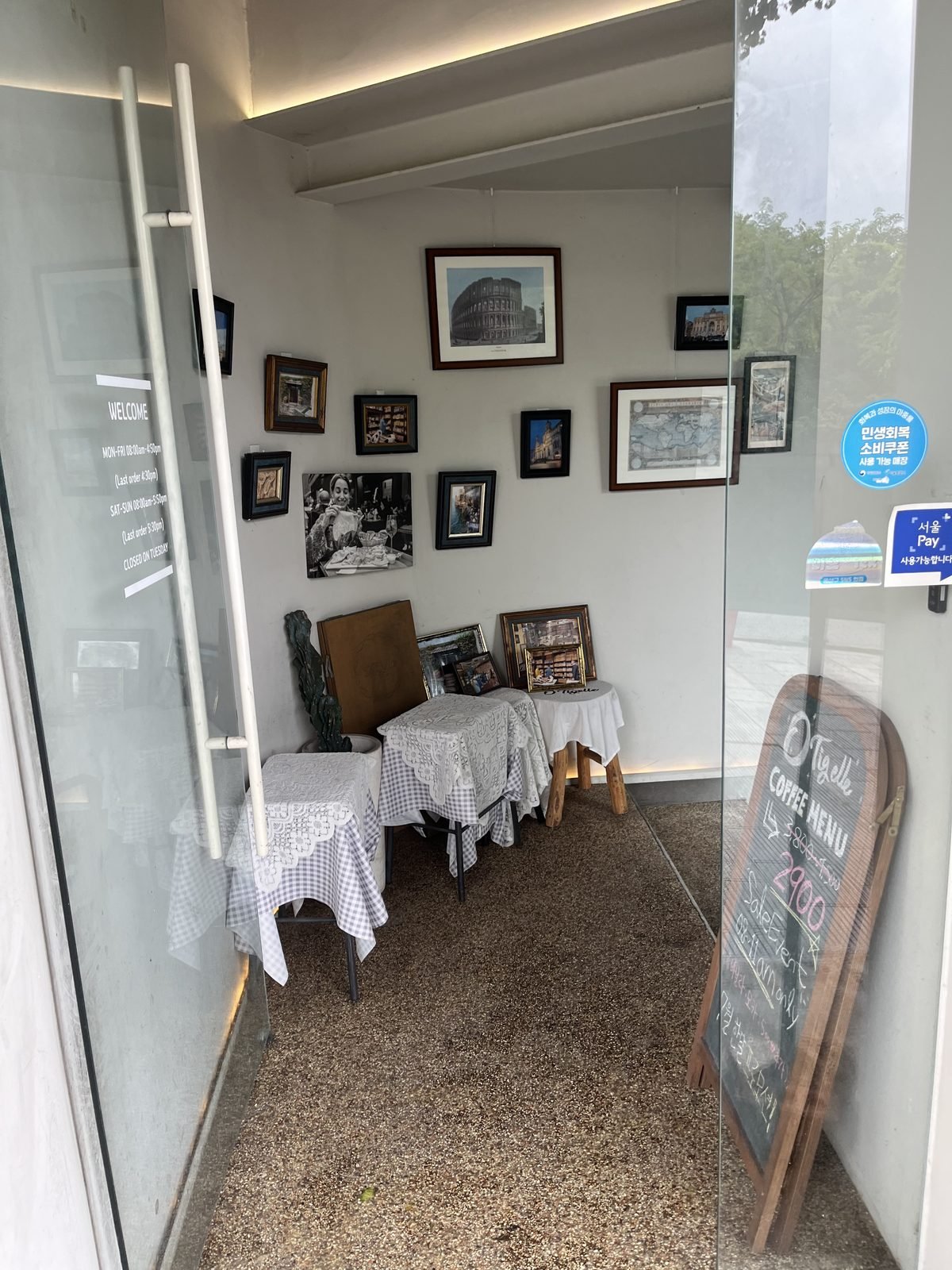
Hours.
Mon, Wed–Fri
8:00am – 4:50pm (last order 4:30)
Sat–Sun
8:00am – 5:50pm (last order 5:30)
Tue
Closed
The menu
Prices are in won and current as of August 2026. The shop posts its menu on Instagram, so check the current one here. The photo can be hard to read on a phone, so I’ve typed it out below.
Regular — “Enjoy the natural taste of salumi.”
Mortadella (savory, soft, Italian bologna-style ham — suitable for a light meal)
5,700
Coppa cruda (original whole dried pork shoulder — for salumi masters)
5,700
Coppa cotta (Italian salumi made of boiled pork shoulder — less salty, good for salumi starters)
5,700
Pancetta (Italian-style pork belly — sweet and salty)
5,700
Chorizo (Spanish salumi of ground pork and chili — spicy and smoky)
5,700
Jambon (whole-boiled pork hind leg, French ham — if you want the natural meat flavor)
6,000
Truffle ricotta (made from the original recipe of Omangia restaurant — very appetizing)
4,000
Caprese (stracciatella cheese with fresh arugula and sun-dried tomatoes — a light, refreshing choice without salumi)
6,500
Special — “Special tigelle made of salumi with special toppings.”
Mortadella special (cheese and paprika, pistachio pesto — a deep pesto flavor)
8,500
Coppa cruda special (arugula, ricotta, fig jam, provolone — sweet fig jam against the cruda)
8,500
Coppa cotta special (arugula, sun-dried tomato, cheese, sliced red onion — for vegetable lovers)
8,500
Salmon special (smoked salmon, dill cream, avocado, pickled egg, ricotta, red onion — the popular one)
9,000
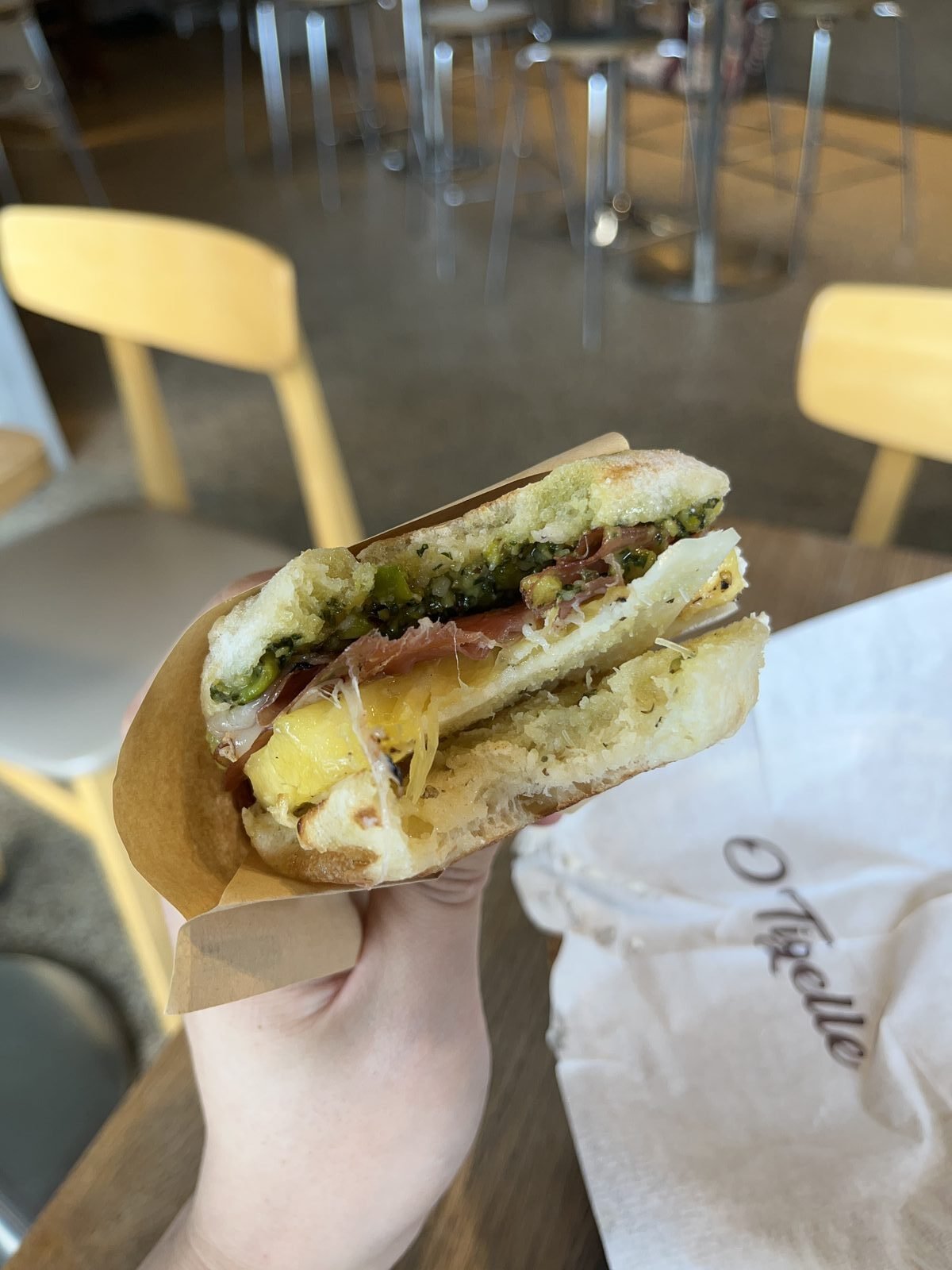
Hawaiiano (grilled pineapple, provolone, pistachio pesto — a deep prosciutto flavor)
8,500
Burrata special (zucchini and Italian prosciutto with a whole creamy burrata)
9,000
Sides
Mushroom soup
10,000
Tomato meatball
11,000
Sets
Basket set — 2 Regular + 2 Special
2,000 off
Set 1 — Special + truffle ricotta + coffee
16,000
Set 2 — Special + small mushroom soup or small meatball + coffee
17,000
Thanks for reading this far. I hope you get here, and I hope the trip is a good one.
I said that one day I’d pick the best mix coffee for you, and share my not-really-a-recipe. Today is that day.
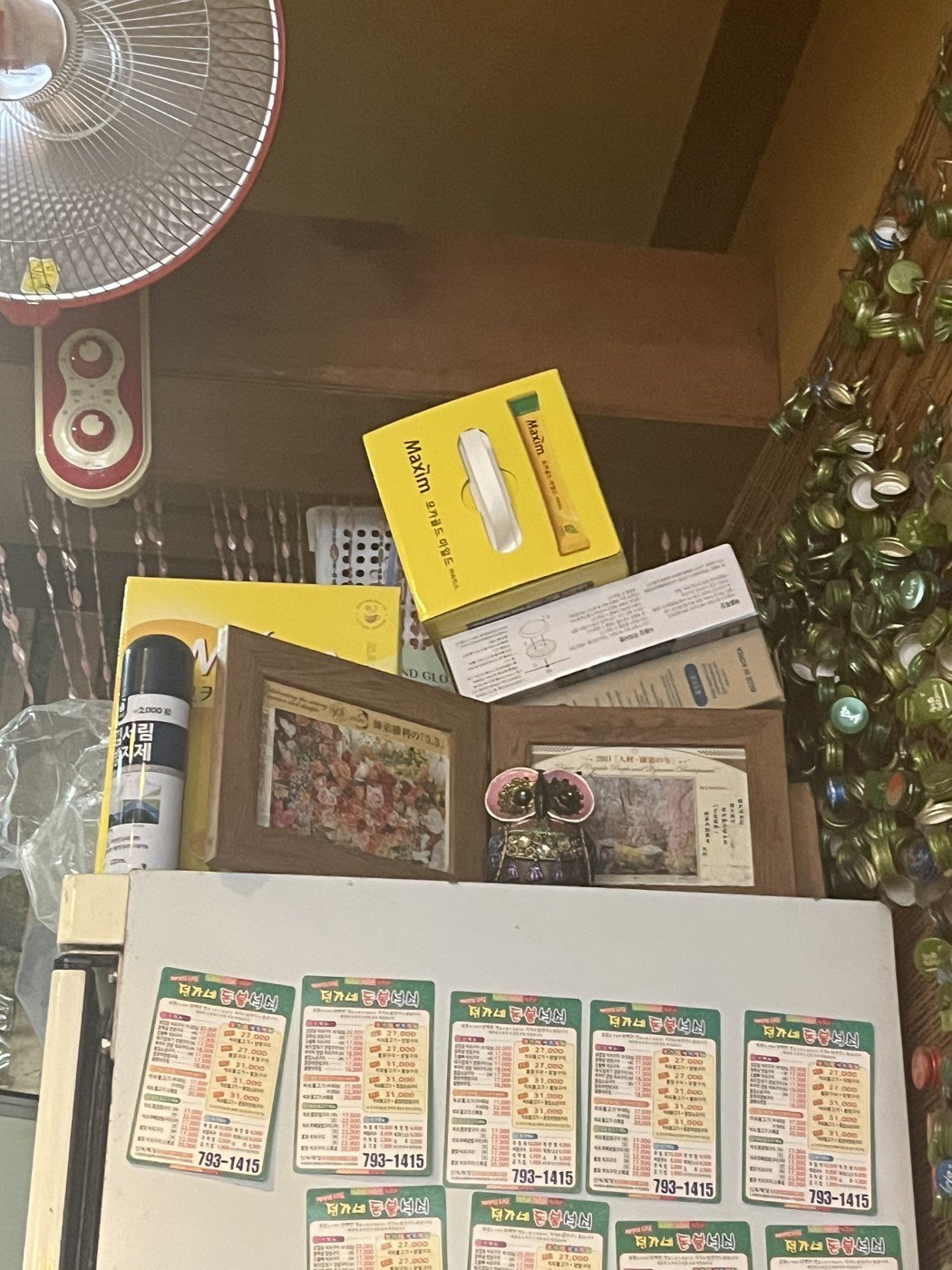
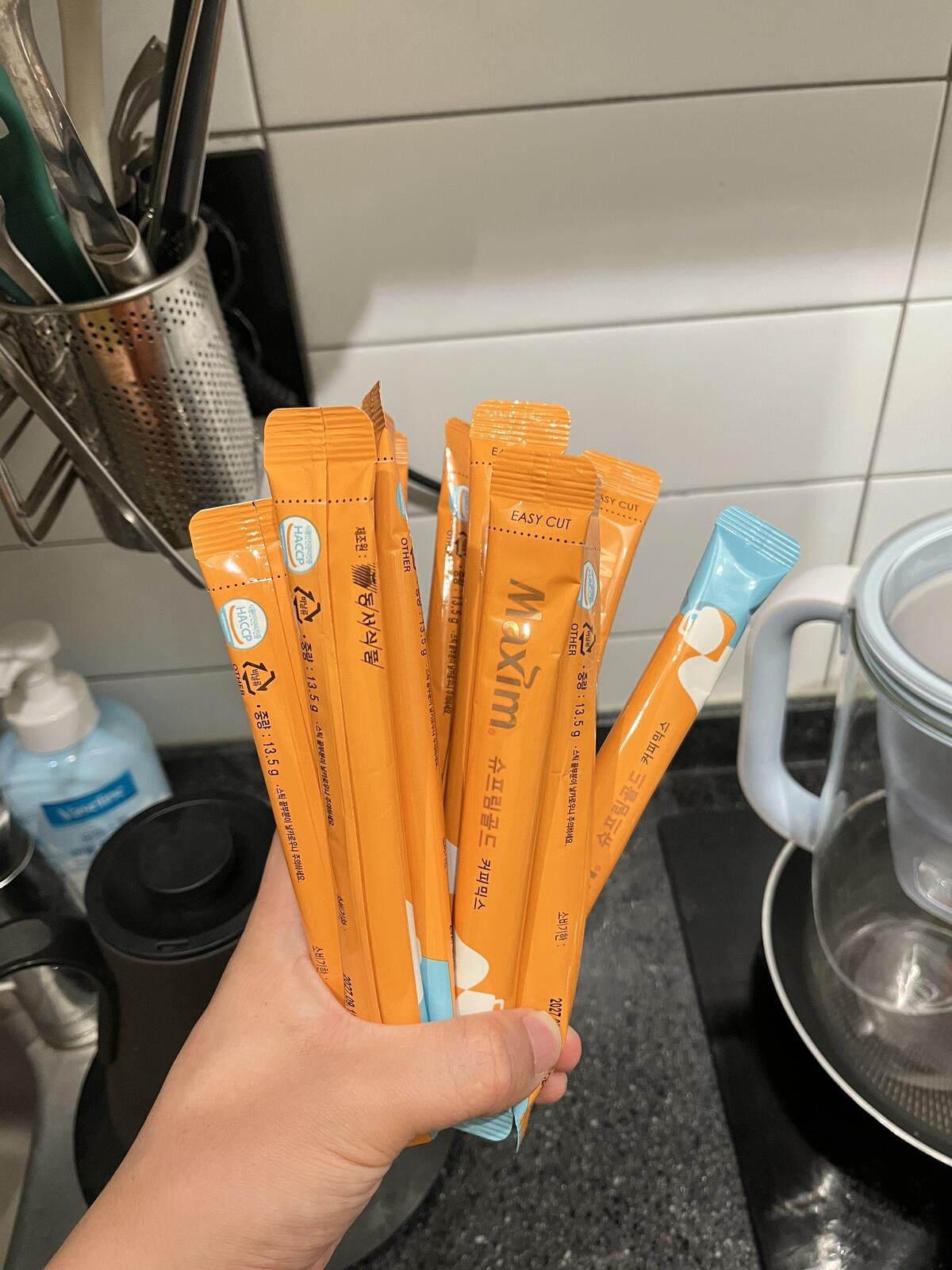
If you’ve been to Korea, you’ve already met this thing. Korean coffee mix: that skinny foil stick sitting next to the hot water dispenser at a restaurant, a guesthouse lobby, your friend’s office. Free, always there, nobody makes a fuss about it. Most travelers walk right past it.
Don’t be one of them. Try one — that’s what it’s there for. And then, before you fly home, buy a box. Actually, buy a few: they cost about what a keychain costs, and they taste more like Korea than anything else in the souvenir shop.
What exactly is Korean coffee mix?
Korean coffee mix holds three things in one stick, already measured for you: instant coffee, creamer, and sugar. Tear off the top, pour it into hot water, and stir. That’s the whole ceremony. Thirty seconds, no barista, no machine.
And here’s the part I didn’t know until I wrote this post: Korea invented it.
In 1976, a Korean company called Dongsuh Foods put coffee, creamer, and sugar into a single package under the brand Maxim — the world’s first coffee mix.
So why is it everywhere? Because hot water is everywhere. That’s the only equipment it needs, which meant coffee could turn up in places a café never would: a construction site, a mountain shelter, a bank counter, a barracks. Mix coffee became the fuel of Korean work life, and it never left.
How much of it? Fifty years later, Dongsuh still holds about 88% of Korea’s instant coffee market — every other brand in the country is splitting what’s left. And Maxim Mocha Gold alone reportedly sells around 170 sticks every second. Not every minute. Every second.
My pick: Maxim Supreme Gold
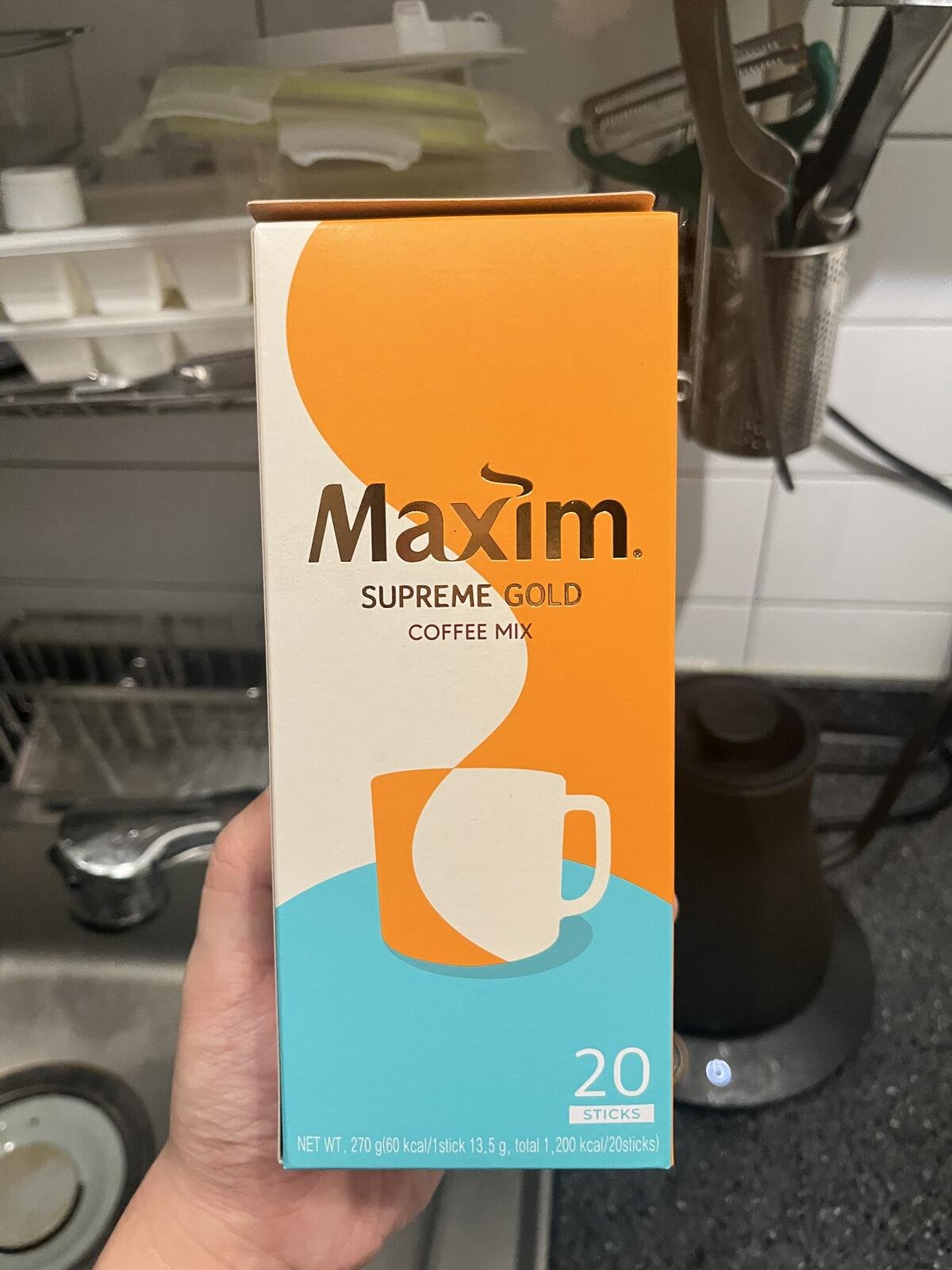
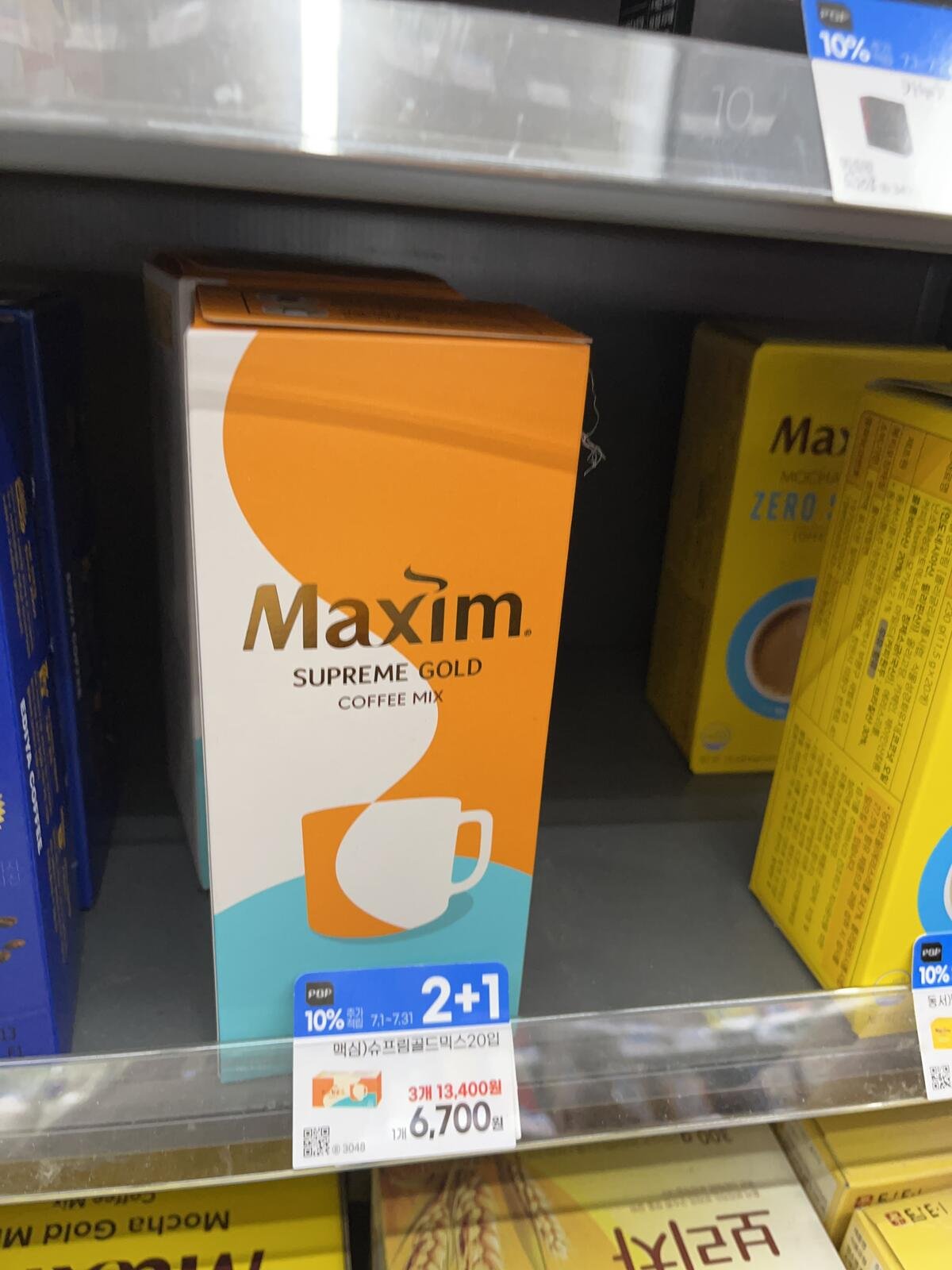
So… my pick is Maxim Supreme Gold. The reason is simple: it’s the expensive one.
In coffee mix, “expensive” means about 50 won a stick more than Mocha Gold, the standard one. Under four cents. It’s the cheapest way I know to feel rich, and I use it every day.
This is what rich feels like.
But I’d like to think it’s not only about the price. For me, coffee mix is really about the creamer — that milky body. I drink black coffee too, plenty of it, but this is a different pleasure entirely. So I want the creamiest one, and that’s this one. Dongsuh upgraded the creamer for this line, and you can see it on the label: 60 calories a stick against Mocha Gold’s 50, in a 13.5g stick instead of 12g. That gap is the creaminess. White Gold goes the other way, swapping the creamer for skim milk powder, so it comes out lighter and cleaner. Lighter is fine, but I want creamy.
The box helps too. Clean lines, a little cup on the front, GOLD printed right under the name — it looks more expensive than it is. That’s ideal gift math. And the 20-stick size fits into a corner of your suitcase, which matters when you’re bringing one back for each coworker.
Be honest — doesn’t this look expensive?
My not-really-a-recipe
Here it is, the recipe I promised: use milk instead of water.
That’s the whole thing. I told you it wasn’t really a recipe.
But I can tell you where I learned it. Every Korean man does his military service, and mine came with a 200ml carton of milk every morning. Milk is fine. What I wanted was a latte. There was no café, no chance — but the admin office had a box of coffee mix, because every room in Korea has a box of coffee mix.
So one morning I tore open two sticks, poured them into the milk carton, folded the top shut, and shook it as hard as I could.
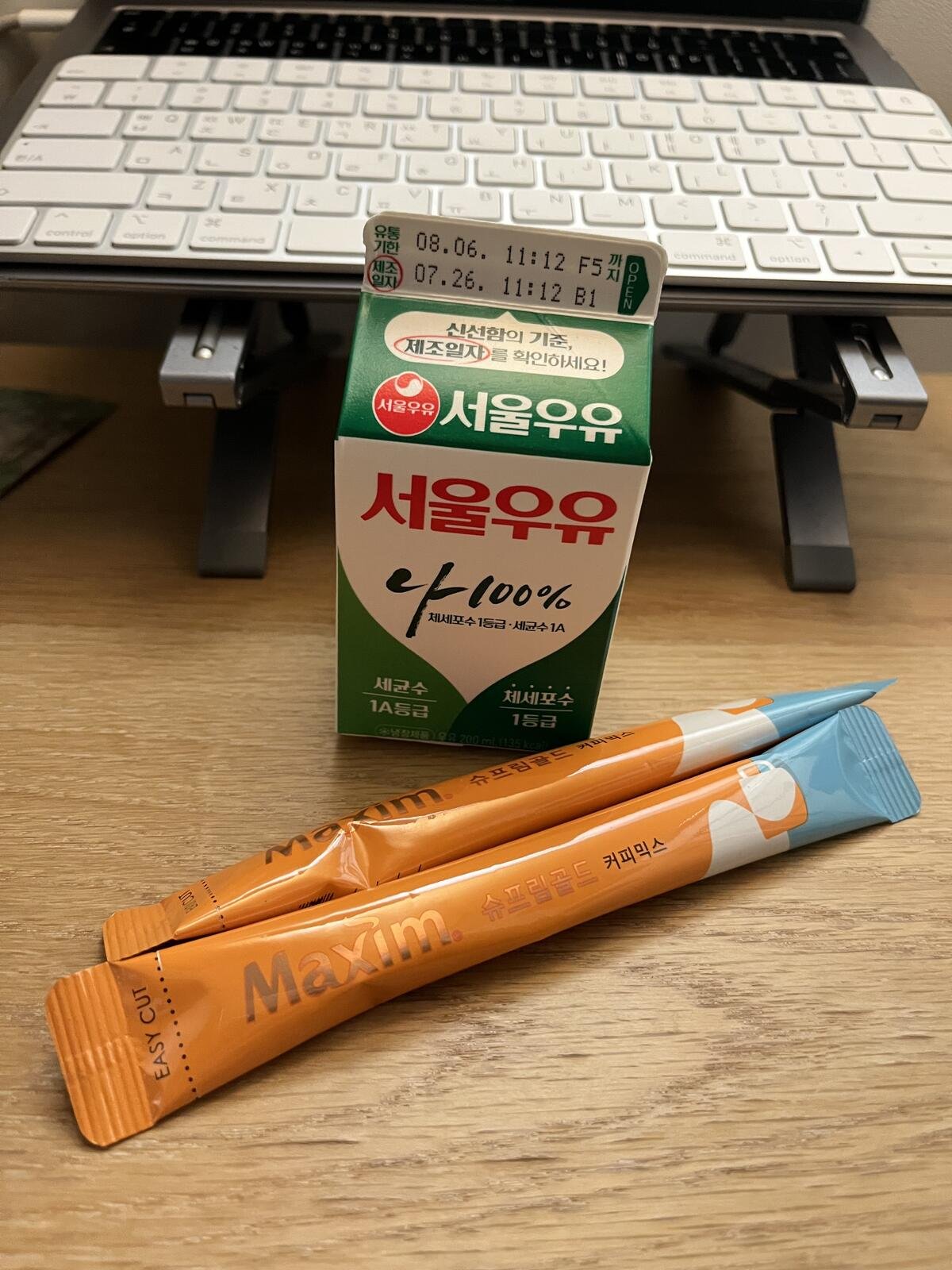
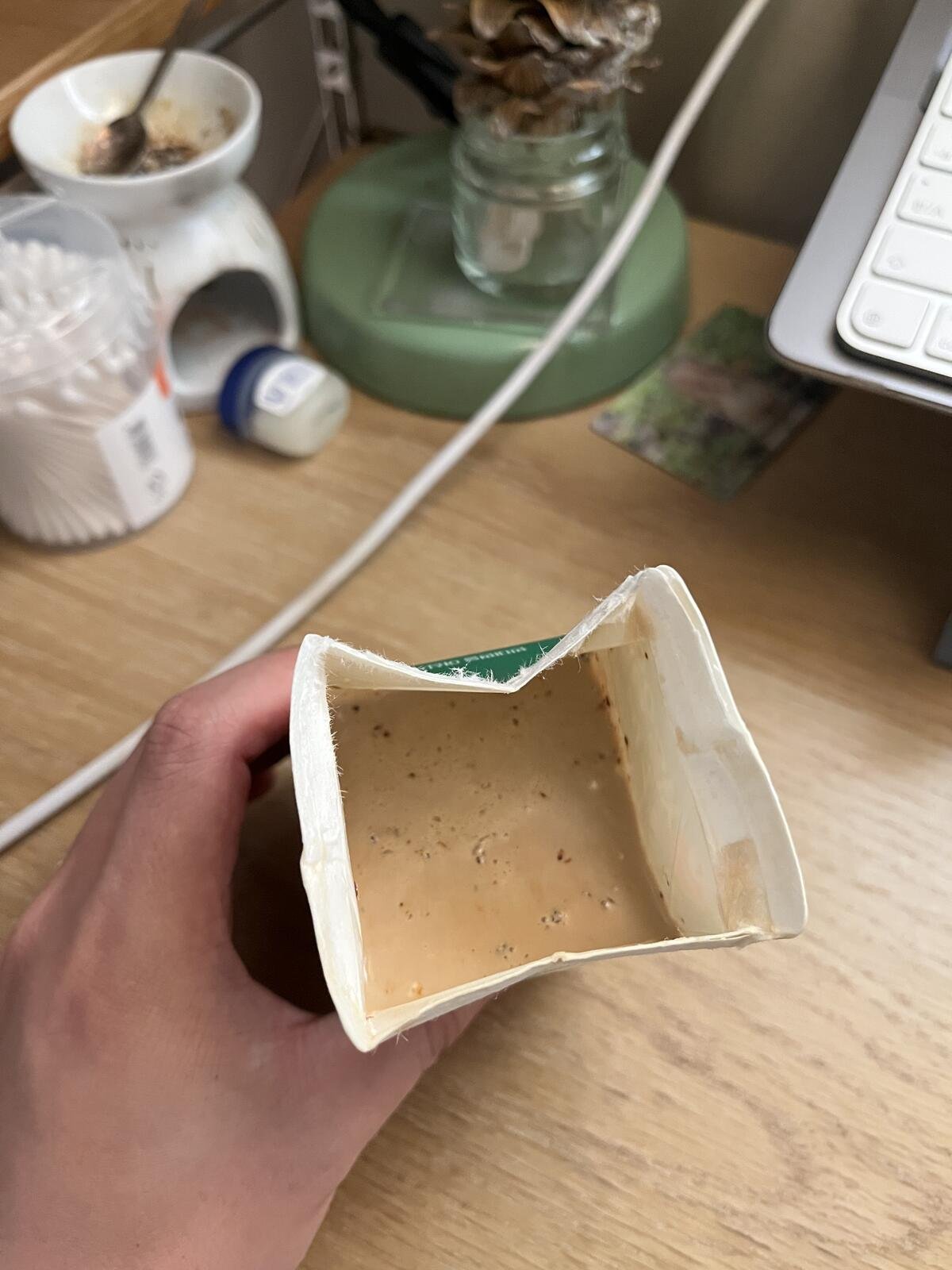
Two sticks, 200ml of milk. That’s the entire shopping list.Shake it with the full desperation of a soldier who wants a latte.
I expected lumps. Cold milk, powdered coffee — it had no business working. It dissolved. And it was good: sweet, thick, cold, closer to a dessert than to coffee. That carton became my morning for the rest of my service.
You can keep shaking until every last grain is gone. I stop early — the bits that survive are my favorite part. Let me have this.
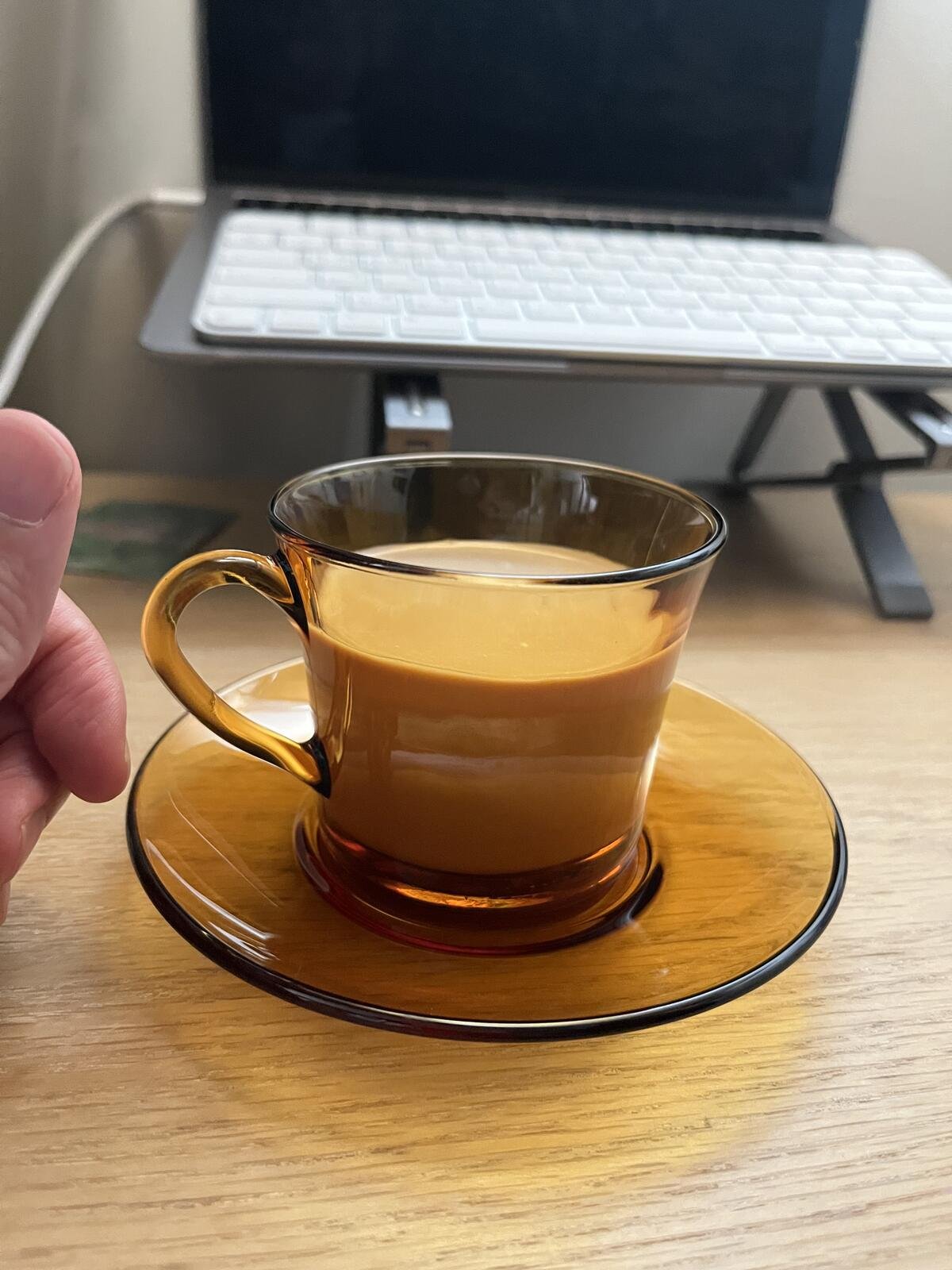
Years later I make it like a normal adult, in a cup: a splash of hot water first to melt the powder, then cold milk on top. Less milk than the carton version — I don’t measure it, I just pour until it looks strong. Strong is what I’m after in the morning. And no ice, ever. Ice waters it down, and thick is the entire point.
Then, writing this post, I went back and made it the old way — two sticks straight into a 200ml carton, shake. It was better. I think it’s the water. Even that little splash thins it out, and the carton version has nothing in it but milk and coffee mix.
So do it the way I did it in my early twenties, with no kitchen and no other options. 200ml of milk, two sticks, and shake it longer than feels necessary. No ice.
Looks convincing, doesn’t it? The taste goes past convincing.
Buying it
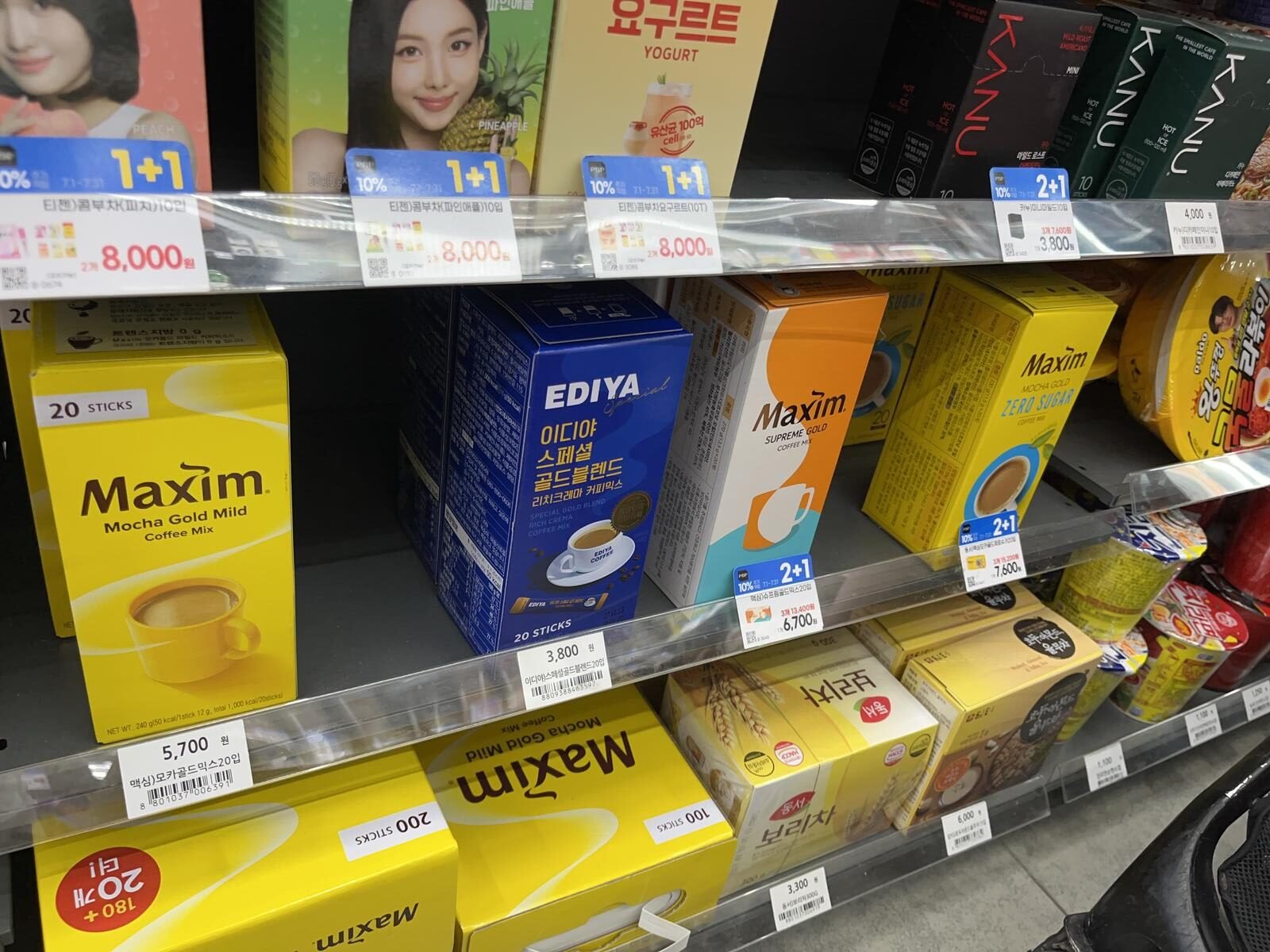
You don’t have to hunt for this. Walk into any supermarket in Korea — a big one, a neighborhood one, the small one under your hotel — and it will be there, usually a whole shelf of it.
Coffee mix is everywhere.
Get the 20-stick box, the one in the photos above. It’s the size that works as a gift: light, flat, cheap enough to buy five of them, and it doesn’t look cheap when you hand it over. Around 6,000–7,000 won depending on the store, so four or five dollars. Buy one more than you need — the last one is for you.
You can buy a friend’s heart for four dollars. Five if the store’s expensive.
And it’s a good thing to fly with. Nothing to break, nothing to leak, nothing a customs officer will look at twice. And whoever you give it to will get more out of it than they would from the keychain you were about to buy instead.
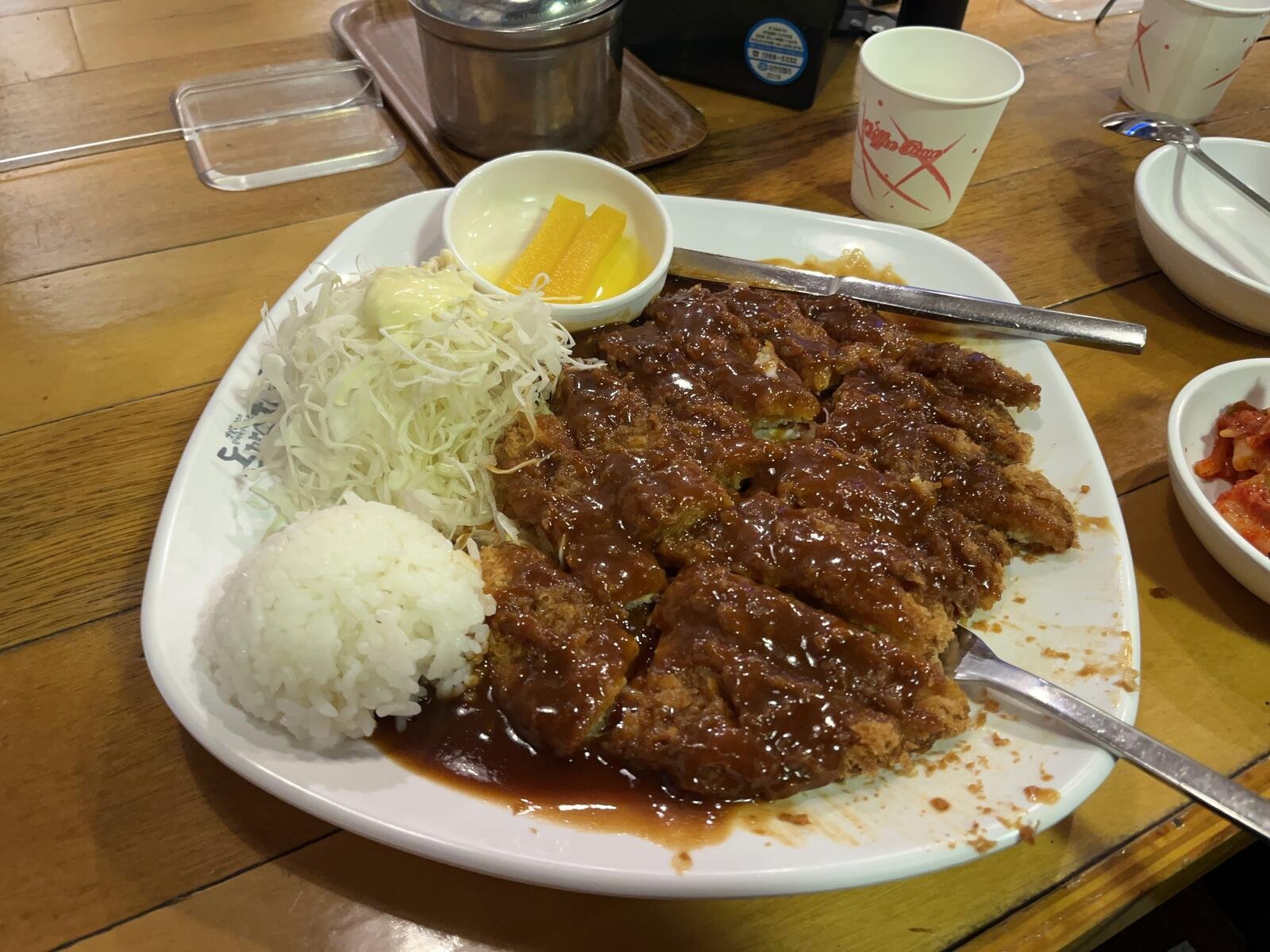
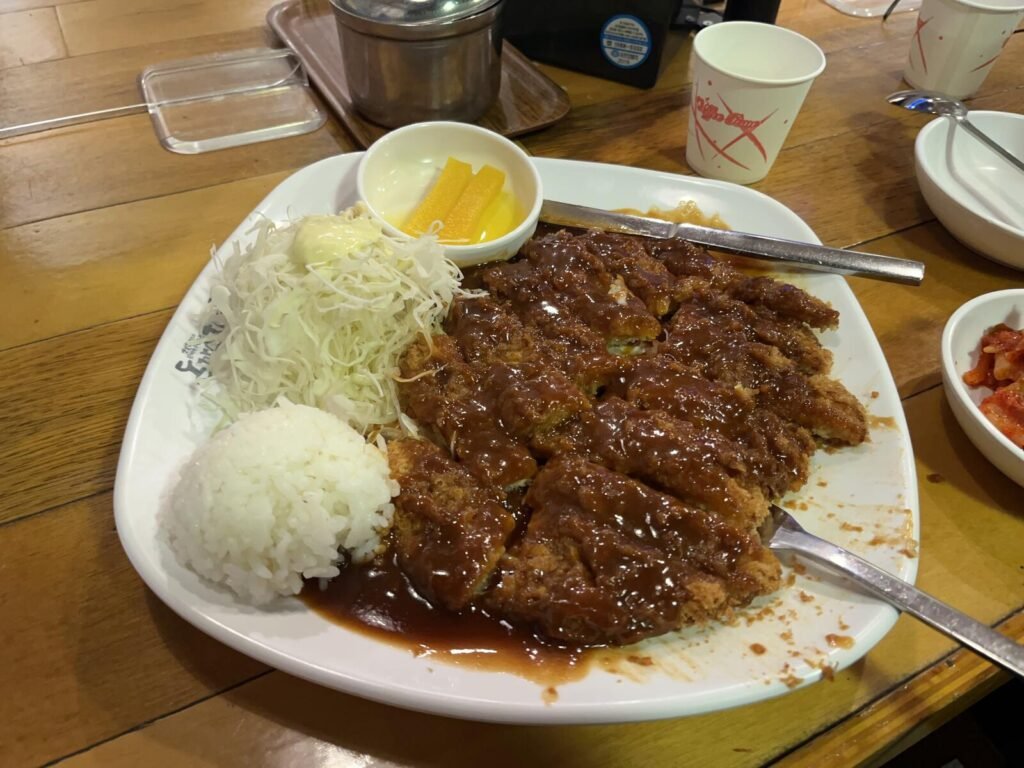
In my case, it’s Korean donkatsu (돈까스) — our own style of pork cutlet. And I’m not alone here. Many Korean men my age would say the same.
I don’t know exactly why. When I was a kid, that thin, crispy, huge donkatsu was pure happiness. Maybe it made me feel, “Wow! This meat is as big as my face!” And that crispy, oily taste was something moms didn’t really want to give their kids — which made it more special. It was the kind of food you got on your birthday. And sometimes, when I was upset, my mom would comfort me like this: “Kid, let’s go eat donkatsu.” That was game over.
In my case, I dive into my childhood just by looking at this plate.
Korean donkatsu vs tonkatsu: three cousins
Here’s a fun fact I learned while writing this post: my soul food has a family tree, and it crosses three continents.
It started in Europe — think Austrian schnitzel: meat pounded thin, breaded, and fried. In 1899, a Tokyo restaurant called Rengatei turned the French côtelette into “katsuretsu,” which became tonkatsu — the thick, juicy version Japan loves today, sliced into pieces and eaten with chopsticks.
Donkatsu arrived in Korea in the 1920s–30s, but the thick Japanese style didn’t stick here. When it finally got popular in the 1960s, Korean donkatsu went back to the schnitzel way: pounded thin and wide, covered in a brown demi-glace-style sauce, and served uncut — you eat it with a knife and fork. So, funny enough, my Korean soul food is closer to a schnitzel than to a tonkatsu.
A feast of donkatsu
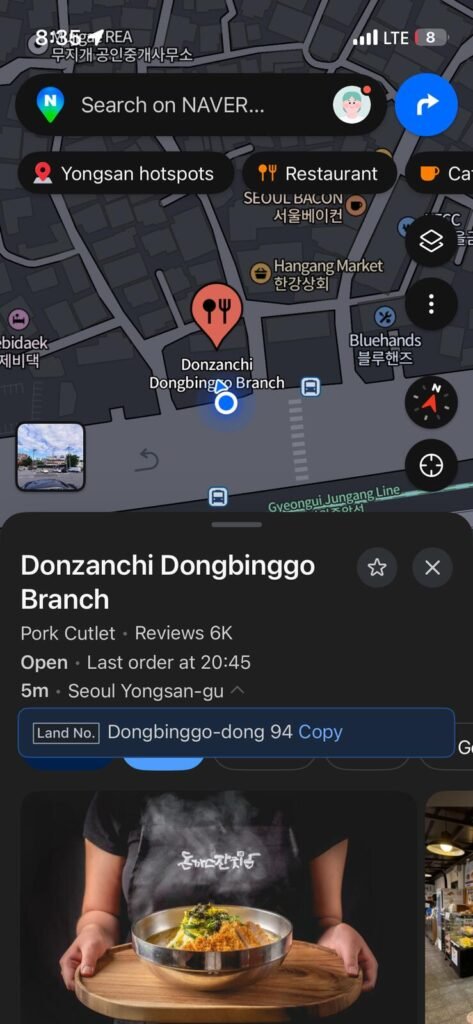
In Seoul, there are many old-school donkatsu places. Today, let me introduce mine: Donzanchi (돈까스잔치) in Dongbinggo-dong, near Ichon Hangang Park. Their donkatsu comes the classic way: as big as your face, drowned in brown sauce.
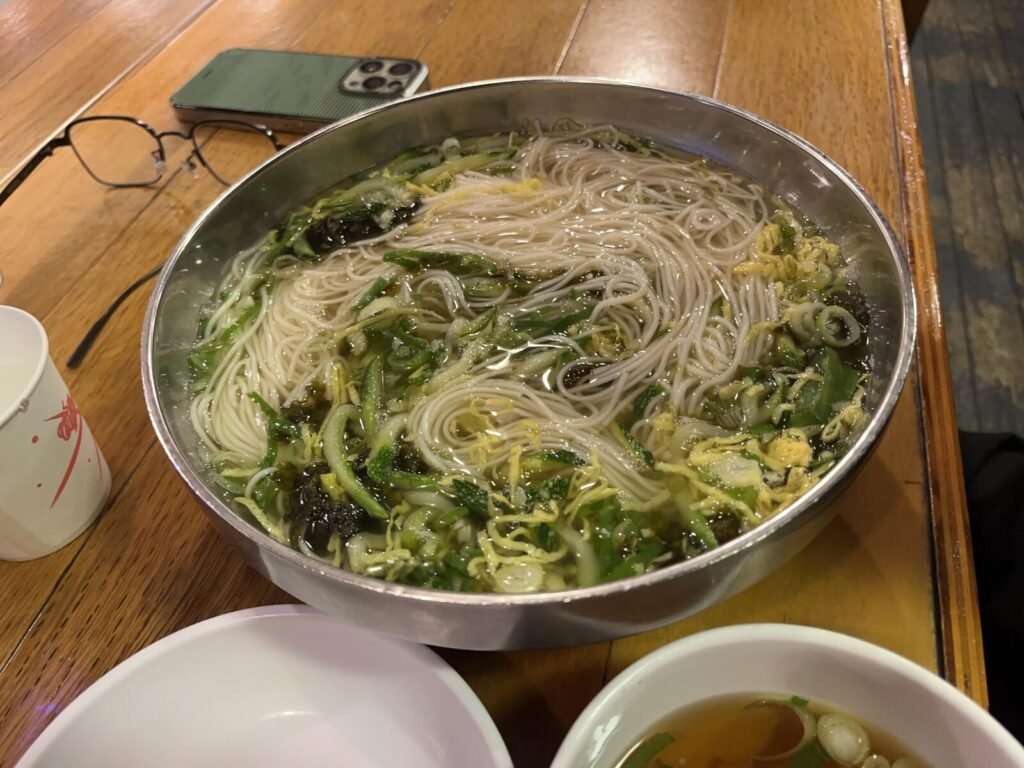
Donzanchi is a little special because they also sell janchi-guksu (잔치국수). Janchi means “feast” in Korean — so the restaurant’s name literally means “donkatsu feast.” Later, I learned why the noodle is called that: janchi-guksu was the dish for weddings, birthdays, and big celebrations. The long noodles mean a long life — and a long marriage. Koreans still ask an unmarried friend, “So, when are you going to feed us guksu?” It means: “When are you getting married?” Unlike donkatsu, this one is real traditional Korean food.
Their signature menu is janchi-guksu with a donkatsu on top. Honestly, I don’t recommend it, because I hate losing the crispy texture of my donkatsu. (If that combination sounds good to you, you would probably like katsu-nabe.)
It’s not a special noodle — and that’s why it’s special.
You know, it’s not a super fancy taste. But sometimes we miss our childhood. When I want to sink into that memory, I go to Donzanchi.
Jeong (정), served in a styrofoam box
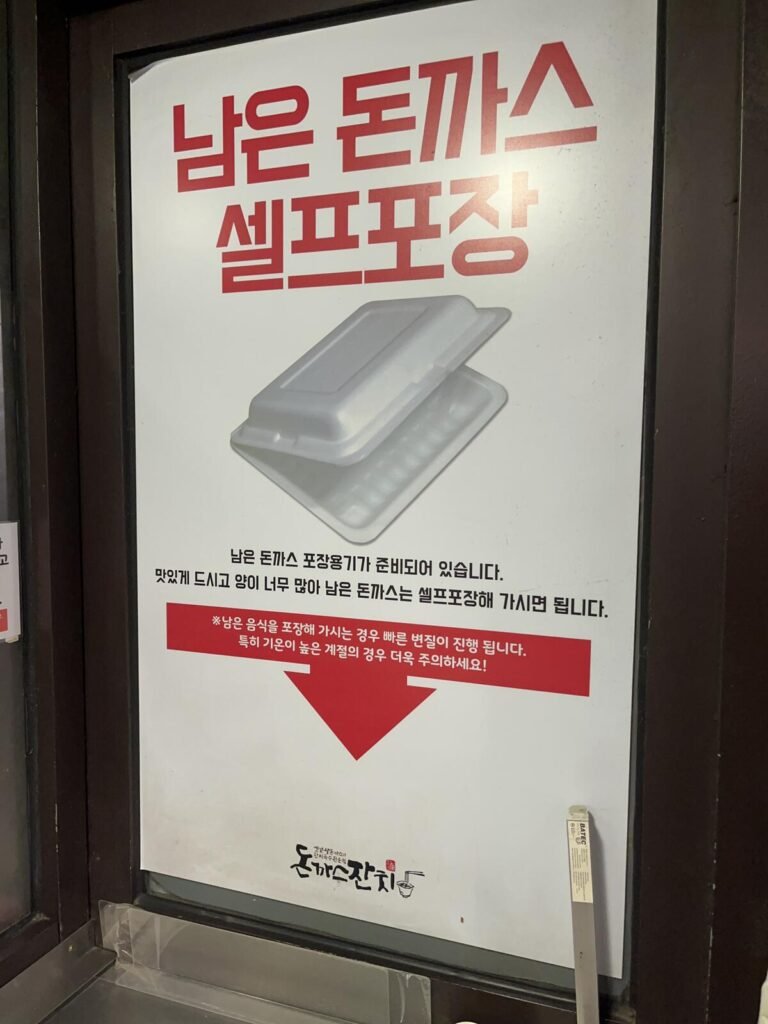
Maybe you’ve heard of jeong (정) if you’re interested in Korea — that warm, generous attachment Koreans share. At Donzanchi, jeong comes in portions. The plates are huge. But don’t worry if you can’t finish: leftover donkatsu can be self-packed for free. Take-out containers are right there, and you just pack it yourself. (The janchi-guksu can’t come home with you, though. It’s noodles.)
This is Korean jeong! Do you have an emotion like this in your country? Please tell me.
Eat it like a local
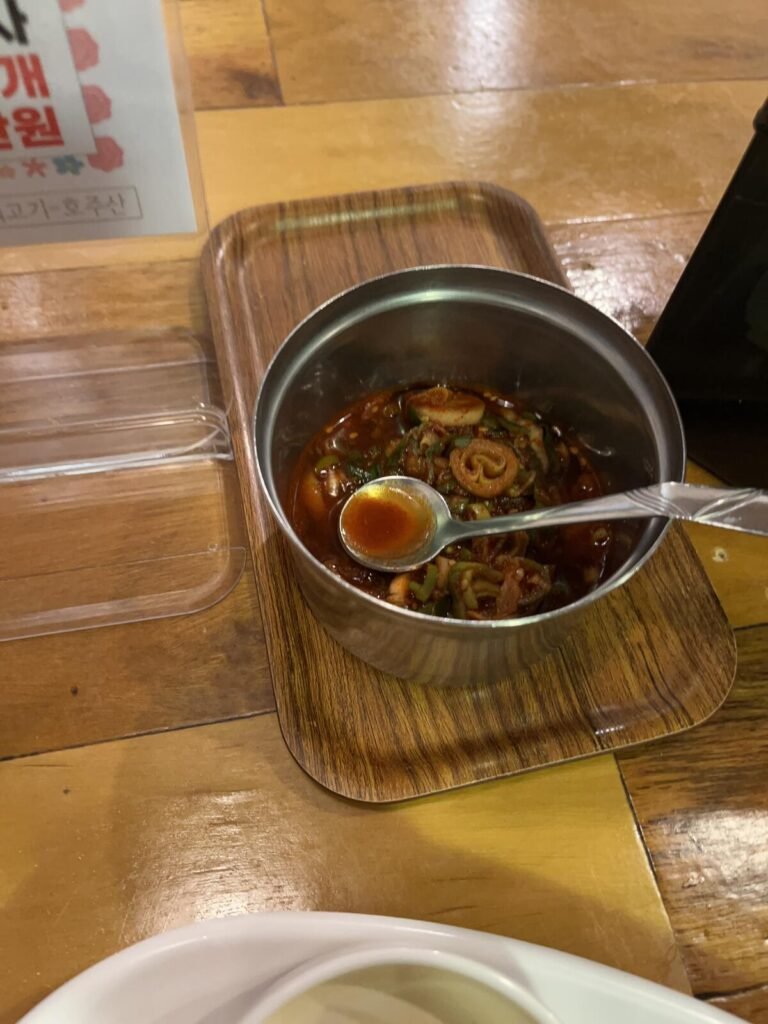
There’s no special way to eat here. Just one tip: try your janchi-guksu with dadaegi (다대기), the seasoned soy sauce on your table. Janchi-guksu is mild, and mild is good enough. But with dadaegi? It’s a kick — like kimchi.
Janchi-guksu too mild? Try this: dadaegi. (Caution: add it little by little — it’s very salty!)
The perfect finish: mix coffee
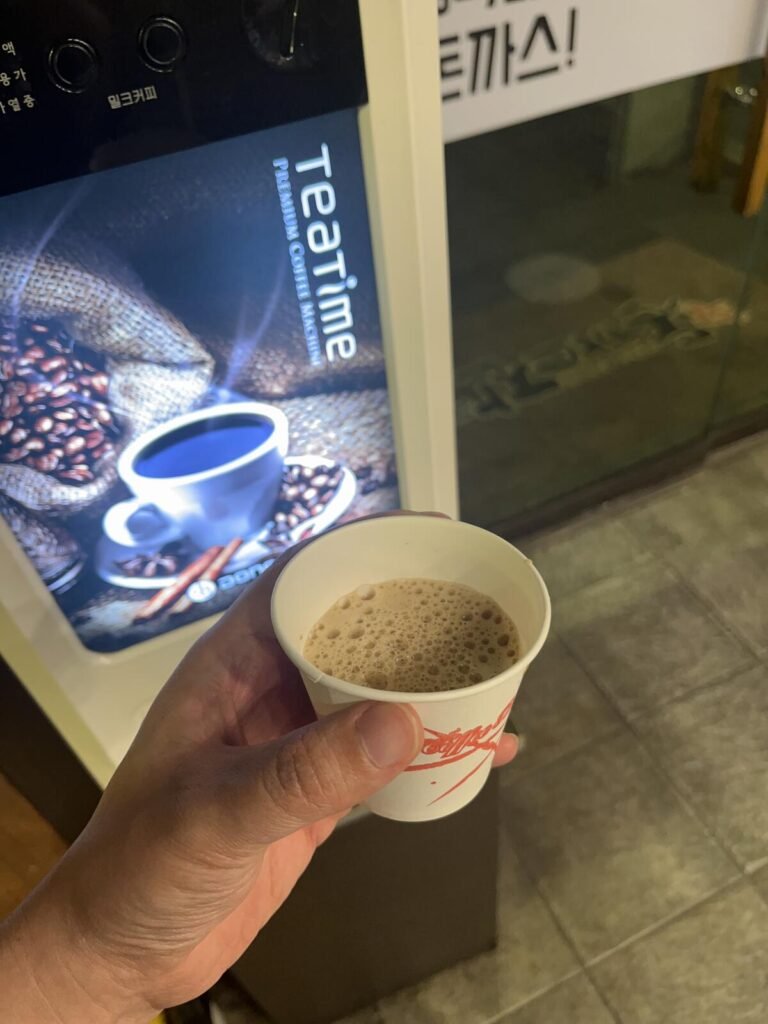
Many Korean restaurants like this have a mix coffee machine near the door. If you spot one, don’t pass it by. It’s the perfect finish to your meal.
I’ve heard many foreigners take mix coffee home as a souvenir. Good choice. In a future post, I’ll pick the best mix coffee for you — with water it’s good, but with milk? A perfect dessert. I’ll even share my recipe. (Calling it a “recipe” is a little embarrassing, but I’ll share it anyway.)
Honestly, the coffee from that old machine tastes subpar. But this is the REAL vibe.
That’s the vibe.
Donzanchi is a nice stop if you visit Ichon Hangang Park (이촌한강공원) — it’s a local’s course in our daily life. I’ll introduce that area soon.
So… have a great meal, my stranger.
Quick facts
Name: Donkatsu Janchi, Dongbinggo branch (돈까스잔치 동빙고점) — listed as “Donzanchi Dongbinggo Branch” on Naver Map
What I ordered: Yetnal (old-style) donkatsu, 13,500 won (as of July 2026)
Hours: Open daily, 10:30–21:30 (last order at 20:45)
Where: Dongbinggo-dong, Yongsan-gu — a short walk from Ichon Hangang Park