I ordered delivery from Jeonggane Seokswoe Bulgogi (정가네석쇠불고기) five times before I went to see what had been feeding me.
The second half of that name is the dish, and it isn’t one Koreans eat often. Seokswoe bulgogi (석쇠불고기) isn’t expensive. It’s just cooked in an unusual way, so most of us have only eaten it on a day out somewhere. A small treat, not a luxury.
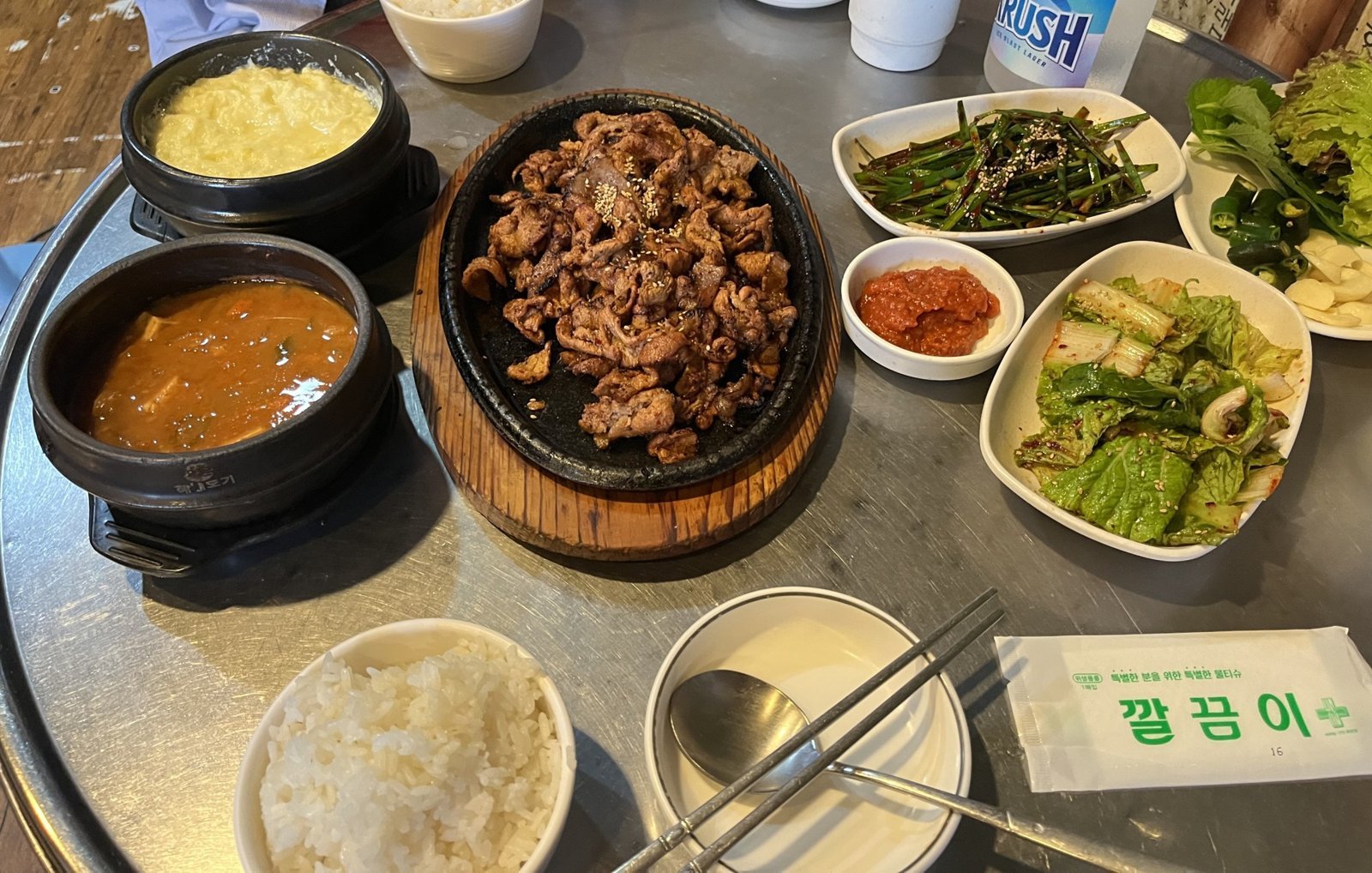
What seokswoe bulgogi is
If you’ve had bulgogi before, it was probably beef — thin, sweet-marinated, cooked with enough broth that it came out closer to a stew than a grill.
The bulgogi here is pork, not beef — worth knowing if you don’t eat pork.
Seokswoe is the Korean word for a gridiron, and the word has iron in it: soe (쇠) means iron. That’s all the thing is — iron bars crossed into a grid, set over open flame. Seokswoe bulgogi is bulgogi cooked on one, and that change makes it a different dish. There’s no pan and no broth, so nothing pools and nothing stays wet. What you get instead is the taste of smoke, right down in the meat.
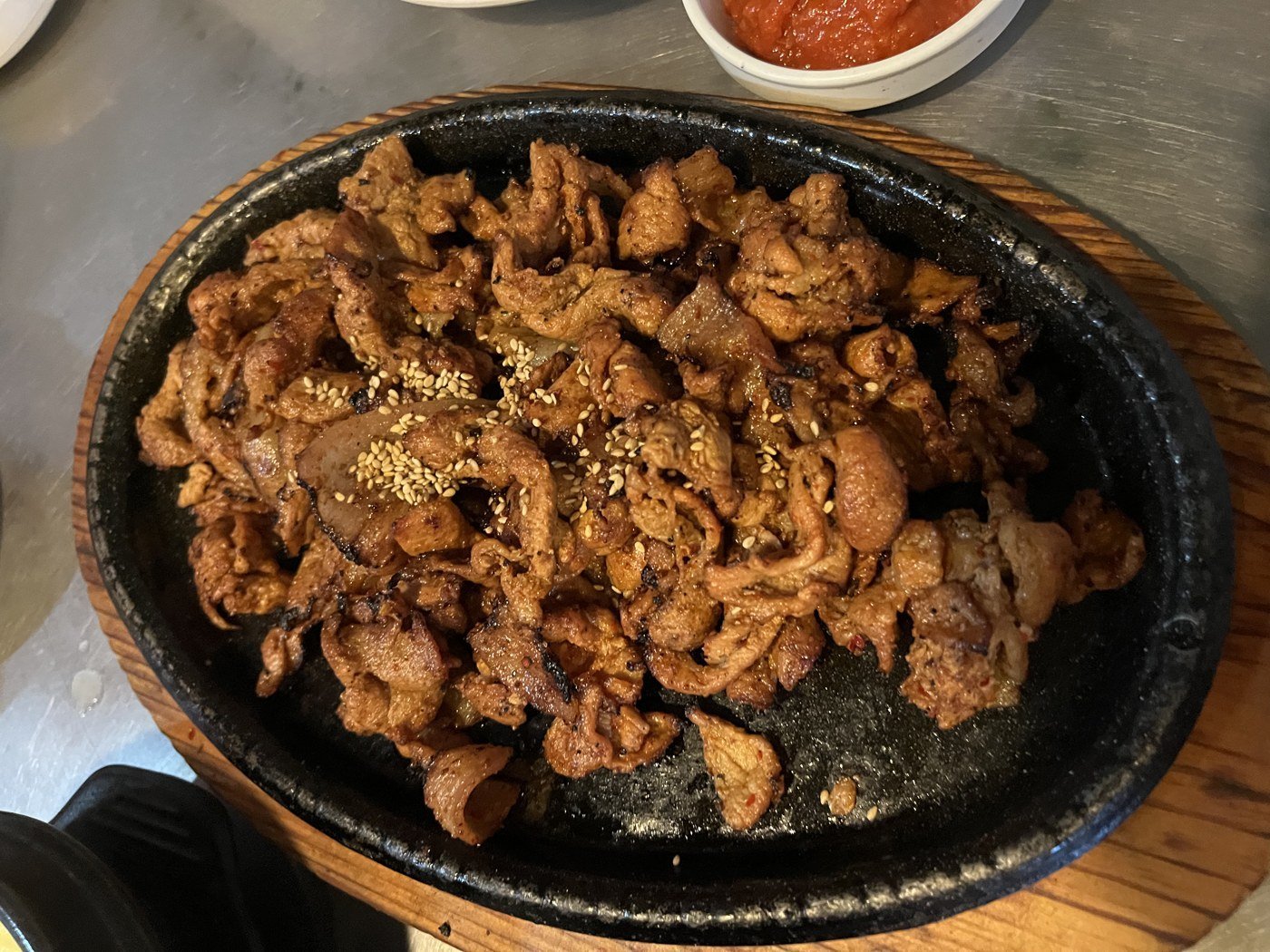
The side dishes
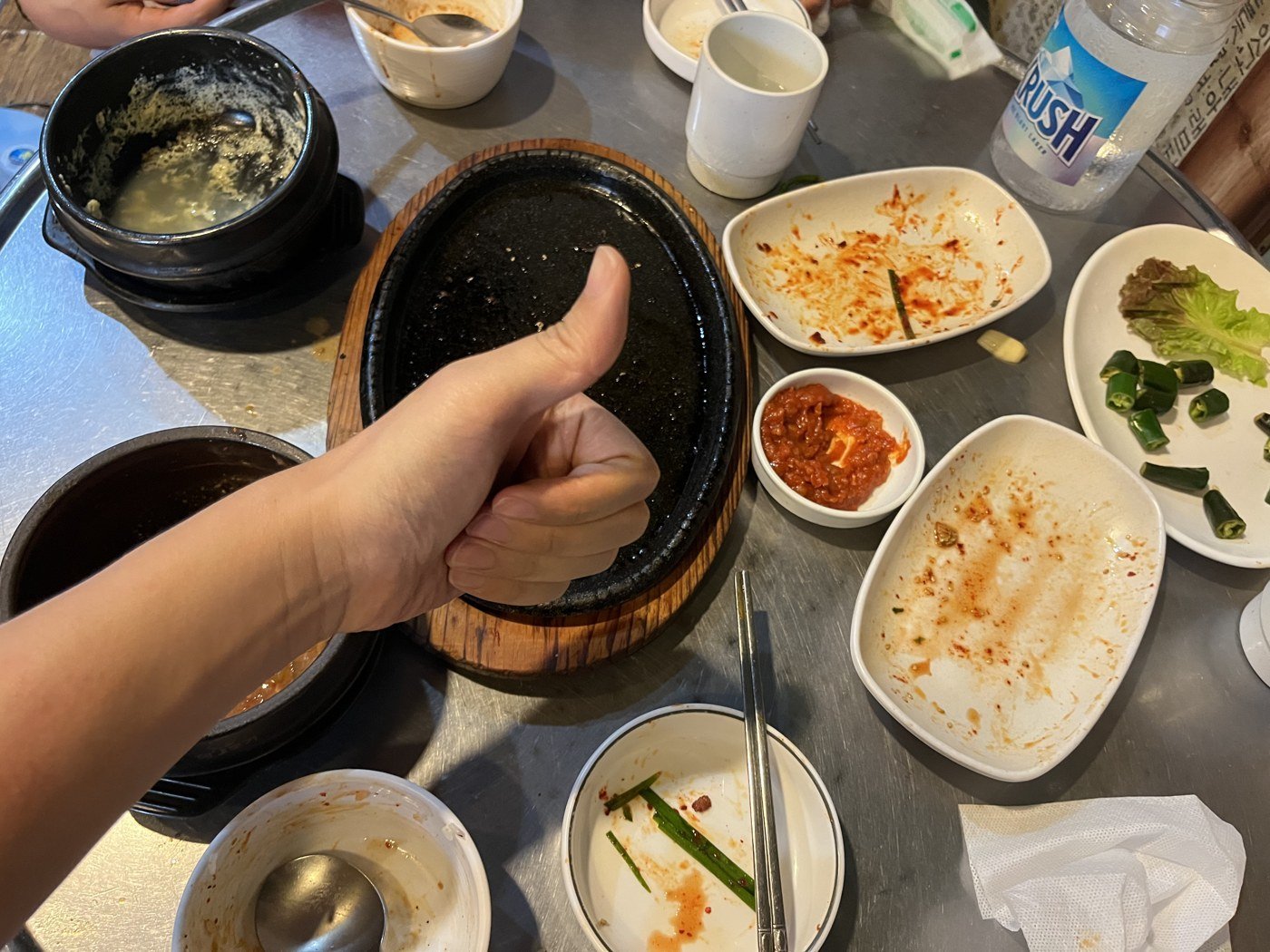
Plenty of restaurants send out a main good enough that you clear the plate. Here I clear everything else too.
None of it is decoration.
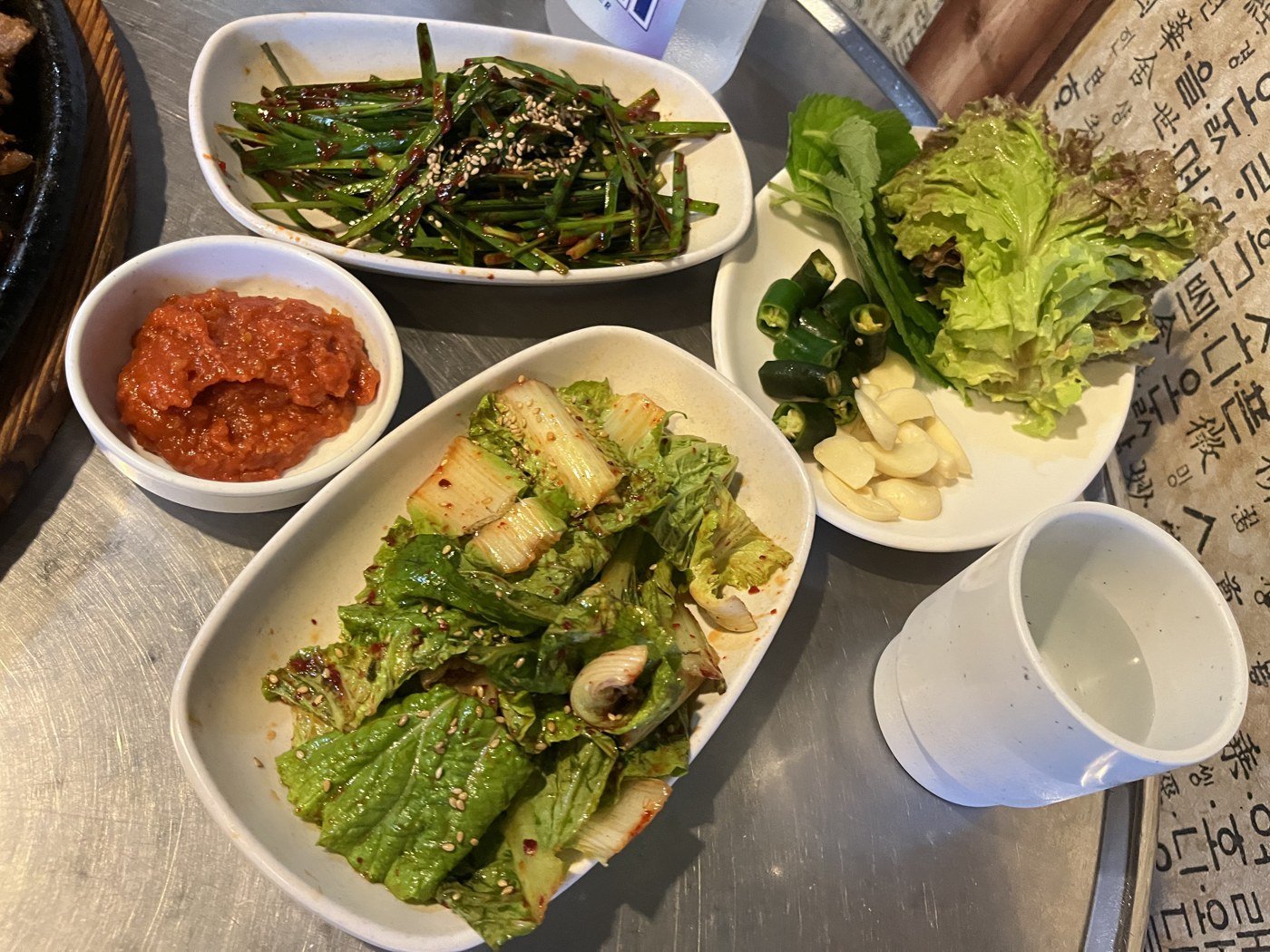
The one I’d come back for on its own is geotjeori (겉절이) — a kind of kimchi whose name is also its method: salted only on the surface. The leaves are dressed and served the same day rather than left to ferment, so it comes to the table still crisp and bright. The greens change through the year. In winter it’s bomdong, sweeter than ordinary cabbage. Other months it’s eolgari, a young cabbage that stays tender even as it grows. Whichever it is, I couldn’t taste much difference at the table. Both were good.
The dressing is soy and vinegar, sesame oil and sesame seeds, and just enough chili powder to keep it clean rather than hot.
I should tell you my bias. If there’s meat on the table, I’ll always reach for the sharp green thing next to it — scallion salad, pickled wild garlic leaves, that family. I’ve eaten a lot of them.
I’d never had geotjeori like this anywhere else. Now I want it at every meat restaurant I go to.
Then buchu-muchim (부추무침) — seasoned garlic chives. If you eat pork in Korea you’ll see it often: in the dumpling filling, next to a bowl of pork soup, and here. I grew up with that and never asked why. The explanation I’ve heard is nutritional — pork is high in vitamin B1, and the onion family helps the body absorb it. What I’m sure of is simpler. It gets the same dressing as the geotjeori, and a flat leaf holds it the way a wide noodle holds sauce — so the seasoning is in every bite. Same dressing, different leaf, and they come out nothing alike: the geotjeori sweeter, this one fragrant, and not even the same to chew. Both belong with the meat.
You could eat the meat with just the geotjeori and the buchu-muchim and be happy. It’s better if you wrap it. That’s what the fresh lettuce and perilla leaves are for — ssam (쌈), which isn’t a dish but a way of eating. Think of a taco with a leaf where the tortilla goes.
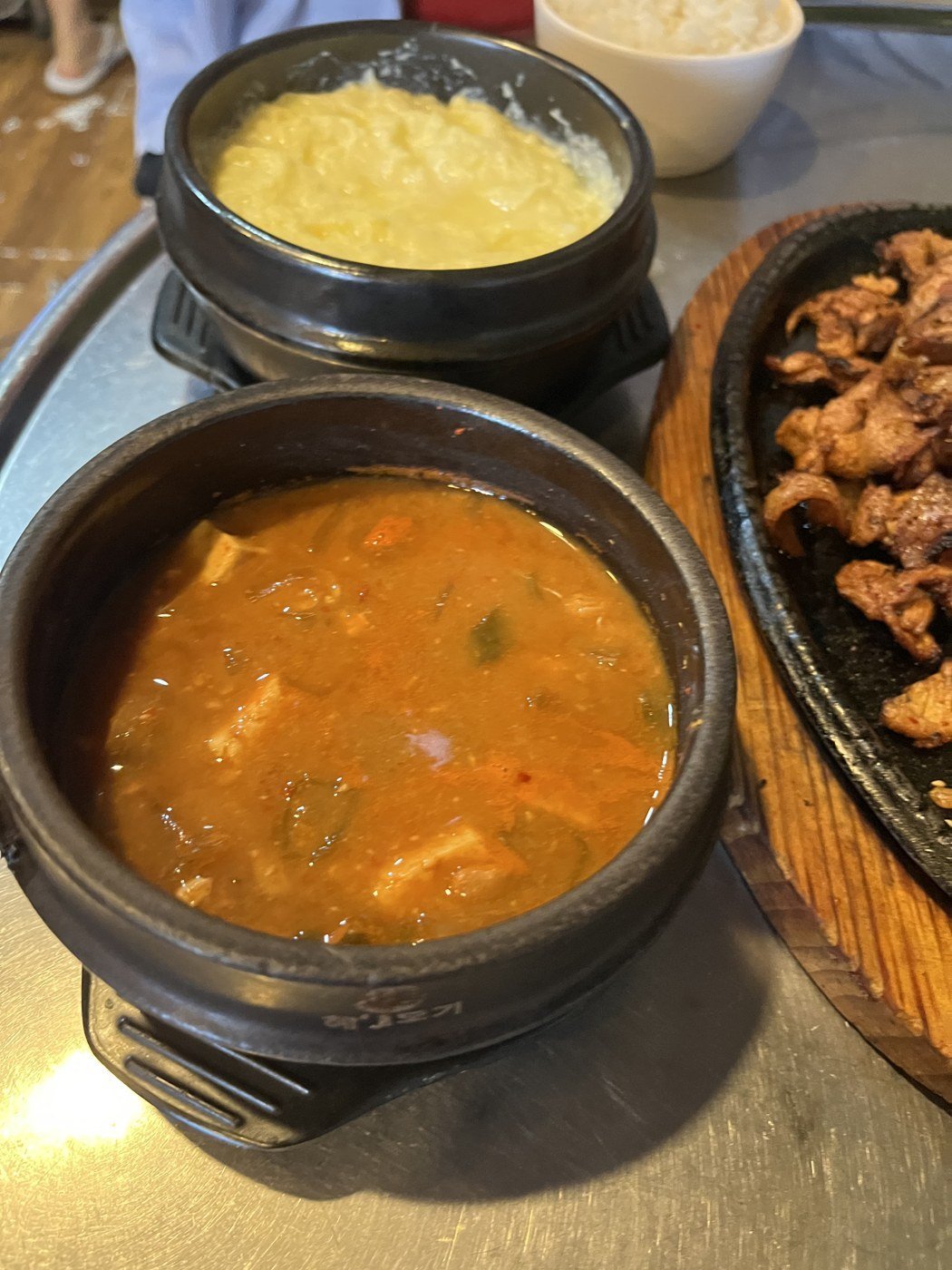
And one thing that only happens if you eat in: steamed egg, at the back there. The pot in front of it is cheonggukjang, and that one needs a section of its own.
The stew
Along with the meal comes a small earthenware pot of cheonggukjang (청국장). This is where the title of this post came from.
Start with what it is. If you know doenjang-jjigae — the brown soybean stew at the center of Korean cooking — cheonggukjang is another stew made from the same bean. The difference is time. Doenjang is a paste that ages for months before anyone cooks with it. Cheonggukjang is soybeans fermented for two or three days, and that’s the entire process. The beans don’t disappear into a smooth paste the way doenjang does. Some get broken up, some don’t, and you feel them when you eat.
It also has a reputation. Cheonggukjang is the dish people describe by its smell before they describe its taste.
If that’s what you’ve heard, don’t worry about it. It’s an old reputation. Most kitchens now make it for a general palate, and unless you go somewhere that specializes in cheonggukjang, what arrives is mild. This one was. Underneath it was something siwonhan (시원한) — the word means cool, but a hot soup can be siwonhan too. It means clean, with nothing heavy in it. There was dalkeun (달큰한) in there as well, a faint sweetness; radish, I thought, and crab. All of it sat on the gusuhan (구수한) taste of the beans — nutty, but deeper. My first thought was jipbap (집밥).
Jipbap is the Korean word for home food. Usually it means the everyday kind — whatever is on the table on a weeknight.
This isn’t quite that. This felt more like a welcome — the table someone sets when you’ve been gone a while and you finally come back. People don’t usually light a fire and grill meat on a weeknight. They do it because you’re home.
The shop
Fifteen years in the same spot. The owner told me that.
You can see it before anyone says it. The sign out front has cracked and lifted in patches, and the room inside has the same years on it.
The grilling happens in the kitchen. It’s hot, hard work, and it makes a lot of smoke. She told me the smoke makes it difficult to keep part-time help. So her younger brother does it.
It didn’t sound like a complaint to me. It sounded like pride.
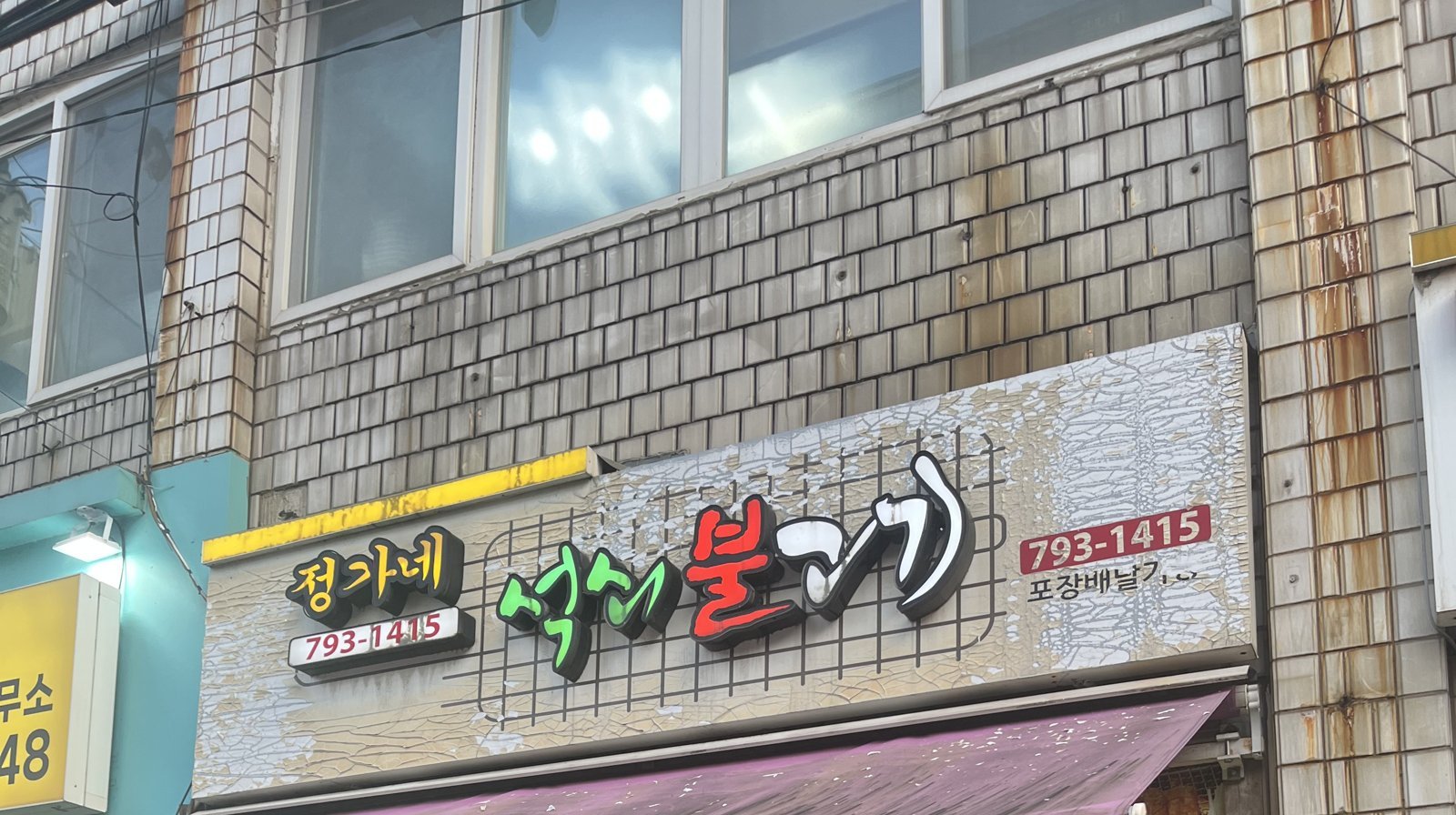
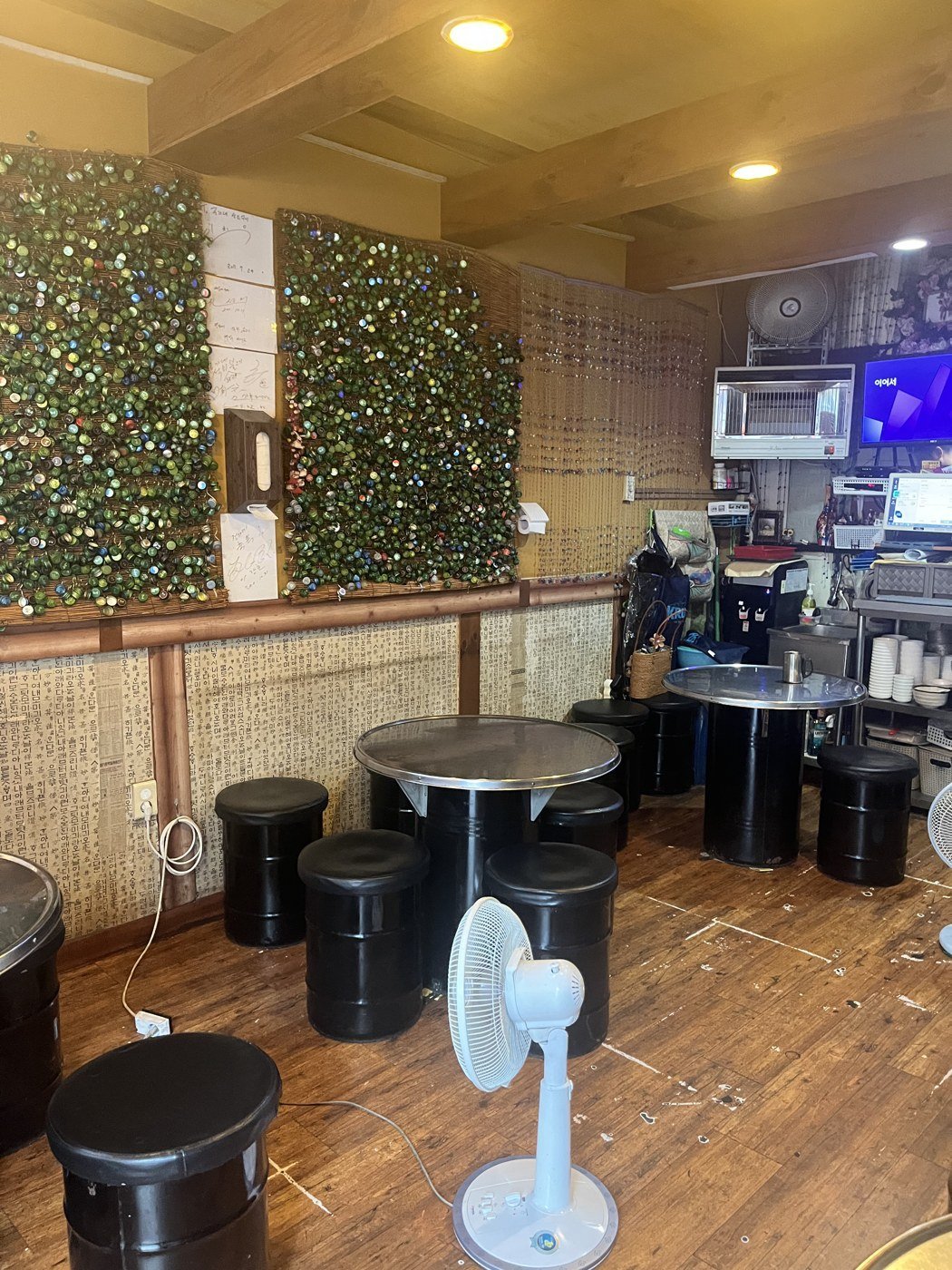
The -ne (네) at the end of Jeonggane means somebody’s household. It’s the Jeong family’s place. And that isn’t just a name — the owner and the man at the grill are sister and brother. It had been on the sign the whole time.
One more thing, and it’s why the phone number below matters. Bogwang-dong is being redeveloped, and this block is part of it. Nothing is closing tomorrow. But at some point the restaurant will have to move, and I don’t know when.
If you’re going
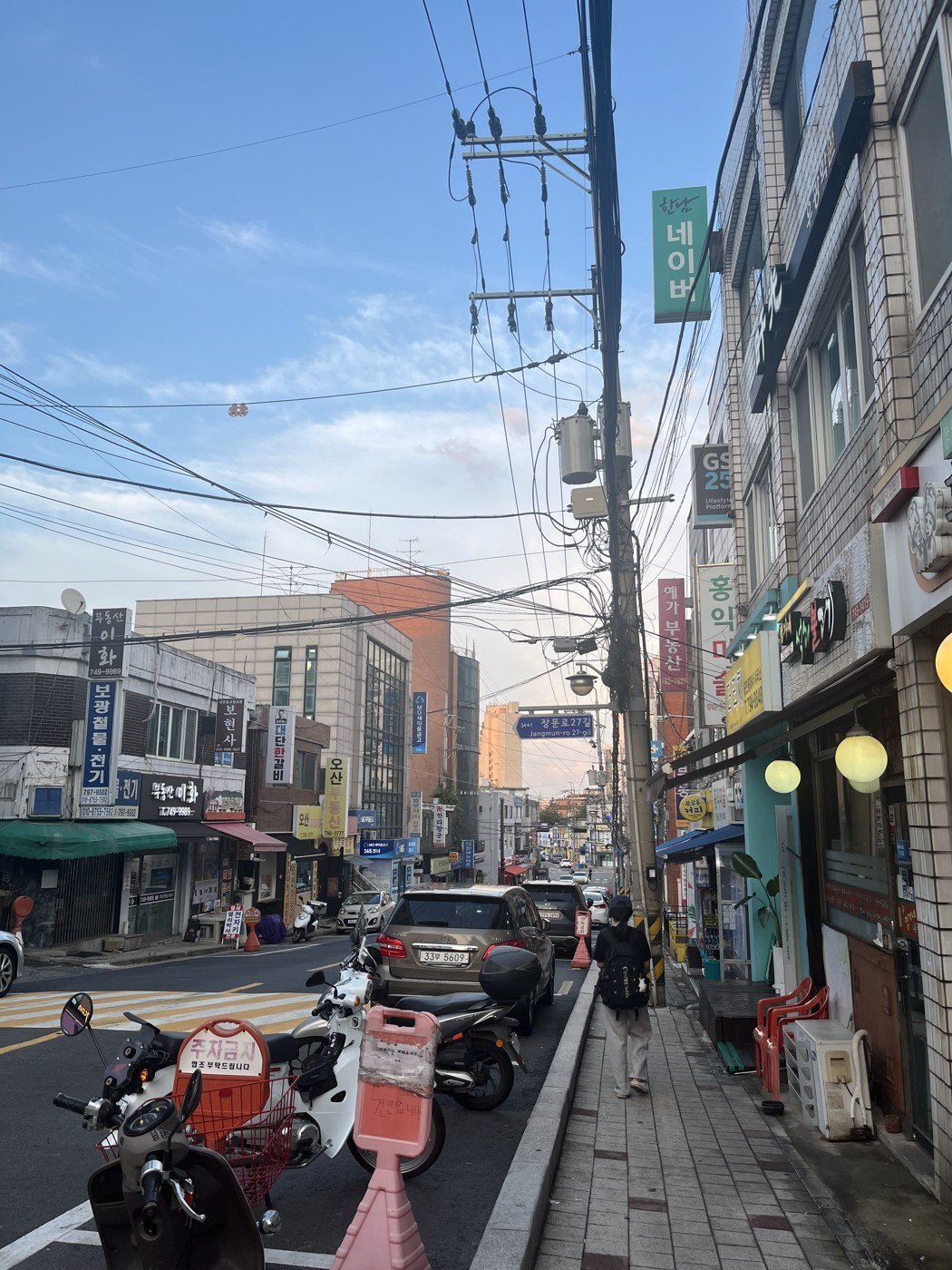
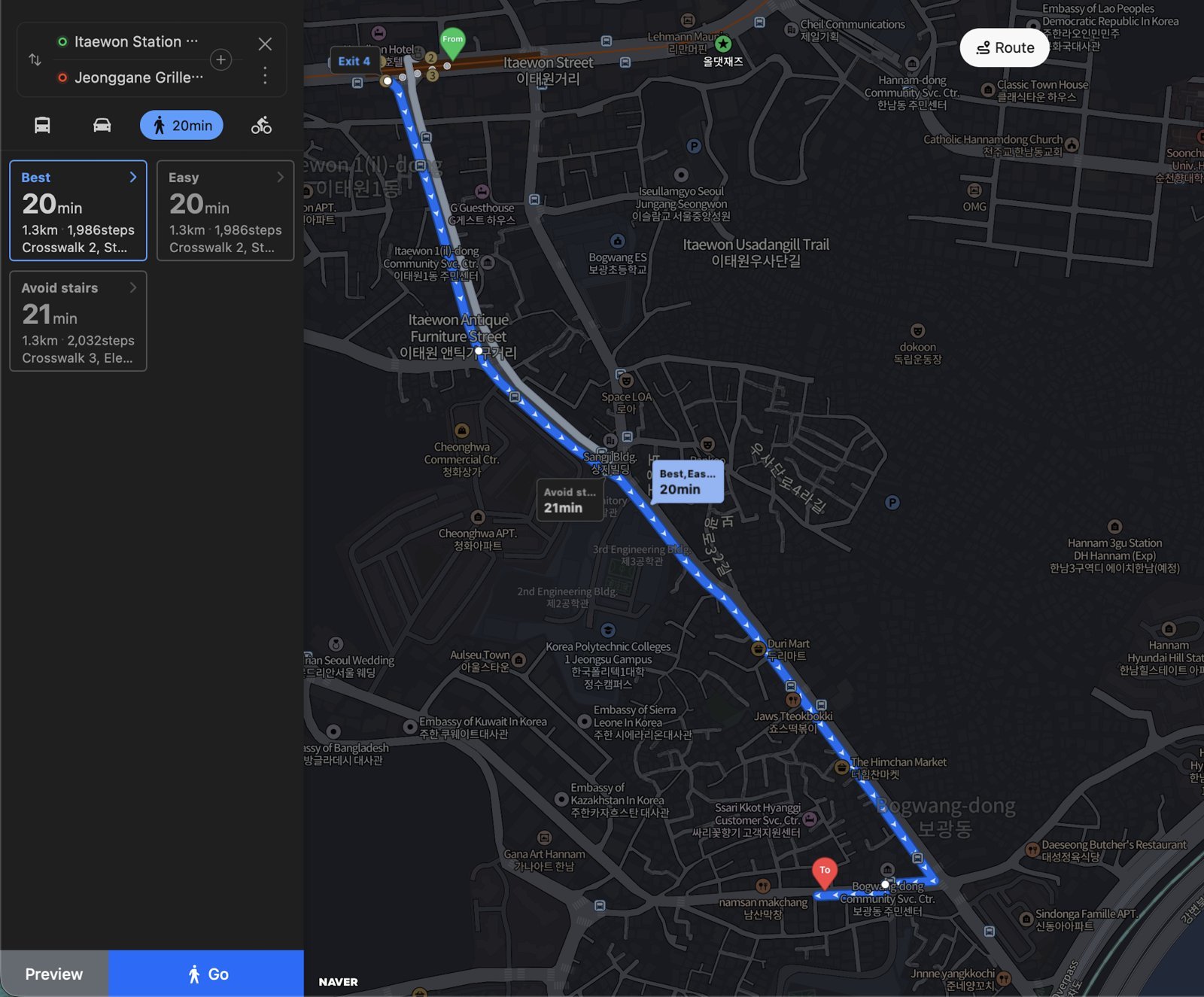
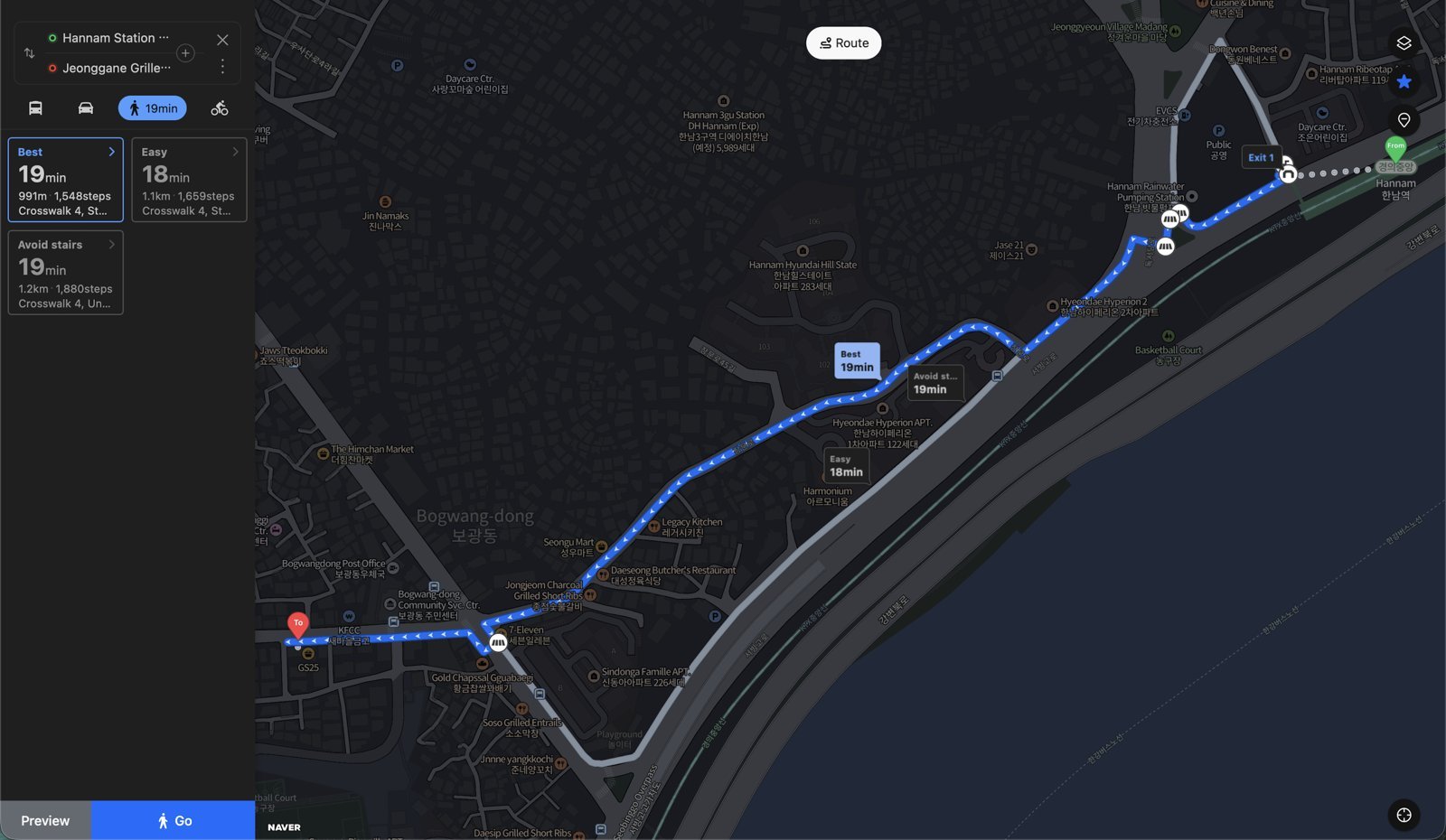
Getting there. Jeonggane Seokswoe Bulgogi (정가네석쇠불고기), 88 Jangmun-ro, Yongsan-gu (서울 용산구 장문로 88). It sits between two stations — Itaewon (Line 6) and Hannam (Gyeongui–Jungang Line) — so two different lines will get you there, and Hangang Park, Hannam-dong and Itaewon are all walkable from the door. I come from Itaewon Station — Exit 4, then twenty minutes on foot. From Hannam Station it’s Exit 1, and about the same.
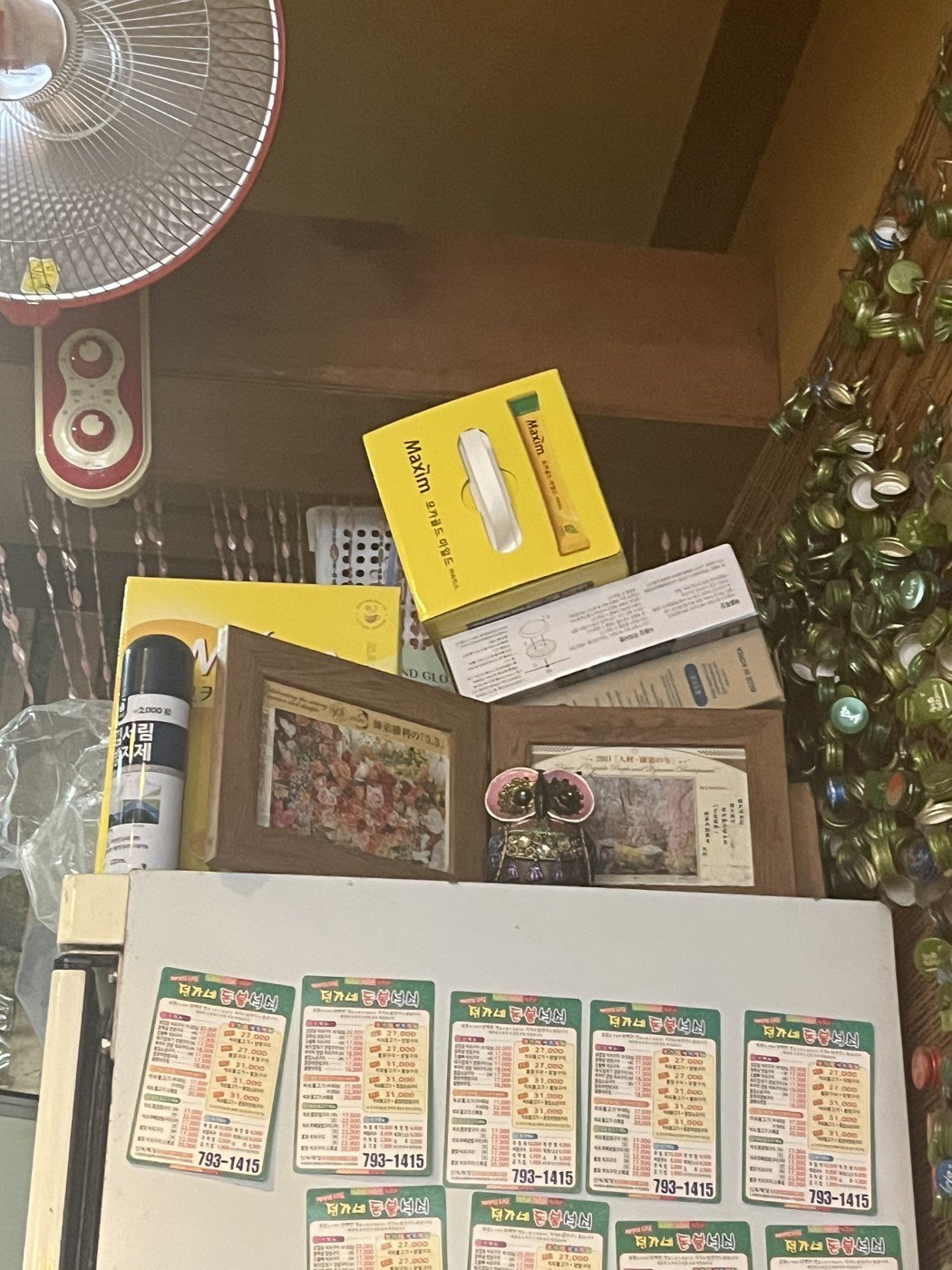
Hours. 5:00pm to 2:00am, last order 1:45am. In principle it opens every day; in practice the owner closes when she needs a rest. It has been open every time I’ve gone, but the number is 02-793-1415, and given the redevelopment it’s worth a call either way.
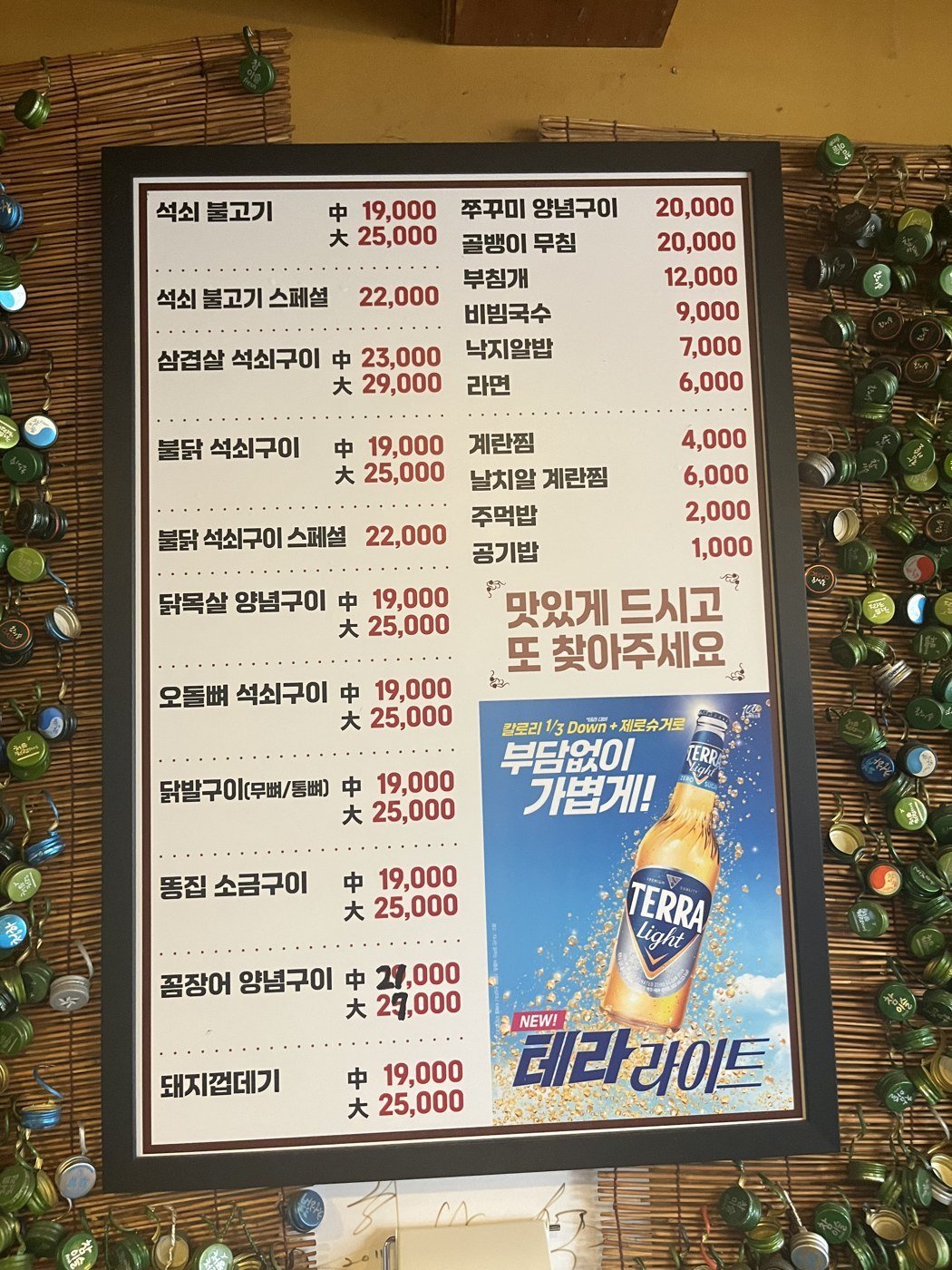
What to order. Seokswoe bulgogi (석쇠불고기), medium 19,000 won or large 25,000 won. The menu also lists a special — seokswoe bulgogi special (석쇠불고기 스페셜), 22,000 won — which is the same meat with rice cake and vegetables added. The plain one is plenty. How far that goes:
| 中 Medium 19,000 | 大 Large 25,000 | |
|---|---|---|
| As a meal | One person, generously | Two |
| With drinks | Two | Three |
Bring a translation app. The menu is Korean only and the shop isn’t set up for English. Ordering from a phone screen works fine.
Eating alone is fine here. Nobody will look at you.
The steamed egg is free if you eat in. It’s on the menu at 4,000 won, and it doesn’t come with delivery. Of all the reasons to go in person rather than order, that’s the one I can put a number on.
On drinking. Half this menu — chicken feet, gizzards, cartilage, pork skin — is the kind of thing Koreans order to go with soju. I don’t drink, so I’ll leave that to you. It’s clearly a good room for it.
Leave a Reply